

Introduction
Brazil is the largest country in South America and the fifth-largest in the world by both area and population. It’s known for its vast and diverse landscapes, including the Amazon rainforest, Pantanal wetlands, and extensive Atlantic coastline. Brazil is rich in natural resources and biodiversity, making it a global hotspot for wildlife and ecosystems. The country has a vibrant culture influenced by Indigenous peoples, Portuguese colonization, and African heritage, famous for its music, festivals like Carnival, and football (soccer) passion. Its economy is one of the largest in the world, with key industries such as agriculture, mining, manufacturing, and services.
- The Pantanal: A Global Biodiversity Hotspot
The Pantanal is the world’s largest tropical wetland, covering approximately 140,000 square kilometers across Brazil, Bolivia, and Paraguay, with the majority lying in Brazil. This vast floodplain is a unique ecosystem that supports one of the highest concentrations of wildlife on Earth. Its seasonal flooding creates a rich and dynamic environment that sustains an extraordinary variety of plant and animal species, making it a crucial region for global biodiversity conservation. - Rich Mammalian Diversity
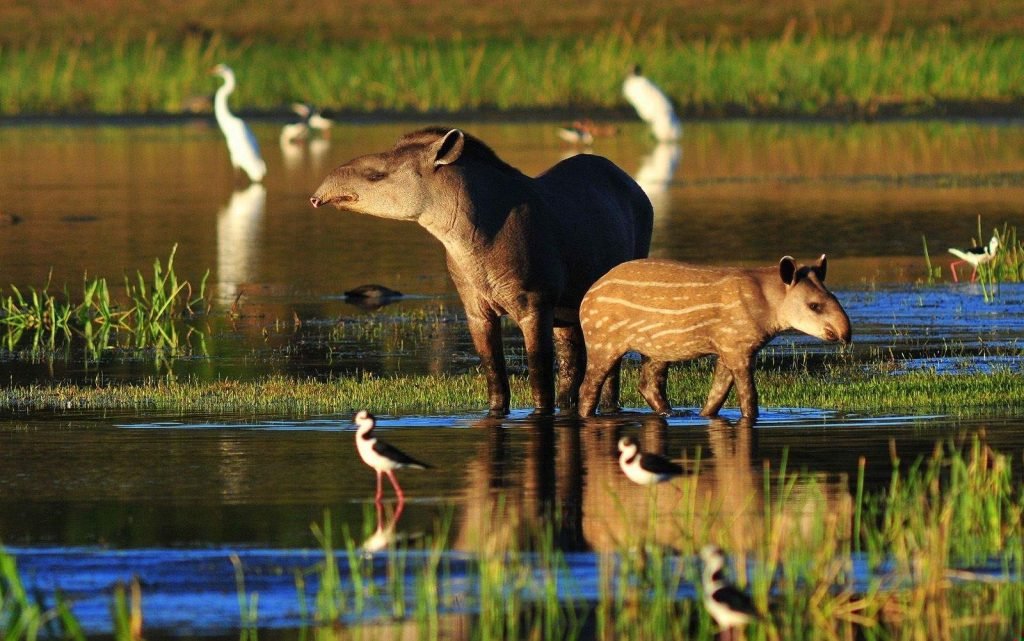
The Pantanal is home to a diverse range of mammals, many of which are emblematic of South American wildlife. The jaguar (Panthera onca) stands out as the apex predator of the region, renowned for being one of the best places to see these elusive big cats in the wild. Other important mammals include the giant anteater, capybara—the world’s largest rodent—South American tapirs, ocelots, howler monkeys, and the rare maned wolf. This diversity highlights the ecological complexity and health of the Pantanal ecosystem. - Iconic Jaguars and Their Role
Jaguars in the Pantanal are more frequently observed than in other parts of their range, largely due to the region’s open terrain and abundance of prey. These powerful carnivores play a critical role as apex predators, regulating prey populations and maintaining ecosystem balance. Their presence indicates a healthy, functioning environment. Conservation efforts to protect jaguars also benefit many other species in the Pantanal. - Abundant Birdlife and Avian Diversity
The Pantanal is a birdwatcher’s paradise, with over 650 species of birds recorded. This includes colorful and charismatic species such as the hyacinth macaw, the largest flying parrot species, the Jabiru stork with its impressive wingspan, and various species of herons, egrets, and ibises. Birds of prey, including hawks and eagles, are also common. The diversity of birds reflects the wide range of habitats available in the Pantanal, from dense forests to open wetlands. - Aquatic and Semi-Aquatic Wildlife
The wetland nature of the Pantanal supports a wealth of aquatic life. Yacaré caimans, relatives of alligators, are abundant and vital to the ecosystem. Giant otters, one of the world’s largest otter species, are also found here, thriving in the clear waters of the rivers and lakes. Various species of fish, turtles, and amphibians complete the aquatic community, all adapted to the seasonal rhythms of flooding and drying. - Reptiles and Amphibians of the Pantanal
The Pantanal harbors a rich diversity of reptiles, including the green anaconda, one of the world’s longest snakes. Numerous other snakes, lizards, and turtles populate the area, playing important roles in controlling insect and rodent populations. Amphibians, like frogs and toads, also abound and are indicators of healthy water systems. These species contribute to the overall ecological balance of the wetlands. - The Importance of Seasonal Flooding
A defining characteristic of the Pantanal is its seasonal flooding cycle, which dramatically transforms the landscape each year. During the rainy season, vast areas become submerged, creating temporary lakes and channels that provide breeding grounds for fish and aquatic birds. When the waters recede, lush grasses and plants flourish, supporting herbivores and predators alike. This natural flood pulse is essential to sustaining the region’s extraordinary biodiversity. - Threats to Pantanal Wildlife
Despite its ecological importance, the Pantanal faces significant threats. Increasing agricultural expansion, deforestation, uncontrolled fires, and the impacts of climate change are leading to habitat degradation. These pressures endanger many species, including the jaguar and giant otter, and reduce the resilience of the ecosystem. Fire seasons in recent years have been particularly devastating, prompting urgent calls for improved conservation and sustainable management. - Conservation Efforts and Protected Areas
Several protected areas and national parks exist within the Pantanal, aimed at preserving its unique wildlife and ecosystems. International and local organizations work alongside Brazilian authorities to promote conservation, environmental education, and sustainable tourism. Ecotourism, when responsibly managed, offers economic incentives for preservation while allowing visitors to experience the region’s natural wonders. - The Pantanal as a Model for Wetland Conservation
The Pantanal serves as a critical example of wetland conservation worldwide. Its complex interplay of terrestrial and aquatic habitats illustrates how seasonal dynamics can support rich biodiversity. Protecting the Pantanal is essential not only for Brazil but for global biodiversity. The region’s wildlife, from the majestic jaguar to the tiniest amphibians, symbolizes the intricate connections between species and habitats that sustain life on Earth.
Where to Stay in Brazil
- Rio de Janeiro
Famous for its beaches (Copacabana, Ipanema), iconic Christ the Redeemer statue, and vibrant nightlife, Rio offers a range of accommodations—from luxury hotels like Belmond Copacabana Palace to budget hostels in neighborhoods like Santa Teresa and Lapa. Beachfront hotels and boutique guesthouses are popular. - Sao Paulo
Brazil’s largest city and economic hub, São Paulo has countless hotels catering to business travelers and tourists alike. Neighborhoods like Jardins and Vila Madalena offer trendy boutique hotels, while the Paulista Avenue area features large international chains. - Pantanal
For wildlife lovers visiting the Pantanal wetlands, eco-lodges and fazendas (ranches) provide immersive experiences. Popular choices include Araras Pantanal Eco Lodge, Pousada do Parque, and Caiman Ecological Refuge. These lodges focus on guided wildlife tours and sustainable practices.
Things to Do in Brazil
- Explore Rio de Janeiro
Visit the iconic Christ the Redeemer statue and take a cable car up to Sugarloaf Mountain for panoramic views. Relax on the famous Copacabana and Ipanema beaches, and experience the lively nightlife and samba clubs. - Discover the Amazon Rainforest
Take a guided jungle tour from Manaus, go wildlife spotting on river cruises, and learn about Indigenous cultures. Visit the Meeting of Waters, where the dark Rio Negro and the sandy-colored Amazon River flow side by side without mixing. - Experience Iguazu Falls
See one of the world’s largest and most impressive waterfalls from both the Brazilian and Argentine sides. Walk the trails, take a boat ride under the falls, and enjoy the surrounding subtropical rainforest.
Day Trips from Brazil
- From Rio de Janeiro: Petrópolis
Just about 1.5–2 hours from Rio, the charming mountain town of Petropolis offers a cooler climate, historical palaces (like the Imperial Museum), beautiful gardens, and quaint streets. It’s perfect for a cultural and nature escape from the city. - From Sao Paulo: Embu das Artes
About 40 minutes from São Paulo, this small town is famous for its vibrant artisan market, colonial architecture, and artsy vibe. Great for buying local crafts, trying regional food, and enjoying a relaxed atmosphere. - From Salvador: Praia do Forte
Roughly 1.5 hours from Salvador, Praia do Forte is a beautiful beach town known for its sea turtle conservation project, clear waters, and charming village feel. Ideal for beach time and eco-tourism.