

Introduction
Vilnius is the capital and largest city of Lithuania, known for its rich history, diverse culture, and beautiful architecture. It features one of Europe’s largest preserved medieval old towns, with a mix of Gothic, Renaissance, and Baroque styles. Vilnius is a vibrant cultural and political center, blending its historic heritage with a modern, lively atmosphere.
- Gediminas Tower
Gediminas Tower is arguably the most iconic symbol of Vilnius and Lithuania’s history. Perched on a hill overlooking the Neris River, the tower is the remaining part of the Upper Castle, originally built in the 13th century by Grand Duke Gediminas, the founder of Vilnius. The tower offers panoramic views of the city and houses a small museum dedicated to the city’s history and archaeology. Gediminas Tower is a symbol of Lithuanian statehood and resilience, often featured on coins, stamps, and national emblems.
- Vilnius Cathedral (Cathedral Basilica of St. Stanislaus and St. Ladislaus)
Located at the heart of Vilnius’ Old Town, the Vilnius Cathedral is a masterpiece of neoclassical architecture. The site has been a religious center since the 13th century, with the current building dating mainly from the late 18th century after several reconstructions. The cathedral’s imposing façade is complemented by its striking bell tower. Inside, visitors find beautifully decorated chapels, tombs of Lithuanian rulers, and impressive artworks. The cathedral square is a lively gathering place and a focal point for many cultural and national events.
- St. Anne’s Church
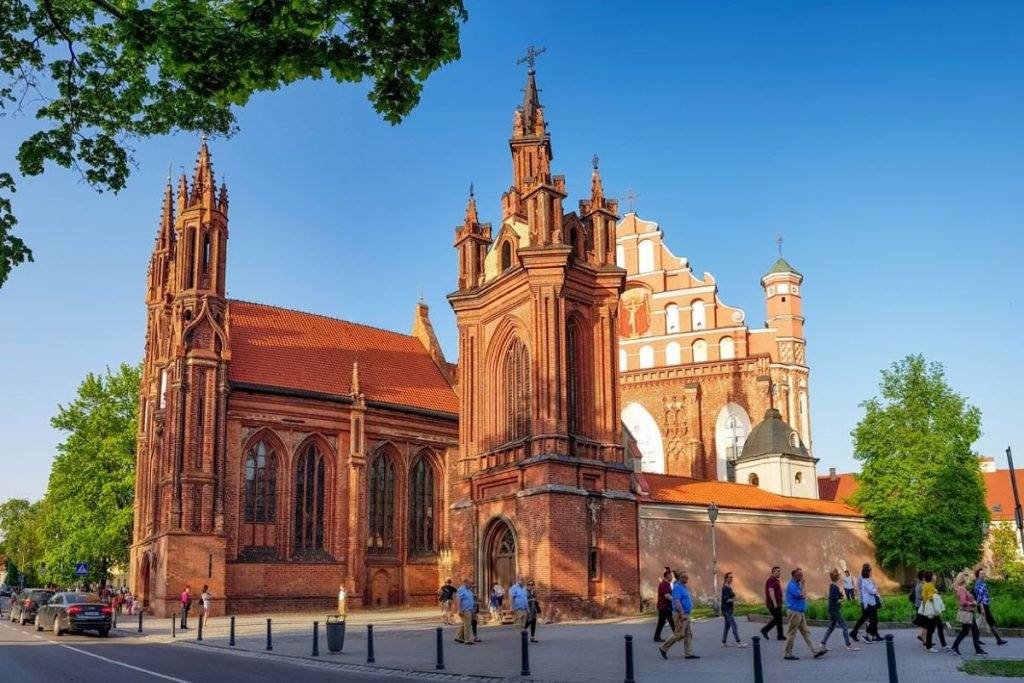
St. Anne’s Church is a stunning example of Gothic architecture and one of the most recognizable landmarks in Vilnius. Built in the late 15th century, its intricate red brick façade, with delicate spires and ornamental details, is often cited as a masterpiece of the Flamboyant Gothic style. The church’s design is so admired that Napoleon Bonaparte allegedly wished to carry it back to Paris “in the palm of his hand.” St. Anne’s Church stands as a symbol of Vilnius’ medieval heritage and architectural brilliance.
- The Gates of Dawn (Ausros Vartai)
The Gates of Dawn is one of the original city gates of Vilnius and is famous for housing the revered icon of the Blessed Virgin Mary, known as the “Vilnius Madonna.” Built in the early 16th century as part of the city’s defensive walls, the gate has become a significant religious site and pilgrimage destination. The chapel above the gate holds the miraculous painting, which is believed to protect the city and its inhabitants. The Gates of Dawn blend history, spirituality, and folklore, making it a unique landmark.
- The Church of St. Peter and St. Paul
This Baroque church, located in the Antakalnis district, is famous for its extravagant interior decoration. Built in the early 17th century, the Church of St. Peter and St. Paul is adorned with over 2,000 stucco figures that cover its walls and ceilings in intricate detail, creating a breathtaking visual experience. The church symbolizes the Baroque era’s artistic exuberance and the Catholic Church’s influence in Lithuania during the Counter-Reformation.
- Vilnius University
Founded in 1579, Vilnius University is one of the oldest and most prestigious universities in Eastern Europe. The university complex includes several historic buildings that showcase Renaissance, Baroque, and Classical architectural styles. The University’s Great Hall is known for its beautiful frescoes, while the botanical garden and library hold valuable historical collections. Vilnius University has played a critical role in the city’s intellectual and cultural development over the centuries.
- The Palace of the Grand Dukes of Lithuania
The reconstructed Palace of the Grand Dukes is a majestic reminder of Lithuania’s grand medieval past. Originally built in the 15th century, the palace was the political and cultural center of the Grand Duchy of Lithuania. Although destroyed in the 19th century, it was meticulously rebuilt and opened to the public in 2018. The palace now serves as a museum, showcasing artifacts and exhibitions about Lithuania’s royal history, statehood, and culture.
- Uzupis District
While Uzupis might not be an ancient landmark in the traditional sense, it is a historical and cultural gem in Vilnius. Declared an independent republic by local artists in 1997, Uzupis is a bohemian neighborhood filled with galleries, sculptures, and unique architecture. It reflects Vilnius’ modern cultural evolution, blending history with creativity and freedom of expression. The Uzupis Constitution, displayed on a wall in multiple languages, adds to the area’s charm and appeal.
- The Vilnius City Wall Remnants
Vilnius was once a fortified city, protected by defensive walls and gates. Although much of the medieval walls were demolished over time, fragments of the city wall and several towers remain, such as the Bastion of the Vilnius Defensive Wall. These remnants offer insight into the city’s military history and urban development during the Middle Ages. Walking along these preserved parts gives visitors a tangible connection to Vilnius’ strategic importance in the region.
- The Bernardine Monastery and Church
Adjacent to Vilnius University and the Vilnius Cathedral, the Bernardine Monastery and Church complex dates back to the early 16th century. The monastery was an important religious, educational, and cultural center during the Grand Duchy era. Its church, combining Gothic and Renaissance styles, contains beautiful frescoes and altars. The complex today hosts cultural events and exhibitions, continuing its legacy as a spiritual and community hub.
Where to stay in Vilnius
- Vilnius Old Town
Ideal for first-time visitors — you’re right in the heart of the historic district, close to major landmarks like Gediminas Tower, Vilnius Cathedral, and St. Anne’s Church. Expect charming cobblestone streets, cozy cafes, and vibrant nightlife. - Uzupis District
For a more artsy, bohemian vibe, stay in Uzupis — Vilnius’ “Republic of Artists.” It’s a creative neighborhood with galleries, quirky shops, and riverside views, perfect if you want a unique, offbeat experience. - Naujamiestis (New Town)
A modern part of the city with trendy restaurants, bars, and shopping centers. It’s close to the Old Town but generally quieter and more spacious.
Things to Do in Vilnius
- Explore Vilnius Old Town
Wander the UNESCO-listed Old Town’s cobblestone streets. Don’t miss landmarks like Gediminas Tower, Vilnius Cathedral, and the quirky Užupis district nearby. - Climb Gediminas Hill
For amazing panoramic views of the city skyline and the Neris River, hike or take the funicular up to Gediminas Tower. - Visit St. Anne’s Church
Marvel at this stunning Gothic masterpiece — a favorite photo spot and a symbol of Vilnius’ medieval architecture.
Day Trips from Vilnius
- Trakai Castle
Only about 30 km west of Vilnius, Trakai is famous for its stunning island castle set on Lake Galve You can tour the medieval castle museum, rent a kayak or paddleboat, and enjoy local Karaim cuisine (try kibinai pastries). It’s perfect for history lovers and nature enthusiasts alike. - Kernavė Archaeological Site
About 35 km northwest, Kernavė is a UNESCO World Heritage site and the ancient capital of the Grand Duchy of Lithuania. Explore the hill forts, archaeological museum, and beautiful river valley scenery. - Kaunas
Lithuania’s second-largest city is about 1.5 hours from Vilnius by train or car. Explore its charming Old Town, modernist architecture, and lively cultural scene.