

Why Travel to Bhutan?
Bhutan is no ordinary destination. It’s the only country in the world that measures success through Gross National Happiness (GNH), not Gross Domestic Product (GDP). This philosophy is deeply embedded in every aspect of life—from governance and environmental conservation to culture and well-being.
As a high-value, low-impact destination, Bhutan caps tourist numbers through a daily tariff system. This ensures that your journey remains intimate, personal, and environmentally sustainable.
A trip to Bhutan is not just about seeing new sights; it’s about experiencing a way of life that’s rooted in simplicity, mindfulness, and profound connection.
Must-Visit Destinations in Bhutan
- Paro: Where Your Journey Begins
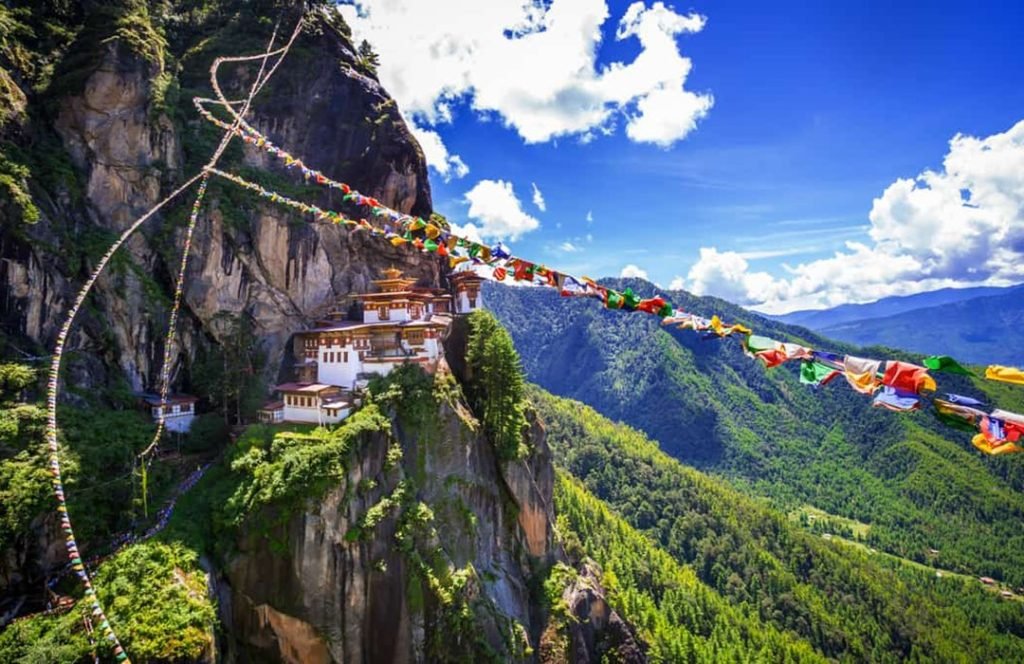
Home to Bhutan’s only international airport, Paro is where most travelers take their first breath of the crisp Himalayan air. But it’s far more than just a gateway. Paro is also the site of Bhutan’s most iconic landmark—Taktsang Monastery, or Tiger’s Nest. Clinging dramatically to a cliff at 3,120 meters, this sacred site offers a rewarding trek and breathtaking views. Legend has it that Guru Rinpoche flew here on the back of a tigress to meditate.
Other highlights in Paro include:
- Rinpung Dzong – An architectural marvel and fortress-monastery
- National Museum of Bhutan – Housing ancient artifacts and Thangka paintings
- Kyichu Lhakhang – One of Bhutan’s oldest and most sacred temples
- Thimphu: The Capital with No Traffic Lights
Bhutan’s capital city, Thimphu, is a delightful contradiction: modern yet traditional, vibrant yet peaceful. You won’t find any traffic lights here—just white-gloved policemen guiding cars with elegance.
Explore:
- Memorial Chorten – A spiritual stupa where locals gather for prayer
- Tashichho Dzong – The seat of the Bhutanese government and a royal residence
- Buddha Dordenma – A towering golden statue overlooking the valley
- Weekend Market – A colorful place to mingle and shop for local produce and crafts
Thimphu also offers cozy cafés, local handicraft stores, and even archery competitions—the national sport of Bhutan.
- Punakha: Valley of Fertility
Once the capital of Bhutan, Punakha is famed for its fertile valleys, subtropical climate, and the majestic Punakha Dzong—often considered the most beautiful dzong in the country. It sits at the confluence of the Pho Chhu (male) and Mo Chhu (female) rivers.
Don’t miss:
- Chimi Lhakhang – The “Fertility Temple” built in honor of the Divine Madman, a beloved Buddhist saint known for his unconventional teachings
- Suspension Bridge – One of the longest in Bhutan, offering scenic views and fluttering prayer flags
- Rafting Tours – Gentle whitewater rafting along Punakha’s rivers
- Bumthang: The Spiritual Heartland
Bumthang, a collection of four valleys—Chokhor, Tang, Ura, and Chhume—is Bhutan’s spiritual heart. It is rich in ancient monasteries, sacred sites, and legends of Guru Rinpoche.
Top experiences:
- Jakar Dzong – A fortress of white walls and panoramic views
- Kurje Lhakhang – Where Guru Rinpoche left his body imprint
- Local Farmhouses – Savor authentic Bhutanese cuisine and apple brandy with locals
What to Do in Bhutan
- Trek the Himalayas
Bhutan offers some of the most pristine and off-the-beaten-path treks in the world. Popular routes include:
- Druk Path Trek – A moderate 6-day journey connecting Paro and Thimphu
- Jomolhari Trek – For seasoned hikers, this trail takes you to the base of Mount Jomolhari (7,326m)
- Snowman Trek – Notoriously one of the toughest treks on Earth, reserved for true adventurers
- Embrace Bhutanese Festivals
Time your trip to coincide with a Tshechu, a traditional Buddhist festival marked by masked dances, music, and colorful pageantry. The Paro Tshechu and Thimphu Tshechu are among the most popular, held annually in spring and autumn.
These festivals aren’t just performances—they are spiritual expressions deeply rooted in Bhutanese culture. Travelers are not just observers; they are welcomed into the vibrant celebration.
- Try Authentic Bhutanese Cuisine
Bhutanese food is flavorful, hearty, and spicy. Don’t leave without trying:
- Ema Datshi – A fiery stew of chili peppers and cheese, Bhutan’s national dish
- Red rice – A nutty and nutritious staple
- Momos – Delicious Himalayan dumplings
- Suja – Traditional butter tea, an acquired but comforting taste
Most meals are locally sourced and organically grown, in line with Bhutan’s commitment to sustainability.
Practical Tips for Visiting Bhutan
- Visa and Travel Requirements
All international travelers (except from India, Bangladesh, and the Maldives) must book their trip through a licensed Bhutanese tour operator or international partner. You’ll need a visa, and a daily Sustainable Development Fee (SDF) applies—currently USD $100 per day as of 2024. This includes accommodation, transport, a licensed guide, meals, and entry fees.
- Best Time to Visit
- Spring (March to May) – Ideal for rhododendron blooms and clear skies
- Autumn (September to November) – Perfect weather and vibrant festivals
- Winter (December to February) – Fewer crowds and snow-dusted landscapes
- Summer (June to August) – Green valleys and quieter trails, but occasional monsoons
- What to Pack
Bhutan’s climate varies with altitude, so pack in layers. Essentials include:
- Comfortable hiking shoes
- Warm jackets and rain gear
- Modest clothing for temple visits
- Sunglasses, sunscreen, and reusable water bottles
Sustainable Tourism in Bhutan
Bhutan takes conservation seriously—over 70% of the country is forested, and it’s one of the few carbon-negative nations in the world. The Sustainable Development Fee you pay contributes directly to preserving this environment, supporting local communities, and maintaining cultural heritage.