
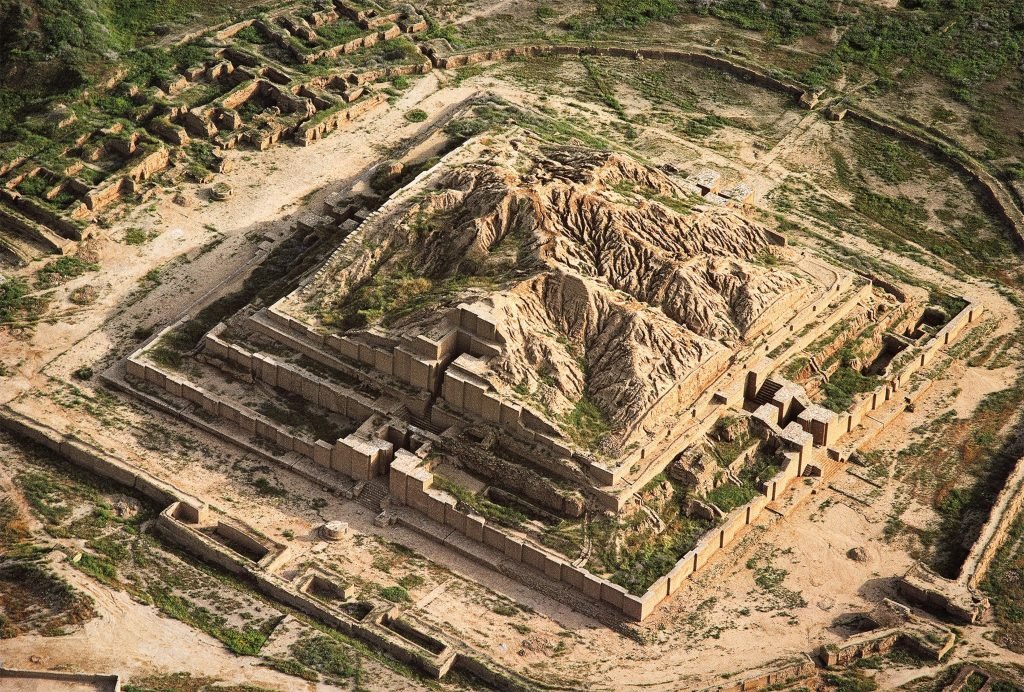

- Persepolis: The Jewel of the Achaemenid Empire
Let’s begin with Persepolis, arguably Iran’s most famous archaeological site. Located near Shiraz in southern Iran, Persepolis was the ceremonial capital of the Achaemenid Empire, founded by Darius the Great around 518 BC. This UNESCO World Heritage Site is a breathtaking example of ancient Persian architecture and power.
As you walk up the grand stairways and gaze at the towering columns of the Apadana Palace, you’ll feel the grandeur of an empire that once ruled much of the known world. The detailed stone reliefs depicting representatives of various nations bringing gifts to the Persian king reflect the cosmopolitan nature of the Achaemenid court.
Don’t miss: The Gate of All Nations, the Throne Hall, and the royal tombs carved into the nearby mountains.
- Naqsh-e Jahan Square: The Heart of Isfahan
A true masterpiece of Islamic architecture, Naqsh-e Jahan Square (Imam Square) is the beating heart of Isfahan. Built during the Safavid dynasty in the early 17th century, it’s one of the largest city squares in the world and another UNESCO World Heritage Site.
Surrounded by some of the most stunning architectural wonders in Iran—including the Shah Mosque, Sheikh Lotfollah Mosque, Ali Qapu Palace, and the historic Qeysarie Bazaar—the square is a living, breathing museum of Persian-Islamic art and urban design.
Travel Express Tip: Visit during golden hour to capture magical photos as the sunlight dances across the turquoise tiles.
- Pasargadae: The Tomb of Cyrus the Great
Before there was Persepolis, there was Pasargadae, the first dynastic capital of the Achaemenid Empire. Here lies the tomb of Cyrus the Great, the revered founder of the Persian Empire, whose respect for diversity and human rights is legendary in world history.
Though not as grand as Persepolis, the simplicity and symbolism of the tomb, standing alone on a vast plain, evoke a powerful sense of awe and reverence.
Why it matters: Cyrus the Great was the author of one of the first known declarations of human rights—the Cyrus Cylinder—making his final resting place a spiritual and philosophical landmark.
- Golestan Palace: The Qajar Opulence in Tehran
Situated in the heart of modern Tehran, the Golestan Palace is a vibrant blend of Persian tradition and European elegance. This 19th-century royal complex was the seat of the Qajar dynasty and is now a UNESCO-listed site brimming with colorful tiles, mirrored halls, and lush gardens.
Don’t let the modern city surroundings fool you—inside the walls of Golestan, you’ll find ornate throne rooms, exquisite halls used for royal ceremonies, and museums displaying Qajar-era art and artifacts.
Must-see: The Mirror Hall (Talar-e Ayeneh), where reflections seem to multiply the royal splendor a hundredfold.
- Yazd: The City of Windcatchers and Zoroastrian Legacy
Nestled in the desert, Yazd is one of Iran’s oldest continuously inhabited cities. Recognized by UNESCO, this city is famed for its badgirs (windcatchers), mudbrick architecture, and strong Zoroastrian heritage.
Explore the Towers of Silence, where Zoroastrians once carried out sky burials, and visit the Fire Temple, where a flame said to have been burning for over 1,500 years still flickers today.
Wandering the winding alleys of Yazd’s old town feels like stepping into a time capsule, where the rhythms of life continue much as they have for centuries.
- Bam Citadel: A Desert Fortress Reborn
In the southeastern desert lies Arg-e Bam, the world’s largest adobe structure. This ancient citadel dates back at least 2,000 years and was once a key stop along the Silk Road. Tragically, much of Bam was destroyed by a massive earthquake in 2003, but ongoing restoration efforts have brought new life to this architectural marvel.
Walking through its walls, towers, and ruins, you can still imagine the bustling markets, palaces, and soldiers that once filled this desert fortress.
Insider Tip: Visit early in the morning or near sunset to experience the full magic of the desert light on the mudbrick walls.
- Shushtar Historical Hydraulic System: Engineering Wonder of the Ancient World
Iran isn’t just about palaces and temples—it also boasts one of the most impressive feats of ancient engineering: the Shushtar Historical Hydraulic System. Built during the Sassanid era, this complex of dams, canals, tunnels, and watermills was designed to manage water in the arid Khuzestan region.
This UNESCO-listed marvel is not only an example of ancient ingenuity but also a beautiful and tranquil site that surprises many travelers.
What to do: Take a stroll along the water channels and visit the nearby Salasel Castle and mills for a deeper understanding of the site’s complexity.
- Takht-e Soleyman: Fire and Water in the Mountains
Located in northwestern Iran, Takht-e Soleyman (“Throne of Solomon”) is a mystical site blending natural beauty with spiritual significance. This UNESCO-listed archaeological site was a sacred Zoroastrian temple complex, built around a deep volcanic lake.
With remnants of fire temples and Sassanid palaces, this remote mountaintop sanctuary offers insight into Iran’s pre-Islamic religions and cosmology.
Fun Fact: According to legend, this was the birthplace of King Solomon’s wisdom, and the mysterious lake is said to have no bottom!
- Bisotun Inscription: Iran’s Rosetta Stone
Carved into a limestone cliff in western Iran, the Bisotun Inscription is one of the most important multilingual texts from the ancient world. Commissioned by Darius the Great in the 5th century BC, the massive relief and inscriptions recount his rise to power in Old Persian, Elamite, and Babylonian.
Like the Rosetta Stone, it was key in deciphering cuneiform script, unlocking the secrets of Mesopotamian languages for modern scholars.
Recommended for: Serious history lovers, archaeology fans, and anyone fascinated by ancient writing systems.
- The Armenian Monastic Ensembles: Hidden Christian Heritage
In the remote mountains of northwest Iran lie some of the oldest and most beautiful Christian monuments in the Middle East: the Armenian Monastic Ensembles of Iran, including St. Thaddeus, St. Stepanos, and the Chapel of Dzordzor. These UNESCO-listed monasteries date back as far as the 7th century and showcase a fusion of Armenian and Persian architectural styles.
Surrounded by rugged landscapes, these churches offer a glimpse into Iran’s rich religious diversity and centuries of peaceful coexistence.
Don’t miss: The annual pilgrimage of Armenian Christians to St. Thaddeus Monastery—an unforgettable cultural experience.
Why Iran Should Be on Your Travel Bucket List
Iran isn’t just a destination—it’s a journey through time. Its historical sites are not only visually stunning but also deeply meaningful, each telling a story that connects the past with the present. Whether you’re marveling at the tilework of a Safavid mosque, contemplating the philosophy of Cyrus the Great, or wandering through a 2,500-year-old city, Iran invites you to experience human history on an epic scale.
Here at Travel Express, we believe that the most rewarding travel experiences are those that connect you with a deeper understanding of the world. Iran offers that connection in abundance.
Final Travel Tips
- Visa: Many nationalities can now get visas more easily, but check the latest requirements before you go.
- Dress code: Modest dress is expected. For women, that includes a headscarf and loose-fitting clothing.
- Currency: The Iranian Rial is used, but bring cash—international credit cards are not accepted.
- Local hospitality: Iranians are renowned for their warmth and generosity—don’t be surprised if you’re invited for tea (or even dinner!).