
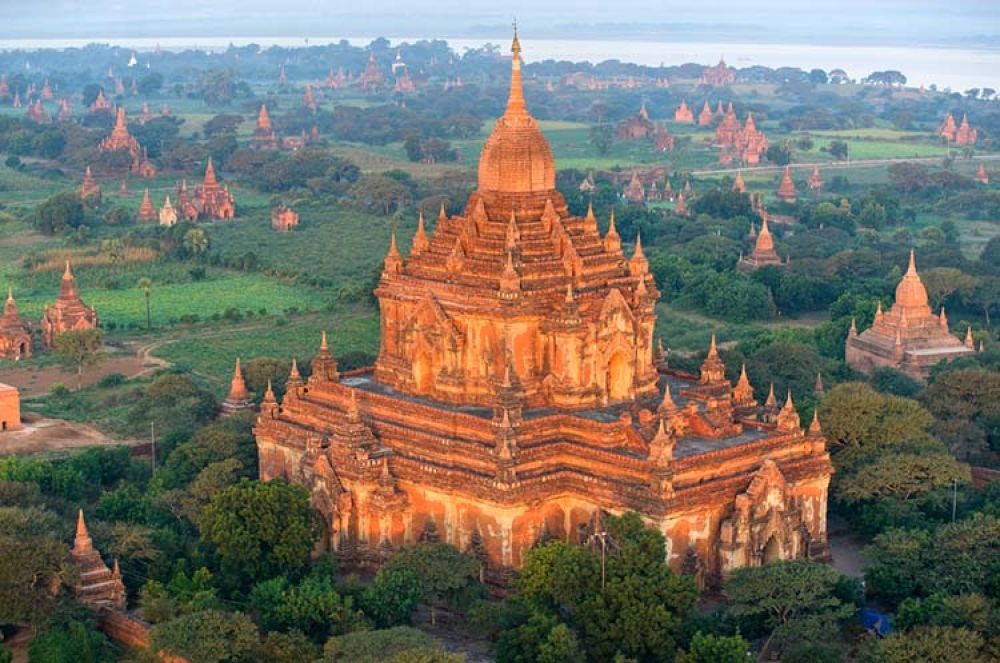

🌅 A Glimpse into Bagan’s History
Bagan was the capital of the Pagan Kingdom from the 9th to the 13th century, a time when Myanmar flourished culturally, spiritually, and economically. During its golden age, more than 10,000 religious structures were built across a 40-square-mile area. Although many have succumbed to time and earthquakes, around 2,200 temples and pagodas still stand—each whispering ancient tales.
Recognized as a UNESCO World Heritage Site in 2019, Bagan is more than a historic site—it’s a spiritual landscape, with the Irrawaddy River flowing to its west and majestic sunsets painting the sky daily.
📍 Top 10 Temples to Visit in Bagan
Let’s dive into the must-visit temples that define Bagan’s beauty and soul:
- Ananda Temple
- Built: 1105 AD
- Style: Mon and Indian architectural fusion
- Highlights: Four standing Buddhas facing cardinal directions, golden spire, and well-preserved murals.
Often referred to as the “Westminster Abbey of Myanmar,” Ananda Temple is arguably Bagan’s most beautiful temple. Its pristine white façade and golden top are dazzling at sunrise and sunset.
- Shwezigon Pagoda
- Built: 11th century
- Style: Bell-shaped stupa; prototype for Burmese pagodas
- Highlights: Gold-plated exterior, holy relics, and spiritual ambiance.
Shwezigon is still an active religious site. It’s said to house a bone and tooth of Gautama Buddha himself.
- Dhammayangyi Temple
- Built: 12th century
- Style: Pyramid-like, massive red brick construction
- Highlights: Mysterious corridors, tight brickwork, and eerie aura.
The largest temple in Bagan, Dhammayangyi is often dubbed the “Haunted Temple” due to its unfinished interior and dark legends surrounding its creator, King Narathu.
- Sulamani Temple
- Built: 1183 AD
- Style: Refined and symmetrical
- Highlights: Interior murals, fine brickwork, and serene energy.
It’s a favorite for those looking for both architectural elegance and spiritual calm.
- Thatbyinnyu Temple
- Built: 12th century
- Style: Tall, slender design
- Highlights: Tallest structure in Bagan (66 meters), panoramic views.
Its name means “Omniscience,” symbolizing Buddha’s all-knowing wisdom. Once allowed to climb, this temple now offers splendid views from its base.
- Htilominlo Temple
- Built: 1218 AD
- Style: Red brick with ornate plaster
- Highlights: Intricate stucco carvings, large Buddha statues.
Named after King Htilominlo, this temple showcases Bagan’s transition to more refined, sophisticated architecture.
- Gubyaukgyi (Myinkaba)
- Built: 1113 AD
- Style: Indian influence
- Highlights: Ancient murals in original pigments, inscriptions in Pali.
One of the few temples where you can still see 800-year-old paintings, offering rare insight into Bagan’s ancient lifestyle and Buddhist teachings.
- Lawkananda Pagoda
- Built: 1059 AD
- Style: River-facing stupa
- Highlights: Riverside sunsets, local pilgrims, relic of Buddha’s tooth.
Located on the Irrawaddy River bank, this pagoda combines natural beauty and religious significance.
- Mingalazedi Pagoda
- Built: 1284 AD
- Style: Terraced, with glazed tiles
- Highlights: Last great pagoda built before Mongol invasions, perfect symmetry.
It marked the end of Bagan’s classical temple era—an architectural swan song.
- Bu Paya Pagoda
- Built: Pre-11th century (rebuilt)
- Style: Gourd-shaped, gilded structure
- Highlights: River views, unique design, relaxing vibe.
Destroyed in the 1975 earthquake and rebuilt in modern style, it still remains an iconic riverside landmark.
🛵 Getting Around: How to Explore the Bagan Temples
Navigating Bagan is half the adventure. Here are your options:
🚲 Electric Bikes (E-Bikes)
The most popular and convenient way to explore. Rent one for around $5–$8 per day. Eco-friendly, nimble, and fun!
🐎 Horse Carts
Old-fashioned and charming, ideal for a romantic sunset ride. Negotiate prices beforehand.
🚗 Private Car & Guide
Great if you want historical depth with comfort. Prices vary depending on itinerary and time.
🚶 On Foot or Bicycle
Best for temple clusters. Keep water and a map handy.
📅 Best Time to Visit Bagan
✅ High Season (November to February)
- Cool temperatures, clear skies
- Peak tourist season—book accommodations early!
⚠️ Shoulder Season (March to May)
- Very hot (above 40°C) but fewer tourists
🌧️ Monsoon Season (June to October)
- Fewer crowds, lush landscapes
- Rain can affect access to dirt paths and lesser-known temples
📸 Best Temples for Sunrise & Sunset
Sunrise Spots
- Nyaung Lat Phet Viewing Mound
- Sulamani Temple area
- Lawkaoushaung Temple (if open)
Sunset Spots
- Shwesandaw Pagoda (viewing mound nearby due to climbing restrictions)
- Bu Paya (riverside sunset)
- Taung Guni Temple (check access)
Climbing is now restricted in most temples to preserve their structure. Designated viewing mounds are now the go-to for those iconic sunrise shots.
🙏 Temple Etiquette & Cultural Tips
Bagan is not just a tourist site—it’s a sacred space for many. Respect local customs:
- Dress modestly: Cover shoulders and knees.
- No shoes or socks inside temple compounds.
- Be respectful of monks and locals praying.
- Don’t climb temples unless signs explicitly allow.
- No drones without special permission.
🏨 Where to Stay in Bagan
There are three main areas to base yourself:
🏙️ Old Bagan
Closest to major temples, more upscale hotels, fewer budget options.
🏞️ New Bagan
Laid-back vibe, mid-range guesthouses and restaurants.
🛍️ Nyaung-U
Budget-friendly, local markets, and great street food.
🍜 What to Eat in Bagan
You’ll find Burmese cuisine with Indian and Chinese influences.
- Tea Leaf Salad (Lahpet Thoke) – a zesty, crunchy must-try!
- Shan Noodles – light and flavorful, served with pickles.
- Mohinga – rice noodle fish soup, Myanmar’s national dish.
For a romantic dinner with temple views, try The Moon (2) – Be Kind to Animals, a vegetarian gem in New Bagan.
🧭 Hidden Gems Worth Discovering
Beyond the top 10, consider exploring these lesser-known temples:
- Pyathada Pagoda – once climbable, still majestic and quiet.
- Tuyin Taung – a solitary hilltop temple with great views.
- Manuha Temple – known for its reclining Buddha and tight interior, symbolizing suffering.
🎈 Hot Air Ballooning Over Bagan
This is the bucket-list experience of Bagan. Float above misty temple spires as the sun rises—an unforgettable panorama.
- Operates: October to March
- Cost: Around $300–$400 per person
- Top companies: Balloon Over Bagan, Oriental Ballooning
Book early—slots fill up fast!
✈️ How to Get to Bagan
- By Air: Daily flights from Yangon, Mandalay, and Heho to Nyaung-U Airport.
- By Bus: Overnight buses from Yangon or Inle Lake (budget-friendly but long).
- By Boat: A scenic cruise from Mandalay (available in dry season).
🧳 Final Tips Before You Go
- Bring cash—ATMs are available, but not always reliable.
- Carry a flashlight—temples can be dark inside.
- Download Maps.me or Google Maps offline—to navigate easily.
- Don’t try to “see it all” in one day—slow travel wins in Bagan.
- Respect the silence—some of Bagan’s most powerful moments come in stillness.
🗺️ Ready to Explore Bagan?
Bagan is not just a place to check off your list—it’s a place to feel, to breathe history, and to connect with something ancient yet alive. Let Travel Express be your guide to this spellbinding wonderland. Whether you’re gazing at golden stupas or meditating in a centuries-old shrine, Bagan promises memories that will linger long after you leave.
Pack your curiosity. Charge your camera. And let Bagan’s temples whisper their stories to you.