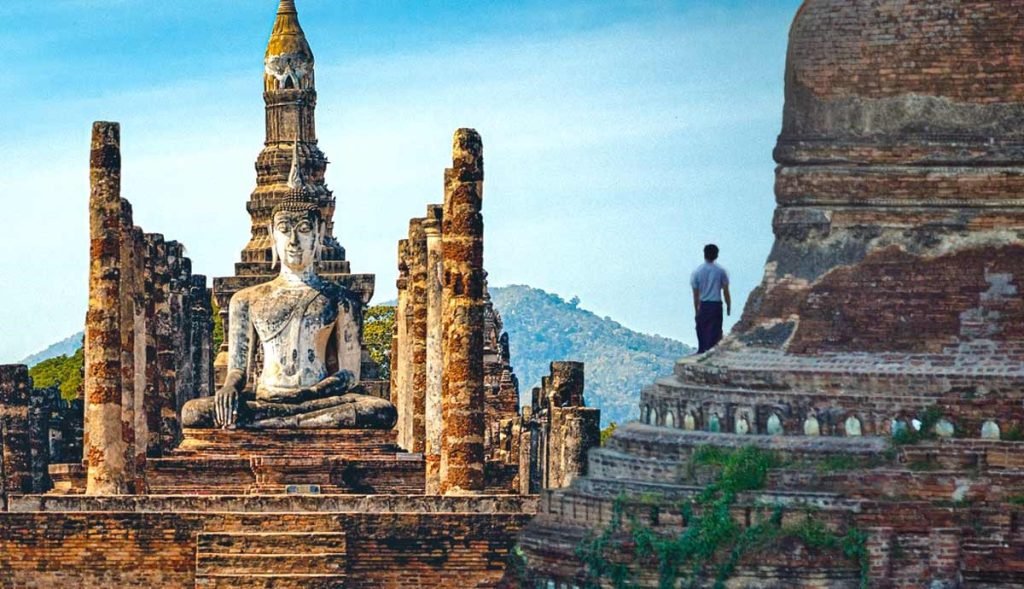

UNESCO sites in Asia
Introduction
Asia is the largest and most populous continent on Earth, known for its vast diversity in cultures, languages, landscapes, and history. It is home to major civilizations like China, India, and the Middle East, each contributing rich traditions, religions, and innovations. From the high peaks of the Himalayas to tropical beaches in Southeast Asia, the continent offers incredible natural beauty. Economically, Asia includes some of the world’s fastest-growing economies, such as China, India, and South Korea. Its mix of ancient heritage and modern development makes Asia a fascinating and dynamic region.
- Angkor, Cambodia
The sprawling temple complex of Angkor is one of Southeast Asia’s most significant archaeological sites. Once the capital of the Khmer Empire (9th to 15th centuries), Angkor is home to the magnificent Angkor What, the world’s largest religious structure, and other iconic sites like Bayon Temple with its serene stone faces and Ta Prohm, entwined with roots and vines. The architecture reflects the empire’s spiritual devotion and mastery in stone craftsmanship. Sunrise visits offer a breathtaking view of Angkor Wat emerging from the mist.
- Great Wall of China, China
Stretching over 21,000 kilometers, the Great Wall of China is one of the world’s most iconic human-made structures. Originally built to defend China from northern invasions, it dates back to the 7th century BC, though much of what remains today was constructed during the Ming Dynasty (1368–1644). The Wall spans mountains, deserts, and plateaus, offering not just historical significance but also panoramic views. Popular sections include Badaling, Mutianyu, and the wild, less restored Jiankou.
- Taj Mahal, India
A symbol of eternal love, the Taj Mahal in Agra was commissioned in 1632 by Mughal emperor Shah Jahan in memory of his wife Mumtaz Mahal. This white marble mausoleum is an architectural masterpiece that fuses Persian, Islamic, and Indian styles. With its perfect symmetry, reflecting pool, and intricate inlays of precious stones, it’s widely considered one of the most beautiful buildings in the world. A UNESCO site since 1983, it continues to captivate millions of visitors annually.
- Borobudur Temple Compounds, Indonesia
The largest Buddhist temple in the world, Borobudur is located on the island of Java. Built in the 8th and 9th centuries during the Syailendra Dynasty, the temple consists of nine stacked platforms topped by a central dome. Decorated with over 2,600 relief panels and 500 Buddha statues, it narrates Buddhist teachings and the journey to enlightenment. Sunrise tours reveal Borobudur shrouded in morning mist, offering a peaceful and spiritual experience.
- Historic Centre of Bukhara, Uzbekistan
A key stop along the ancient Silk Road, the city of Bukhara is a living museum of Islamic architecture and Central Asian heritage. With over 140 preserved monuments, including the Kalyan Minaret, Ark Citadel, and Lyabi-Hauz ensemble, Bukhara reflects centuries of religious, cultural, and educational activity. Declared a World Heritage Site in 1993, it offers a glimpse into a time when it was one of the Islamic world’s great learning centers.
- Petra, Jordan
Although located in the Middle East, Jordan is geographically part of Western Asia. Petra, often called the “Rose City,” is a marvel of rock-cut architecture. Built by the Nabataeans in the 3rd century BC, the city thrived as a trade hub. Its most iconic structure is Al-Khazneh (The Treasury), a tomb carved into a sandstone cliff. Visitors enter Petra via the narrow Siq, a natural canyon, culminating in a dramatic reveal of the Treasury—one of the most photographed sites in the world.
- Historic Monuments of Ancient Kyoto, Japan
Kyoto, the former imperial capital of Japan, preserves the spirit of traditional Japan through its temples, shrines, and gardens. Seventeen locations across Kyoto, Uji, and Otsu were collectively designated as UNESCO World Heritage Sites in 1994. Notable among them are Kiyomizu-dera, Kinkaku-ji (Golden Pavilion), and Ryoan-ji, famous for its Zen rock garden. These monuments represent Japanese aesthetic and spiritual ideals developed over more than a millennium.
- Hạ Long Bay, Vietnam
Located in northeast Vietnam, Hạ Long Bay is a stunning natural heritage site known for its emerald waters and thousands of limestone karsts and islets. The bay’s name means “Descending Dragon,” derived from local legends. The dramatic seascape has been shaped by over 500 million years of geological evolution. Activities such as kayaking, cave exploration, and overnight cruises allow visitors to fully appreciate the bay’s surreal beauty. It’s been a UNESCO site since 1994.
- Historic Areas of Istanbul, Turkey
Bridging Europe and Asia, Istanbul is a city of cultural fusion. The Historic Areas of Istanbul include landmarks like Hagia Sophia, Blue Mosque, Topkapi Palace, and the Hippodrome. These sites reflect the city’s transformation from Byzantium to Constantinople to modern-day Istanbul. Blending Roman, Byzantine, and Ottoman influences, these monuments tell the story of a city that has shaped empires and religions. Istanbul’s skyline, marked by domes and minarets, is unforgettable.
- Ancient City of Sigiriya, Sri Lanka
Also known as the Lion Rock, Sigiriya is a dramatic rock fortress rising 200 meters above the jungle. In the 5th century AD, King Kashyapa transformed the rock into his royal citadel. A massive pair of lion’s paws guards the entrance to the summit. The site includes frescoes, mirror walls, and sophisticated water gardens below. Recognized by UNESCO in 1982, Sigiriya is a fusion of natural wonder and ancient engineering, offering sweeping views and a sense of awe.
Where to stay in Asia
- Japan – Modern Meets Traditional
- Best for: Families, solo travelers, cultural explorers
- Cities to Stay: Tokyo (Shinjuku, Asakusa), Kyoto (Gion, Arashiyama), Osaka (Namba)
- Types of Accommodation:
- Ryokans (traditional Japanese inns) for cultural immersion
- Capsule hotels for budget solo travel
- Mid-range hotels with family rooms
- Airbnb options for longer stays
- Thailand – Budget-Friendly and Beachy
- Best for: Backpackers, families, beach lovers
- Cities to Stay: Bangkok (Sukhumvit, Silom), Chiang Mai (Old City), Phuket, Krabi, Koh Samui
- Types of Accommodation:
- Guesthouses and hostels (especially in Chiang Mai)
- Beach resorts with pools and kids’ clubs
- Boutique hotels and eco-lodges
- Affordable luxury resorts
- Indonesia – Island Getaways
- Best for: Couples, spiritual travelers, surfers
- Cities/Islands to Stay: Bali (Ubud, Canggu, Seminyak), Lombok, Gili Islands
- Types of Accommodation:
- Private villas with pools
- Yoga retreats and wellness resorts
- Budget bungalows near the beach
- Eco-resorts for a sustainable stay
Things to do in Asia
- Visit the Great Wall of China (China)
Walk along one of the world’s most iconic landmarks. The Great Wall stretches over 13,000 miles and offers stunning views, especially from sections like Mutianyu or Jinshanling.
- Explore Ancient Temples in Angkor Wat (Cambodia)
Wander through the majestic ruins of Angkor Wat, a UNESCO World Heritage Site, and one of the largest religious monuments in the world. Sunrise over the temple is a must-see.
- Experience a Japanese Tea Ceremony (Japan)
Take part in a traditional tea ceremony in Kyoto, where elegance, mindfulness, and culture combine. It’s a serene way to experience Japanese hospitality and history.
Day trip from Asia
🇯🇵 From Tokyo, Japan: Hakone
- What to Do: Hot springs (onsen), Lake Ashi boat rides, views of Mt. Fuji, Hakone Open-Air Museum
- Travel Time: ~1.5 hours by train
- Why Go: A relaxing nature escape from Tokyo with classic Japanese scenery.
🇹🇭 From Bangkok, Thailand: Ayutthaya
- What to Do: Explore ancient temples and ruins, bike around the historic park, river cruise
- Travel Time: ~1 hour by train or car
- Why Go: A glimpse into Thailand’s former capital and royal heritage.
🇻🇳 From Hanoi, Vietnam: Ninh Binh
- What to Do: Boat rides through Tam Coc, hike to Mua Cave, visit ancient temples and limestone karsts
- Travel Time: ~2 hours by car
- Why Go: A scenic, peaceful alternative to the touristier Ha Long Bay.