
Introduction
Antarctica is Earth’s southernmost continent, located around the South Pole. It’s the coldest, windiest, and driest continent, covered almost entirely by ice. Despite its harsh conditions, Antarctica is home to unique wildlife like penguins, seals, and whales. It’s a place of scientific research, pristine natural beauty, and extreme adventure, attracting explorers and scientists from around the world.
The Franklin Expedition (1845-1848)
One of the most famous and tragic Arctic expeditions was led by Sir John Franklin in 1845. His mission was to chart and navigate the Northwest Passage, a sea route connecting the Atlantic and Pacific Oceans through the Arctic Archipelago of Canada. Franklin’s expedition consisted of two ships, HMS Erebus and HMS Terror, with 129 men aboard. Unfortunately, the ships became icebound, and the entire crew perished under mysterious circumstances. Despite the tragedy, the expedition spurred numerous search missions and ultimately expanded knowledge of the Arctic region.
Fridtjof Nansen’s Fram Expedition (1893-1896)
Norwegian explorer Fridtjof Nansen undertook an innovative expedition aboard the specially designed ship Fram, intending to drift with the Arctic ice pack to reach the North Pole. Nansen believed the ice would carry his ship across the pole, allowing for scientific observations and exploration. Although he didn’t reach the North Pole itself, the expedition made groundbreaking contributions to Arctic oceanography and demonstrated the feasibility of prolonged Arctic travel. Nansen’s journey inspired future polar explorers and deepened understanding of ice dynamics.
Robert Peary’s North Pole Claim (1909)
American explorer Robert Peary is often credited with being the first person to reach the North Pole. His 1909 expedition was meticulously planned with dog sled teams and Inuit guides. Despite controversies over the accuracy of his claim, Peary’s journey marked a significant milestone in polar exploration. He successfully demonstrated the potential of combining indigenous knowledge with modern techniques to navigate the harsh Arctic environment, opening the door for subsequent expeditions to the top of the world.
Roald Amundsen’s Arctic Air Expedition (1925)
Roald Amundsen, the famed Norwegian explorer who first reached the South Pole, also made a bold attempt to conquer the Arctic by air. In 1925, Amundsen, along with Lincoln Ellsworth and Umberto Nobile, flew over parts of the Arctic using the airship Norge. This expedition was one of the first to cross the Arctic by air and provided valuable aerial reconnaissance of the region. It showcased the potential of aviation in polar exploration, allowing access to otherwise unreachable areas and marking a new era of Arctic expeditions.
The Maud Expedition (1918-1925)
Led again by Roald Amundsen, the Maud expedition was a long-term scientific endeavor to drift across the Arctic Ocean in a specially designed ship. Unlike Nansen’s Fram expedition, which aimed for the North Pole, the Maud focused on studying Arctic ocean currents and weather patterns over several years. Though it faced challenges and took longer than anticipated, the expedition gathered important scientific data that improved understanding of Arctic climatology and geography, influencing future research strategies in the polar regions.
The Soviet North Pole Drifting Stations (1937-Present)
Starting in 1937, the Soviet Union pioneered the use of drifting ice stations — temporary research bases set up on large ice floes that drift across the Arctic Ocean. These stations, beginning with North Pole-1, allowed continuous scientific study of the Arctic’s atmosphere, sea ice, and ecosystems. The concept of drifting stations became a hallmark of Soviet and later Russian polar research, greatly expanding long-term data collection capabilities in the Arctic and contributing to climate science, oceanography, and meteorology.
Sir Wally Herbert’s 1968-1969 Trans-Arctic Expedition
Sir Wally Herbert led the first confirmed surface crossing of the Arctic Ocean from Alaska to Spitsbergen between 1968 and 1969. Using dog sleds, skis, and boats, Herbert and his team endured extreme cold, shifting ice, and polar bears, covering over 2,000 miles in more than a year. This feat of endurance and navigation demonstrated the possibilities of traversing the Arctic’s vast ice sheet, providing valuable information about ice conditions and survival techniques critical for future explorers and scientists.
The MOSAiC Expedition (2019-2020)
The most ambitious recent Arctic expedition is the Multidisciplinary drifting Observatory for the Study of Arctic Climate (MOSAiC), launched in 2019. An international team of scientists aboard the German research icebreaker Polarstern deliberately froze the ship into the Arctic ice to drift for a full year. This unprecedented mission collected extensive data on sea ice, weather patterns, oceanography, and ecosystems, providing critical insights into the rapid changes occurring due to climate change. MOSAiC stands as a milestone in collaborative polar research with global implications.
The Longyearbyen to North Pole Ski Expeditions
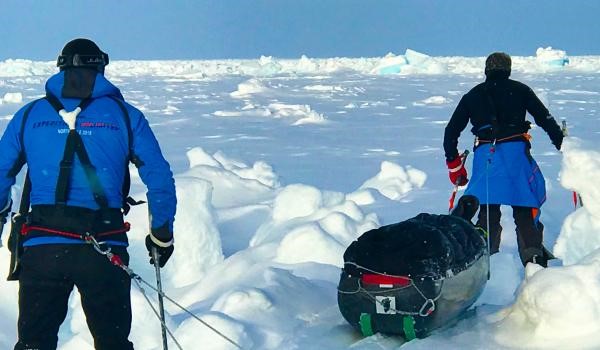
In recent decades, ski expeditions from Longyearbyen (Svalbard) to the North Pole have become popular among adventurers and researchers alike. These journeys, often spanning several weeks, involve skiing over shifting sea ice and enduring brutal Arctic weather. Such expeditions test human endurance and survival skills while providing opportunities to study ice conditions and Arctic wildlife firsthand. They symbolize the enduring allure of the Arctic for exploration and personal challenge in the modern era.
Modern Technological Arctic Expeditions
Today, Arctic expeditions increasingly utilize advanced technology such as satellite navigation, drones, icebreakers, and remotely operated underwater vehicles (ROVs). These tools allow scientists and explorers to map the seafloor, monitor ice thickness, and study marine life in ways previously impossible. Modern expeditions focus not only on exploration but also on urgent scientific research related to climate change, pollution, and conservation. They continue the legacy of historic Arctic voyages while addressing pressing global challenges.
Where to Stay in Antarctica
- Research Stations
The most permanent “accommodations” in Antarctica are the scientific research stations operated by various countries. These facilities house scientists and support staff year-round, but they generally don’t accept tourists overnight. However, some expeditions include brief visits to these stations where visitors can learn about research and life in Antarctica. - Expedition Cruises
The most common way tourists “stay” in Antarctica is on board expedition cruise ships. These vessels serve as both transport and accommodation, offering cabins with varying levels of comfort—from cozy shared rooms to luxury suites. Cruises range from basic to high-end, often featuring expert guides, naturalists, and even zodiac boats for landing on shore. - Icebreaker Ships
Some tours use icebreaker ships capable of navigating thicker sea ice to reach more remote parts of Antarctica. These ships also have onboard cabins and facilities similar to cruise ships but with a stronger focus on exploration and adventure.
Things to Do in Antarctica
- Wildlife Watching
Antarctica is famous for its unique wildlife. You can observe penguins (like Adélie, Gentoo, and Emperor), seals (such as Weddell and leopard seals), whales (including orcas and humpbacks), and a variety of seabirds. Wildlife is most active during the summer months, making it an unforgettable experience. - Zodiac Boat Excursions
Small inflatable boats called Zodiacs allow visitors to get close to icebergs, glaciers, and wildlife along the coast. These excursions offer a thrilling and intimate way to explore areas that larger ships can’t access. - Kayaking
For the more adventurous, kayaking among the ice floes and around pristine shorelines offers a unique perspective on Antarctica’s icy wilderness. Guided tours provide safety and help you
Day trip from Antarctica
- Zodiac Landings
Most Antarctic cruises include multiple short day trips using Zodiac boats to land on the continent or nearby islands. These landings let you explore wildlife colonies, glaciers, and historic sites for a few hours before returning to the ship. - Hiking Excursions
During these day landings, guided hikes on the ice or rocky shorelines allow visitors to experience Antarctica’s terrain safely. - Visits to Research Stations
Some day trips include stops at scientific research stations, where you can learn about ongoing Antarctic research.