
Are you dreaming of strolling through the romantic streets of Paris, indulging in authentic pasta in Rome, or catching the Northern Lights in Finland? If you’re planning a European adventure, chances are you’ll need a Schengen Visa. At Travel Express, we know travel planning can be exciting—but also a little overwhelming. That’s why we’ve put together this ultimate guide to the Schengen Visa for tourists.
Whether you’re a first-time traveler or a seasoned globetrotter, this guide will walk you through everything you need to know about applying for a Schengen Visa—requirements, application process, tips, and more. Let’s dive in!
What is a Schengen Visa?
The Schengen Visa is a short-term visa that allows you to travel freely across the 26 countries in the Schengen Area. It’s named after the Schengen Agreement, which allows border-free travel between member countries. With just one visa, you can explore countries like France, Germany, Spain, Greece, and more—without border checks between them.
Schengen Area Member Countries
As of now, the Schengen Area includes the following 26 countries:
- Austria
- Belgium
- Czech Republic
- Denmark
- Estonia
- Finland
- France
- Germany
- Greece
- Hungary
- Iceland
- Italy
- Latvia
- Liechtenstein
- Lithuania
- Luxembourg
- Malta
- Netherlands
- Norway
- Poland
- Portugal
- Slovakia
- Slovenia
- Spain
- Sweden
- Switzerland
Note: Not all EU countries are in the Schengen Area, and not all Schengen countries are in the EU.
Do You Need a Schengen Visa?
Whether you need a Schengen Visa depends on your nationality. Citizens of the EU, EEA, Switzerland, and certain countries like the USA, Canada, Australia, and Japan do not need a visa for short stays (up to 90 days in any 180-day period).
However, citizens of countries like India, China, Pakistan, Philippines, South Africa, and many others do need to apply for a Schengen Visa before traveling.
Check your visa requirement status on the official Schengen visa info website.
Types of Schengen Visas
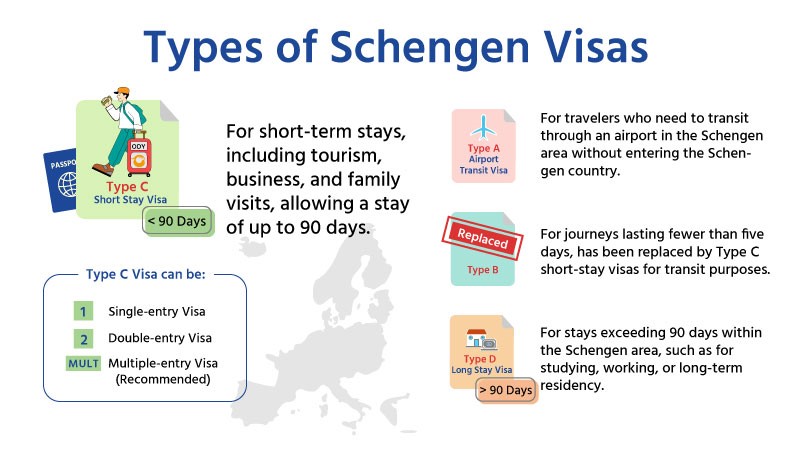
For tourists, the most relevant visa type is the Type C (Short-Stay) Visa, which includes:
- Single-entry Visa: Enter the Schengen Area once.
- Double-entry Visa: Enter twice within the visa’s validity.
- Multiple-entry Visa: Enter and exit multiple times, up to 90 days within a 180-day period.
If you’re only planning one trip, a single-entry visa is sufficient. However, if you’re hopping in and out of the Schengen Zone (say, a Mediterranean cruise or a UK visit in between), consider a multiple-entry option.
Schengen Visa Requirements for Tourists
Here’s a checklist of the standard documents you’ll need to apply:
- Completed Visa Application Form
- Fill it out online or manually, depending on the country.
- Valid Passport
- Must be valid for at least 3 months beyond your planned departure.
- Should have at least 2 blank pages.
- Two Recent Passport-Sized Photos
- As per biometric specifications (white background, no smile).
- Travel Itinerary
- Flight reservation (don’t book until the visa is approved).
- Hotel bookings or proof of accommodation.
- Travel Insurance
- Must cover at least €30,000 for medical emergencies and be valid for the entire Schengen Area.
- Proof of Financial Means
- Recent bank statements (last 3–6 months).
- Sponsorship letter (if someone is supporting your trip).
- Cover Letter
- Purpose of travel, itinerary, and how you plan to fund your trip.
- Proof of Employment or Student Status
- Employment letter or school enrollment letter.
- Visa Fee Payment Receipt
- Standard fee is €80 (around $90), discounted or waived for certain categories.
Where and When to Apply
Where to Apply
You must apply at the consulate or visa application center of the country where:
- You’ll spend most of your time, or
- The first country you will enter if time is split equally.
Example: If you’ll be in Spain for 5 days and France for 10 days, apply through the French consulate.
When to Apply
- Earliest: 6 months before your travel date.
- Latest: 15 days before your travel.
We recommend applying at least 4–6 weeks before your trip to avoid last-minute stress.
Step-by-Step Application Process
Here’s a simple breakdown of the application process:
- Determine Your Main Destination
- Plan your itinerary carefully.
- Book an Appointment
- Schedule online via the official embassy/consulate or through a visa center like VFS Global or TLScontact.
- Gather Documents
- Use the checklist above.
- Attend the Visa Interview
- Submit your application in person (biometrics are required).
- Be ready to answer questions about your travel plans.
- Pay the Visa Fee
- Usually payable by card or cash.
- Wait for Processing
- It typically takes 15 calendar days, but delays are possible.
- Collect Your Passport
- You’ll receive a stamped visa if approved!
Pro Tips from Travel Express
1. Book Refundable Flights and Hotels
Many embassies recommend providing reservations, not paid bookings. Use websites offering free cancellation.
2. Avoid Suspicious Itineraries
Don’t plan 10 days in five countries—it may raise red flags. Be realistic with your schedule.
3. Be Honest and Consistent
Your application, cover letter, and itinerary should all match. Discrepancies can lead to rejections.
4. Check Visa Validity Carefully
Your visa will state:
- Issue date
- Expiration date
- Number of entries
- Duration of stay (days)
Make sure you understand how long you’re allowed to stay and when you must leave.
5. Don’t Overstay
Even one day of overstaying could cause serious trouble, including bans from future travel.
What to Do If Your Visa Is Denied
Don’t panic—visa rejections happen. Common reasons include:
- Insufficient funds
- Unclear travel purpose
- Suspicious travel itinerary
- Missing documents
You’ll receive a letter explaining the reason. You can:
- Reapply with corrections
- Appeal the decision within the stated timeframe (varies by country)
After You Get Your Schengen Visa
Congrats! Now it’s time to pack your bags. Here are a few things to remember:
- Carry printouts of your travel insurance, hotel bookings, and return ticket.
- You may still be asked for these at the border.
- Make sure your passport is stamped on entry and exit.
FAQs: Schengen Visa for Tourists
Q: Can I work on a tourist Schengen Visa?
No. The tourist visa does not allow employment or business activities.
Q: Can I visit non-Schengen countries with this visa?
Only if those countries have visa-free agreements with your nationality. The Schengen visa only covers Schengen countries.
Q: Can I extend my visa while in Europe?
Generally, no—unless you have exceptional circumstances (like illness or force majeure). Apply for the right length in advance.
Q: Do I need a visa if I’m transiting through a Schengen country?
Some nationalities do, even for airport transits. Check the Airport Transit Visa (Type A) requirements.