
🚂 1. Glacier Express – The Slowest Fast Track Through the Alps
Route: Zermatt to St. Moritz
Duration: 8 hours
Best For: Panoramic Alpine views, engineering marvels, and luxury comfort
Known as the “slowest express train in the world,” the Glacier Express is anything but boring. This eight-hour journey between the glamorous resort towns of Zermatt and St. Moritz takes you through 291 bridges, 91 tunnels, and the 2,033-meter-high Oberalp Pass.
What makes this route special is the ever-changing landscape—from the dramatic Matterhorn to deep gorges, green pastures, and serene alpine lakes. The panoramic windows in every carriage make sure you don’t miss a single view, while onboard service delivers gourmet meals and local wine straight to your seat.
Travel Express Tip: Reserve a seat in the Excellence Class for the ultimate indulgence. You’ll get a five-course meal, leather lounge seating, and access to a private bar.
🟢 2. Bernina Express – From Glaciers to Palm Trees
Route: Chur/St. Moritz to Tirano (Italy)
Duration: 4 hours
Best For: UNESCO World Heritage landscapes, contrast of climates
The Bernina Express is a true testament to the diversity of Swiss scenery. Starting from the frosty heights of St. Moritz or Chur, it winds its way south to the sun-drenched town of Tirano in Italy, crossing the Swiss-Italian border in spectacular fashion.
This journey covers the Bernina Pass, rising to 2,253 meters, before descending into the lush vineyards and palm trees of the Italian Valtellina region. Highlights include the Landwasser Viaduct, the spiral tunnels of Alp Grüm, and glacier views that feel almost within arm’s reach.
Travel Express Tip: Once you arrive in Tirano, hop onto the connecting regional train to Lugano for an extended scenic treat known as the Bernina Express Bus route.
🟡 3. GoldenPass Line – Charming Villages & Lake Views
Route: Lucerne to Montreux
Duration: 5.5 hours (with connections)
Best For: Swiss traditions, fairytale towns, and lake panoramas
The GoldenPass Line connects the German-speaking heart of Switzerland to the French-speaking Riviera. From Lucerne, the journey heads through the Lake Lucerne region, over the Brünig Pass, through the chalet-style village of Zweisimmen, and finally descends into Montreux, located on the sparkling shores of Lake Geneva.
Along the way, you’ll pass by charming villages like Interlaken, with the majestic peaks of the Eiger, Mönch, and Jungfrau towering in the background. The mix of landscapes—wooded hills, alpine meadows, and glacial lakes—offers a visual feast.
Travel Express Tip: Book a seat in the GoldenPass Panoramic or Belle Époque coaches for a vintage, luxury experience.
🔴 4. Gotthard Panorama Express – A Ride Through History
Route: Lucerne to Lugano
Duration: 5.5 hours (Train + Boat)
Best For: History buffs, lake cruises, cultural contrasts
Part train journey, part boat ride, the Gotthard Panorama Express begins with a scenic cruise across Lake Lucerne, where you can take in the historic Rütli Meadow and Tell’s Chapel. After docking in Flüelen, the journey continues by train through the historic Gotthard route, complete with spiral tunnels and views of quaint mountain villages.
What makes this route unique is its combination of natural beauty and engineering ingenuity. Unlike the modern Gotthard Base Tunnel, this older route takes you over the mountains, not through them—giving you much more to see.
Travel Express Tip: If you’re short on time, you can skip the boat portion and start your trip directly from Flüelen.
🔵 5. Luzern–Interlaken Express – Lakes, Mountains, and More Lakes
Route: Lucerne to Interlaken
Duration: 2 hours
Best For: Short and sweet trips, lake lovers
If you’re pressed for time but still want a front-row seat to Swiss beauty, the Luzern–Interlaken Express is your golden ticket. This 2-hour route connects two of Switzerland’s most iconic destinations and takes you along five crystal-clear lakes, past waterfalls, and through steep forested valleys.
The highlight? The section between Meiringen and Brünig where the train uses a cogwheel mechanism to climb steep gradients, offering incredible views of the Bernese Oberland.
Travel Express Tip: Grab a window seat on the right-hand side when traveling from Lucerne for the best views.
🟠 6. Voralpen Express – The Road Less Traveled
Route: St. Gallen to Lucerne
Duration: 2.5 hours
Best For: Off-the-beaten-path charm, locals-only vibes
The Voralpen Express may not get as much hype as the Glacier or Bernina Express, but it’s one of Switzerland’s hidden gems. Running between St. Gallen and Lucerne, this route offers a gentle but scenic journey through the pre-Alps.
Expect to see rolling meadows, quiet lakes, and traditional farmhouses with red-tiled roofs. The train even crosses the Sitter Viaduct, the highest railway bridge in Switzerland.
Travel Express Tip: This line is especially stunning in the fall when the landscape turns golden and fiery red.
🟤 7. Jungfrau Railway – Top of Europe
Route: Interlaken → Jungfraujoch
Duration: About 2 hours one-way
Best For: Bucket list views, high-altitude thrills
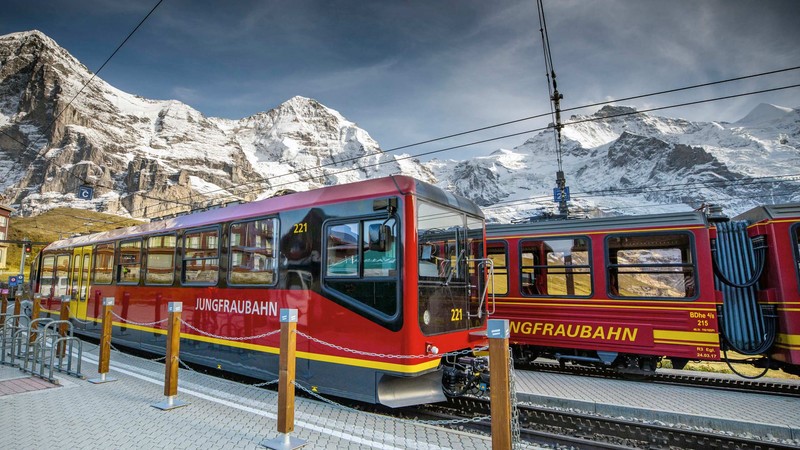
No list would be complete without the legendary Jungfrau Railway, which takes you to the highest train station in Europe—Jungfraujoch at 3,454 meters. Starting from Interlaken, the route connects via Lauterbrunnen or Grindelwald, climbing through tunnels and icy terrain before emerging into an otherworldly panorama of snow and glaciers.
At the top, you’ll find an observation deck, the Ice Palace, and sweeping views of the Aletsch Glacier, a UNESCO World Heritage Site.
Travel Express Tip: Visit in the early morning to avoid crowds and catch the clearest mountain views.
✨ Why Travel Switzerland by Train?
Here’s what makes train travel in Switzerland truly stand out:
- Punctuality & Efficiency: Swiss trains are famously on time and well-connected.
- Comfort & Cleanliness: Spacious seating, clean amenities, and scenic lounges.
- Swiss Travel Pass: Offers unlimited travel on most public transport systems, including many scenic trains.
- Eco-Friendly: Reduce your carbon footprint while seeing more.
📆 Best Time to Go
Switzerland is a year-round destination, but your experience can vary with the seasons:
- Spring (April–June): Wildflowers bloom, lakes thaw, and crowds are low.
- Summer (July–August): Ideal for hiking and clear mountain views.
- Autumn (September–October): Fall foliage turns the landscapes into a kaleidoscope of color.
- Winter (December–March): Snow transforms everything into a magical winter wonderland.