
Introduction
New Zealand is an island country located in the southwestern Pacific Ocean, known for its stunning natural landscapes, diverse wildlife, and vibrant indigenous Maori culture. It consists mainly of two large islands—the North Island and the South Island—along with many smaller islands. Renowned for outdoor adventures like hiking, skiing, and water sports, New Zealand also boasts geothermal wonders, fjords, and unique flora and fauna. It has a modern, developed economy and a friendly, multicultural society.
- Diverse Geothermal Features
Rotorua’s geothermal parks offer a remarkable variety of natural features. Visitors can witness geysers shooting hot water into the air, boiling mud pools churning with energy, and colorful silica terraces formed by mineral deposits. These features are not only visually striking but also provide a direct glimpse into the Earth’s inner workings.
Each geothermal park in Rotorua showcases a different mix of features. Some highlight volcanic craters and lava formations, while others focus on therapeutic hot springs and bubbling mud. The constant geothermal activity creates a dynamic environment that’s always changing.
- Wai-O-Tapu Thermal Wonderland
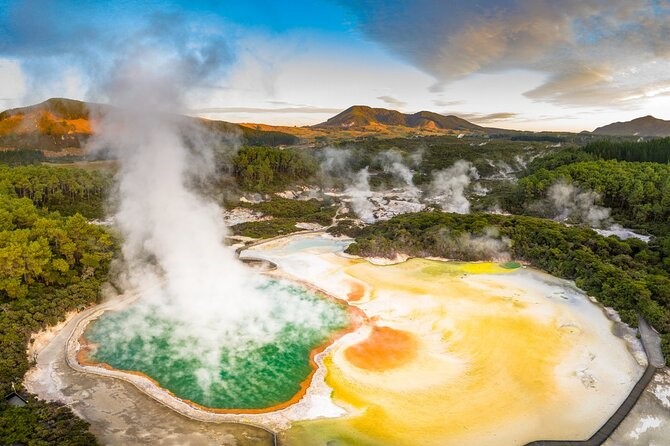
One of the most famous geothermal attractions in Rotorua is Wai-O-Tapu Thermal Wonderland. Known for its vibrant colors and unique geothermal formations, Wai-O-Tapu is home to the famous Champagne Pool, a steaming hot spring with bright orange and green edges. Another major attraction is the Lady Knox Geyser, which erupts daily, reaching heights of up to 20 meters.
Wai-O-Tapu features walking tracks that lead visitors through crater lakes, sinter terraces, and bubbling mud. The park’s surreal, almost alien landscapes make it a must-see destination.
- Whakarewarewa – The Living Maori Village
Whakarewarewa is a geothermal park with a unique cultural twist—it’s also a living Maori village. For over 200 years, the local Tūhourangi Ngāti Wāhiao people have lived among the geothermal features, using the natural hot springs for cooking, bathing, and heating.
Visitors can explore the village, witness traditional cultural performances, and learn about how geothermal energy has shaped the lifestyle and traditions of the Maori people. It’s a rare opportunity to experience geothermal wonders alongside a living indigenous culture.
- Hell’s Gate Geothermal Reserve and Mud Spa
For those looking to combine nature with relaxation, Hell’s Gate is a geothermal park with a therapeutic twist. It’s known for having the largest hot waterfall in the Southern Hemisphere and some of the most active geothermal features in Rotorua.
What sets Hell’s Gate apart is its mud spa experience. Visitors can soak in warm pools of mineral-rich mud and sulphur water, which are believed to have healing properties for the skin and joints. It’s both a geothermal attraction and a wellness retreat.
- Unique Sulphur Smell
One of the first things visitors notice in Rotorua is the distinct sulphur smell, often described as resembling rotten eggs. This odor comes from hydrogen sulphide gas emitted by geothermal vents.
While it might be surprising at first, the smell is a natural part of Rotorua’s geothermal identity. Locals are so used to it that they barely notice it, and many travelers quickly adjust. It serves as a reminder that Rotorua is sitting on one of the most geothermally active areas on the planet.
- Accessible Geothermal Walks
Rotorua offers many easy-to-access geothermal walking tracks for all fitness levels. Parks like Kuirau Park, located in the city center, offer free entry and a chance to explore geothermal pools, steaming vents, and bubbling mud right in town.
These walking tracks are well-maintained and often include information boards explaining the science behind what visitors are seeing. It’s a great way for families, solo travelers, or casual tourists to engage with Rotorua’s geothermal wonders at their own pace.
- Education and Science
Rotorua’s geothermal parks are not just for tourists—they’re also important educational and scientific resources. Many parks offer guided tours that explain the geology, chemistry, and ecology of geothermal activity.
Local schools and universities often use the area for field trips and research. Topics such as geothermal energy, volcanic history, and environmental conservation are explored in real-world settings, making Rotorua a key destination for environmental education.
- Geothermal Energy Use
Rotorua’s geothermal energy is not just a tourist attraction—it’s also a valuable resource. Locals use geothermal heat for bathing, heating homes, and even cooking. Some homes and public buildings tap directly into geothermal wells, which is a sustainable and cost-effective source of energy.
Geothermal plants in the wider Taupō region produce electricity for the national grid, showcasing New Zealand’s commitment to renewable energy. Rotorua stands as a real-world example of how geothermal resources can be responsibly harnessed.
- Volcanic History
Rotorua lies in a geologically active region with a dramatic volcanic history. The nearby Mount Tarawera last erupted in 1886, causing widespread destruction and creating new geothermal features, including the famous Waimangu Volcanic Valley.
That eruption destroyed the legendary Pink and White Terraces, once considered the “Eighth Wonder of the World.” Today, visitors can explore the Waimangu area, which is the world’s youngest geothermal system, formed directly from the Tarawera eruption.
- A Year-Round Destination
Rotorua’s geothermal parks can be enjoyed all year round, thanks to the mild climate and consistent geothermal activity. Whether you visit in summer or winter, the steam rising from hot pools and the warmth of the geothermal areas create a comforting atmosphere.
Winter is especially popular for visitors looking to soak in hot springs surrounded by cool air, while summer offers clear views of colorful thermal lakes and sunny walks through geothermal trails.
Where to Stay by Destination
- Auckland (North Island)
- Best for: Urban experiences, international arrivals, beaches
- Top areas:
- CBD: Luxury & business hotels
- Ponsonby & Parnell: Trendy boutique stays
- North Shore: Family-friendly coastal homes
- Rotorua (North Island)
- Best for: Geothermal parks, Maori culture
- Top areas:
- Fenton Street: Mid-range motels
- Near Whakarewarewa: Cultural lodges and hotels
- Lake Rotorua area: Scenic resorts
- Taupō (North Island)
- Best for: Lake activities, hot springs
- Stay near:
- Lakefront: Views + resorts
- Town center: Budget motels, backpackers
Things to do in New Zealand
Natural Wonders & Landscapes
- Visit geothermal parks in Rotorua
See geysers, mud pools, and hot springs at places like Wai-O-Tapu and Hell’s Gate. - Explore Fiordland National Park
Cruise through Milford Sound or Doubtful Sound—breathtaking fjords surrounded by waterfalls and mountains. - See the glowworms in Waitomo Caves
Take a boat ride through underground caves illuminated by thousands of glowworms.
Day trip from New Zealand
North Island Day Trips
- From Auckland → Waiheke Island
- Travel time: 40-minute ferry
- Highlights: Wine tasting, beaches, art galleries, zip-lining
- Why go: Perfect mix of relaxation and luxury close to the city
- From Auckland → Hobbiton Movie Set (Matamata)
- Travel time: 2 hours each way
- Highlights: Guided movie set tour, The Green Dragon Inn
- Why go: A must for The Lord of the Rings fans
- From Rotorua → Waitomo Caves
- Travel time: 2–2.5 hours
- Highlights: Glowworm cave tours, black water rafting
- Why go: Stunning underground experience with natural light shows