
Introduction
Croatia is a beautiful country located in Southeast Europe, along the Adriatic Sea. Known for its stunning coastline, historic cities, and rich cultural heritage, Croatia offers a blend of Mediterranean charm and natural wonders. Famous destinations include the walled city of Dubrovnik, the scenic Dalmatian coast, and numerous islands. Croatia is also home to several national parks, including Plitvice Lakes, showcasing its diverse landscapes from crystal-clear waters to lush forests. It’s a popular spot for tourism, history, and outdoor adventures.
- Introduction and Location
Plitvice Lakes National Park, located in central Croatia near the border with Bosnia and Herzegovina, is the oldest and largest national park in Croatia. Established in 1949, it covers an area of approximately 296.85 square kilometers (114.6 square miles). The park is renowned for its spectacular series of cascading lakes, waterfalls, and karst formations. It lies within the mountainous region between the northwestern part of the Lika and Kordun regions, making it a perfect blend of rugged landscapes and serene water bodies. - UNESCO World Heritage Site
Plitvice Lakes was declared a UNESCO World Heritage site in 1979, recognized for its outstanding natural beauty and unique geological features. The park’s rich biodiversity and the complex hydrological system of lakes and waterfalls contribute to its global significance. This designation helps protect the park’s delicate ecosystem and promotes sustainable tourism practices. - Unique Karst Landscape and Lakes System
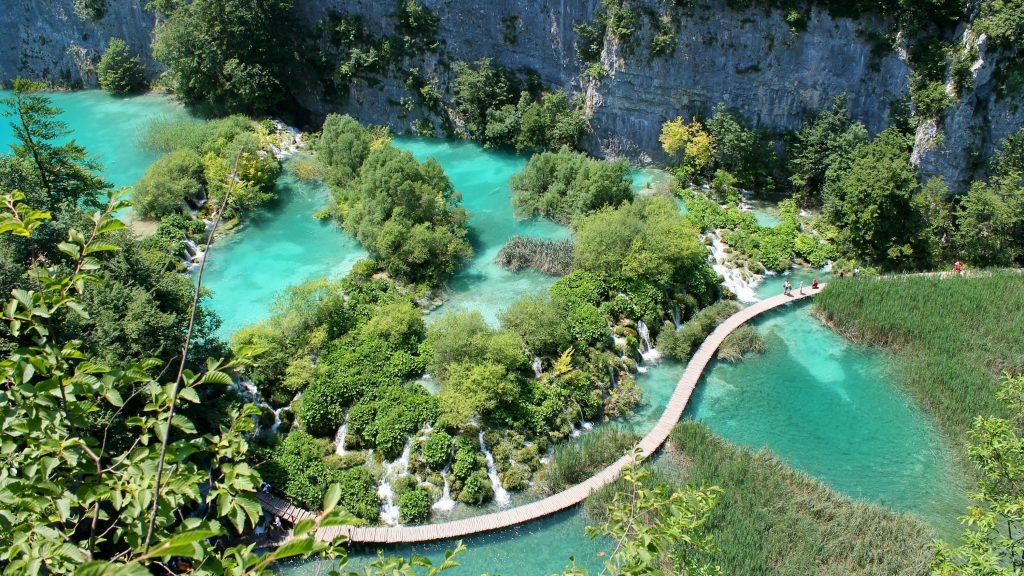
One of the most remarkable features of the park is its karst topography. The lakes are formed on dolomite and limestone terrain, where natural travertine barriers constantly grow due to calcium carbonate deposits. This process creates the distinctive cascading lakes and waterfalls, which are rare in the world. There are 16 interconnected lakes, divided into the Upper Lakes and the Lower Lakes, with water flowing from one to the other through a series of waterfalls and cascades. - Waterfalls and Lakes
Plitvice is famous for its numerous waterfalls, with over 90 individual falls of varying sizes and heights. The tallest waterfall, Veliki Slap (the Big Waterfall), drops about 78 meters (256 feet) and is one of the park’s most iconic sights. The lakes vary in color, from deep green to azure and turquoise, depending on mineral content, algae, and light reflection, creating a magical and ever-changing palette. - Biodiversity and Wildlife
The Park is home to a wide range of flora and fauna, thriving in its diverse habitats of forests, lakes, and meadows. It supports over 1,200 plant species, including rare and endemic plants. Animal life is equally impressive: large mammals like brown bears, wolves, and lynxes inhabit the forested areas. Bird watchers can spot species such as the Eurasian eagle-owl, while fish like the native brown trout swim in the pristine waters. This biodiversity makes Plitvice a vital refuge for wildlife in Europe. - Trails and Exploration
Visitors can explore the park via a network of wooden boardwalks and footpaths that wind around the lakes and waterfalls. The park offers several hiking routes ranging from easy 2-hour walks to full-day treks covering much of the park. Electric boats and panoramic trains are also available for those who want to cover longer distances or take a break from walking. The trails provide spectacular views and photo opportunities at every turn. - Best Time to Visit
Plitvice Lakes is a year-round destination, but the experience changes with the seasons. Spring and early summer showcase lush greenery and high water levels, resulting in waterfalls that are more powerful. Autumn offers a spectacular display of colorful foliage, with warm hues reflecting on the lakes. Winter turns the park into a snowy wonderland with frozen waterfalls and icy trails, although access can be more limited. Summer sees the highest number of visitors, so early morning or late afternoon visits are recommended to avoid crowds. - Conservation Efforts and Challenges
Protecting Plitvice Lakes’ fragile environment is a constant priority. The park authorities implement strict regulations on visitor numbers, trail maintenance, and waste management to minimize human impact. Challenges include managing increasing tourism without damaging the ecosystem, controlling invasive species, and addressing climate change effects, which threaten water levels and biodiversity. Sustainable tourism initiatives are key to preserving the park for future generations. - Facilities and Visitor Information
The park is well-equipped to welcome visitors with several entrances, visitor centers, cafes, and accommodation options nearby. There are clearly marked maps, guides, and multilingual information available. Tickets can be purchased online or at the entrances, with prices varying by season. Guided tours are offered for those interested in deeper insights into the park’s geology, ecology, and history. Accessibility has improved, with some trails suitable for people with reduced mobility. - Cultural and Historical Significance
Beyond its natural beauty, Plitvice Lakes holds cultural value for Croatia and the region. The park area has been inhabited since prehistoric times, with archaeological finds indicating human presence. Throughout history, the lakes and surrounding forests have influenced local folklore, traditions, and livelihoods. Today, Plitvice serves as a symbol of national pride and a key attraction promoting Croatia’s natural heritage to the world.
Where to Stay in Croatia
- Dubrovnik — For History and Coastal Luxury
- Known as the “Pearl of the Adriatic,” Dubrovnik’s Old Town is a UNESCO World Heritage site with stunning medieval walls and charming streets.
- Stay options: luxury hotels with sea views (e.g., Hotel Excelsior, Villa Dubrovnik), boutique guesthouses inside or near Old Town, and modern resorts on the nearby beaches.
- Great for: culture lovers, history buffs, luxury travelers.
- Split — Urban Vibes and Island Gateway
- Split is Croatia’s second-largest city, famous for the Diocletian’s Palace and vibrant waterfront. It’s also a hub for island hopping.
- Stay options: apartments in the historic center, seaside hotels along the Riva promenade, and budget hostels for backpackers.
- Great for: city explorers, nightlife, easy access to islands like Hvar and Brač.
- Plitvice Lakes Area — Nature and National Park Access
- Stay near the park entrances in small villages like Plitvica Selo or Jezerce for quick access. There are charming guesthouses, family-run hotels, and lodges.
- Accommodation inside the park is limited but offers an immersive experience.
- Great for: nature lovers, hikers, families.
Things to Do in Croatia
- Explore Dubrovnik’s Old Town
Walk the famous city walls of Dubrovnik, a UNESCO World Heritage site. Wander through narrow cobblestone streets, visit historic landmarks like Rector’s Palace and Sponza Palace, and relax at cafes overlooking the Adriatic Sea. Don’t miss a cable car ride up Mount Srđ for panoramic views. - Island Hopping in the Dalmatian Coast
Croatia’s coast is dotted with beautiful islands like Hvar, Brač, Korčula, and Vis. Take ferries or private boat tours to explore pristine beaches, hidden coves, lavender fields, and lively nightlife spots. Hvar is known for its vibrant party scene, while Vis offers tranquility and nature. - Visit Plitvice Lakes National Park
Hike through one of Europe’s most beautiful national parks famous for its 16 terraced lakes, connected by waterfalls. Walk on wooden boardwalks over crystal-clear waters and enjoy boat rides across the lakes, surrounded by lush forests.
Day Trips from Croatia
- From Dubrovnik: Montenegro’s Kotor Bay
- Just about 2 hours by car or bus, Kotor Bay offers stunning fjord-like scenery, a charming medieval town (Kotor), and fortified city walls to climb. Visit Perast, a nearby village with beautiful islands, including Our Lady of the Rocks.
- From Split: Trogir and Krka National Park
- Trogir is a UNESCO-listed historic town just 30 minutes from Split, with well-preserved medieval architecture and lovely waterfront cafes.
- Afterward, head to Krka National Park (around 1 hour from Split) to enjoy waterfalls and swimming spots.
- From Zagreb: Plitvice Lakes National Park
- Around 2 hours from Zagreb, Plitvice Lakes offers a perfect nature escape. Spend the day hiking around the lakes and waterfalls and return to the city in the evening.