
Introduction
Namibia is a country in southwestern Africa known for its vast deserts, diverse wildlife, and rich cultural heritage. It features the famous Namib Desert—the oldest desert in the world—and the dramatic Skeleton Coast along the Atlantic Ocean. Namibia is home to unique ecosystems, including desert-adapted animals like elephants and lions. It has a low population density and a mix of ethnic groups, with English as its official language. The country is famous for its stunning landscapes, wildlife safaris, and outdoor adventure opportunities.
- Introduction to Namibia’s Desert Landscapes
Namibia’s desert landscapes are among the most extraordinary and visually captivating in the world. The country is dominated by the Namib Desert, often cited as the oldest desert on Earth, with a history stretching back over 55 million years. These vast deserts create a unique environment marked by sweeping sand dunes, rugged mountain ranges, gravel plains, and salt pans. Namibia’s deserts are not just barren wastelands; they are dynamic ecosystems that offer incredible biodiversity and scenic beauty, attracting travelers, photographers, and scientists alike.
- The Namib Desert: An Ancient Wonder
The Namib Desert stretches along the entire Atlantic coast of Namibia, covering approximately 80,000 square kilometers. It is considered the oldest desert because it has experienced arid conditions for tens of millions of years, shaping its iconic landscape. This desert is known for its massive sand dunes, some of the tallest in the world, reaching heights over 300 meters. The dunes are constantly reshaped by the desert winds, creating ever-changing patterns and forms, making the Namib a living, breathing environment.
- Sossusvlei: The Iconic Sand Dunes
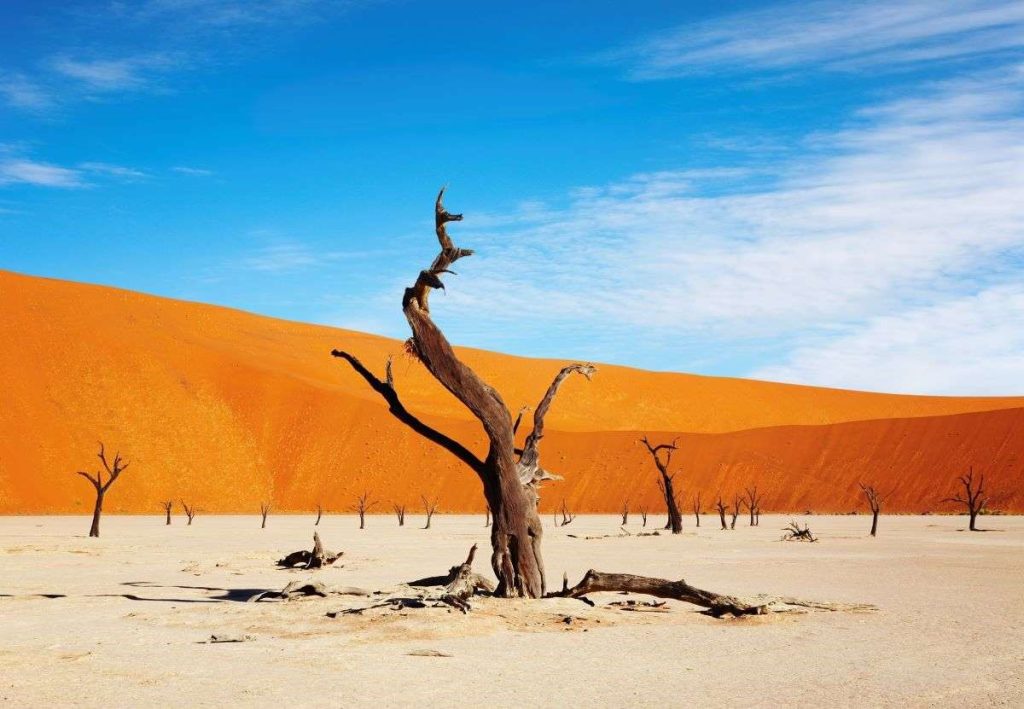
One of Namibia’s most famous landmarks is Sossusvlei, a salt and clay pan surrounded by towering red dunes within the Namib-Naukluft National Park. The intense colors of these dunes, which shift from orange to deep red, are due to the high iron oxide content in the sand. Sossusvlei is especially stunning at dawn and dusk when the low sunlight casts dramatic shadows, highlighting the dunes’ sculpted ridges. This area draws photographers worldwide, eager to capture its surreal beauty and vastness.
- Skeleton Coast: The Foggy, Mystical Shoreline
To the north of the Namib Desert lies the Skeleton Coast, one of the most mysterious and inhospitable stretches of coastline on Earth. Named for the whale and seal bones scattered along its shores and the many shipwrecks that line the coast, the Skeleton Coast is frequently shrouded in dense fog, which arises from the cold Benguela Current meeting the hot desert air. This fog creates a haunting atmosphere and supports a unique ecosystem, including seal colonies, desert-adapted lions, and other wildlife adapted to the harsh coastal desert conditions.
- Desert Flora: Life in Harsh Conditions
Despite the extreme aridity, Namibia’s deserts are home to surprisingly diverse and resilient plant life. One of the most famous desert plants is the welwitschia mirabilis, often described as a “living fossil.” This plant can live for over a thousand years and survives on the moisture gleaned from coastal fog. Other vegetation includes hardy succulents, desert grasses, and ephemeral plants that sprout briefly after rare rains. These plants play a vital role in stabilizing dunes and providing food and shelter for desert animals.
- Desert Fauna: Unique Adaptations
The animals of Namibia’s deserts have evolved remarkable adaptations to survive with minimal water and extreme temperatures. Desert-adapted elephants, for example, have larger feet for walking on sand and can go for days without drinking. The oryx, a striking antelope species, can raise their body temperature to avoid sweating and conserve water. Smaller creatures, such as the fog-basking beetle, harvest moisture from fog droplets to stay hydrated. This delicate balance between flora and fauna highlights the desert’s rich biodiversity despite its harsh conditions.
- Geology and Landforms of the Desert
Fascinating geological processes shape Namibia’s desert landscapes. The sand dunes are formed by wind erosion and deposition, while the desert also features ancient rock formations, gravel plains known as “reg,” and vast salt pans. The Namib-Naukluft Mountains contribute to the region’s varied topography. The Namib’s geological history tells a story of shifting climates, tectonic activity, and erosion that have sculpted some of the most dramatic desert scenery on the planet.
- Cultural Significance of the Desert
For thousands of years, Namibia’s desert landscapes have been home to indigenous peoples such as the San (Bushmen), who have adapted to life in this challenging environment. The desert holds cultural and spiritual significance for these communities, evident in their traditional knowledge of the land, water sources, and wildlife. Rock art and archaeological sites scattered throughout the desert provide valuable insights into the history and lifestyle of early human inhabitants, highlighting the desert’s importance beyond its natural beauty.
- Tourism and Adventure Opportunities
Namibia’s desert landscapes are a magnet for adventure tourism, offering activities like dune climbing, hot air ballooning, 4×4 safaris, and guided desert hikes. Visitors come to experience the vastness of the desert, encounter unique wildlife, and photograph stunning landscapes such as Deadvlei—an ancient white clay pan dotted with petrified black trees contrasting sharply against the orange dunes. Tourism in these desert areas plays a crucial role in Namibia’s economy and conservation efforts, encouraging sustainable interaction with the environment.
- Conservation and Challenges
Despite its remote and rugged nature, Namibia’s desert landscapes face environmental pressures such as climate change, mining, and human-wildlife conflict. Conservation efforts by the Namibian government and NGOs focus on protecting endangered species, preserving habitats, and promoting sustainable tourism. Namibia is considered a leader in conservation in Africa, with a significant portion of its land under protection. Maintaining the delicate balance of this ancient desert ecosystem is essential for future generations to continue experiencing its beauty and ecological importance.
Where to stay in Namibia
- Sossusvlei Area (Namib Desert)
- Sossusvlei Lodge — Luxury with amazing dune views.
- Sesriem Campsite — For budget travelers who want to camp near the dunes.
- Sossus Oasis Camp — Mid-range tents with good facilities.
- Swakopmund (Coastal Town)
- The Strand Hotel — Beachfront, upscale, great for relaxation after desert trips.
- Swakopmund Guesthouse — Cozy, budget-friendly.
- Atlantic Villa Boutique Guesthouse — Stylish and comfortable.
- Etosha National Park
- Okaukuejo Camp — Famous for its floodlit waterhole where you can watch wildlife at night.
- Halali Camp — Central location inside the park, good for game drives.
- Namutoni Camp — Historic fort with easy access to northern Etosha.
Things to do in Namibia
- Explore Sossusvlei and Its Dunes
Climb some of the tallest sand dunes in the world—especially Dune 45 and Big Daddy. Watch incredible sunrises and sunsets that turn the desert into a palette of red and orange hues.
- Visit Etosha National Park
Go on game drives to see Africa’s iconic wildlife like elephants, lions, giraffes, and rhinos. Don’t miss the floodlit waterholes at camps like Okaukuejo for nighttime animal watching.
- Discover the Skeleton Coast
Experience the eerie foggy coastline with its shipwrecks, seal colonies, and desert-adapted lions. It’s a wild, raw, and less-visited part of Namibia.
Day trip from Namibia
From Windhoek:
- Daan Viljoen Game Reserve
Just 30 minutes from the city, it’s perfect for a half-day or full-day game drive with chances to see giraffes, zebras, and various antelope species. - Okahandja Craft Market
About 70 km north, great for picking up authentic Namibian crafts, carvings, and souvenirs.
From Swakopmund:
- Walvis Bay Lagoon and Sandwich Harbour
A morning or afternoon boat tour to see flamingos, pelicans, seals, and sometimes dolphins. Sandwich Harbour combines desert dunes right next to the Atlantic Ocean—unique and breathtaking. - Moon Landscape and Welwitschia Drive
A half-day 4×4 trip to see surreal rocky desert landscapes and the rare Welwitschia plants that survive on coastal fog.
From Etosha National Park (if staying near a camp):
- Morning or Evening Game Drives
Most camps organize guided drives to spot elephants, lions, rhinos, and more.