
Introduction
Salzburg is a charming city in Austria known for its stunning baroque architecture, rich cultural history, and beautiful alpine surroundings. It’s famously the birthplace of the composer Wolfgang Amadeus Mozart and is celebrated for its vibrant music scene, including the annual Salzburg Festival. The city’s picturesque old town, a UNESCO World Heritage Site, features historic churches, palaces, and cobblestone streets that attract visitors from around the world.
- Birthplace of a Genius
Wolfgang Amadeus Mozart was born on January 27, 1756, in Salzburg, then part of the Archbishopric of Salzburg, now in Austria. His birthplace is a central site of Mozart heritage — the Mozart Geburtshaus — located at Getreidegasse 9. This house, preserved as a museum, displays original artifacts, letters, instruments, and documents related to Mozart’s early life. It draws thousands of visitors annually who want to connect with the origins of one of the world’s greatest composers.
- The Mozart Residence (Mozart Wohnhaus)
Beyond his birthplace, Mozart’s family moved to a larger home at Makartplatz 8 in Salzburg, where Mozart lived from 1773 to 1780. Known as the Mozart Wohnhaus, this residence offers a glimpse into the composer’s later years in Salzburg before he moved to Vienna. The house is now a museum exhibiting original scores, personal items, and historical insights into Mozart’s life and work during this period.
- Salzburg’s Musical Influence
Salzburg was a vibrant musical center in the 18th century, partly due to the patronage of the Archbishop of Salzburg. Mozart’s father, Leopold, was a court musician, and Mozart was deeply influenced by the city’s rich musical environment. The city’s churches, courts, and theaters shaped Mozart’s early training and compositions. This cultural milieu continues to be celebrated in Salzburg’s music festivals and institutions.
- The Salzburg Festival and Mozart Week
Salzburg’s cultural life prominently features Mozart’s legacy through the Salzburg Festival and the annual Mozart Week (Mozartwoche). The Salzburg Festival, founded in 1920, is one of the world’s leading music and drama festivals, with a strong focus on Mozart’s operas and compositions. Mozart Week, held every January to coincide with his birthday, attracts international musicians and audiences to celebrate his music through concerts, recitals, and special events.
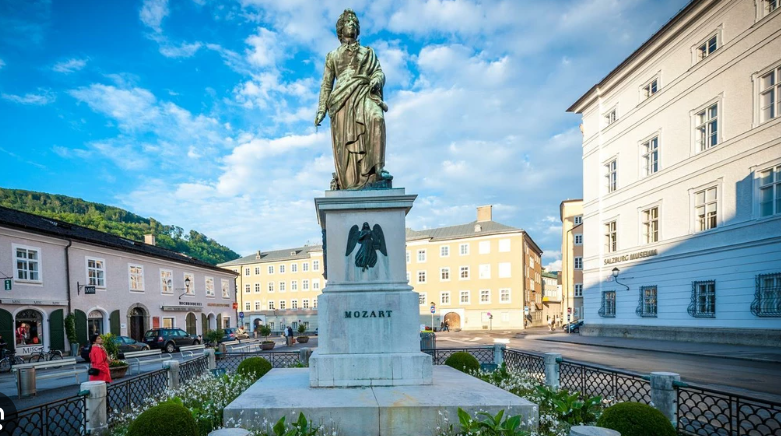
- Mozart Monument in Salzburg
One of the most iconic tributes to Mozart in Salzburg is the Mozart Monument, erected in 1842 in the Mirabell Gardens. This statue, designed by Ludwig Schwanthaler, was the first public memorial to Mozart anywhere in the world. It symbolizes the city’s pride in its native son and serves as a cultural landmark where visitors gather to honor Mozart’s contributions.
- Mozart’s Musical Legacy in Salzburg’s Churches
Mozart’s music is inseparable from the sacred and secular institutions of Salzburg. He performed and composed for key venues such as Salzburg Cathedral (Dom zu Salzburg) and St. Peter’s Abbey. His early sacred works premiered in these churches, which remain important sites for musical pilgrimage. Today, many concerts in Salzburg feature Mozart’s liturgical music performed in the very places where it was first heard.
- Museums and Exhibitions Dedicated to Mozart
Apart from his birthplace and residence, Salzburg hosts several museums and exhibitions dedicated to Mozart’s life and music. The Mozart Museum, located in the Salzburg Residence (Residenz), provides a multimedia experience about Mozart’s career and the cultural environment of the time. These museums preserve historical instruments, manuscripts, costumes, and offer educational programs that keep Mozart’s heritage alive for new generations.
- Mozart’s Influence on Salzburg’s Identity and Tourism
Mozart’s heritage is central to Salzburg’s identity and economy. The city markets itself as the “City of Mozart,” and his name appears on numerous shops, cafes, souvenirs, and restaurants. The tourism industry heavily depends on Mozart-related attractions, guided tours, and cultural events. This connection ensures that Mozart’s legacy remains a living part of the city’s contemporary culture.
- The Mozarteum University
Founded in 1841, the Mozarteum University Salzburg is an internationally renowned institution for music and the arts, named in honor of Mozart. It educates talented musicians from around the world, preserving Mozart’s artistic spirit. The Mozarteum also organizes concerts, research projects, and scholarly activities focusing on Mozart and classical music, making Salzburg a global hub for Mozart studies.
- The Sound of Mozart in Salzburg Today
Salzburg continues to celebrate Mozart’s music in everyday life. Street musicians play his compositions, theaters regularly stage his operas like The Magic Flute and Don Giovanni, and local choirs and orchestras perform his symphonies. The sound of Mozart permeates the city, ensuring that his artistic genius remains an integral and vibrant part of Salzburg’s cultural fabric.
Where to stay in Salzburg
- Altstadt (Old Town) — Best for First-Timers and Culture Lovers
Staying in the Old Town means you’re right in the heart of Salzburg’s historic center, close to Mozart’s Birthplace, the fortress, Salzburg Cathedral, and tons of charming streets and cafes. It’s perfect if you want to explore the city on foot and soak up the baroque architecture and vibrant atmosphere.
- Pros: Walking distance to main attractions, lots of restaurants and shops, beautiful historic vibe.
- Cons: Can be more expensive and busy, limited parking.
- Leopoldskron — For Nature and Serenity
A bit outside the center, Leopoldskron is famous for the Leopoldskron Palace and its beautiful lakeside setting. It’s quieter and greener, great if you want a peaceful stay but still be close to the city (around 15-minute bus or bike ride).
- Pros: Scenic, peaceful, near parks and lake, good for relaxation.
- Cons: Less nightlife and dining options nearby, a little less central.
- Schallmoos — Budget-Friendly and Convenient
Schallmoos is a more residential and affordable area, just north of the city center. It’s popular among students and budget travelers, with good public transport links and some nice cafes and shops.
- Pros: Affordable hotels and hostels, close to train station, good public transport.
- Cons: Less picturesque, more local and less touristy.
Things to do in Salzburg
- Visit Mozart’s Birthplace (Mozart Geburtshaus)
Explore the house where Wolfgang Amadeus Mozart was born in 1756. It’s now a museum showcasing his early life, family artifacts, and original manuscripts. A must for music lovers!
- Tour the Hohensalzburg Fortress (Festung Hohensalzburg)
This massive medieval fortress towers above the city and offers panoramic views of Salzburg and the Alps. You can walk up or take a funicular. Inside, explore museums, state rooms, and medieval history.
- Stroll through the Old Town (Altstadt)
Wander Salzburg’s UNESCO-listed historic center. Enjoy baroque architecture, charming alleys like Getreidegasse (famous shopping street), quaint cafes, and beautiful squares such as Residenzplatz.
Day Trips from Salzburg
- Hallstatt
- Why go? One of the most beautiful lakeside villages in Austria, known for its picturesque alpine scenery, historic salt mines, and charming streets.
- Travel time: About 1.5 to 2 hours by train and bus (or car).
- Highlights: Hallstatt Salt Mine, Hallstatt Skywalk (360° views), Lake Hallstatt boat rides, and the Bone House (Beinhaus).
- Berchtesgaden and Königssee (Germany)
- Why go? Just over the border in Germany, Berchtesgaden offers breathtaking mountain scenery, and Königssee is a crystal-clear alpine lake surrounded by dramatic cliffs.
- Travel time: Around 45 minutes by car or bus.
- Highlights: Königssee boat tour to St. Bartholomä Church, Eagle’s Nest (Kehlsteinhaus), Berchtesgaden Salt Mine.
- Eagle’s Nest (Kehlsteinhaus)
- Why go? Famous WWII site with spectacular panoramic views of the Bavarian Alps.
- Travel time: From Salzburg, about 1 hour to Berchtesgaden and then a bus or hike to Eagle’s Nest.
- Highlights: History, views, and alpine scenery.