
Introduction
Melbourne is the capital city of the Australian state of Victoria and is known for its vibrant culture, diverse population, and strong arts and food scenes. Often considered Australia’s cultural capital, Melbourne is famous for its laneways, street art, excellent coffee, historic architecture, and dynamic live music. The city is also home to major sporting events, top universities, and a mix of modern and Victorian-era buildings. With its blend of creativity, multiculturalism, and innovation, Melbourne offers a unique and dynamic urban experience.
- A Global Street Art Capital
Melbourne is internationally celebrated as one of the world’s most dynamic and influential street art capitals. Unlike cities where graffiti is often criminalized or quickly removed, Melbourne has embraced its street art culture, turning laneways and walls into canvases for creativity. Artists from across the globe come to leave their mark, making the city a living gallery. This open approach has helped cultivate a deeply rooted local scene, drawing in tourists, photographers, and art lovers who roam the streets in search of fresh creations. - The Iconic Hosier Lane
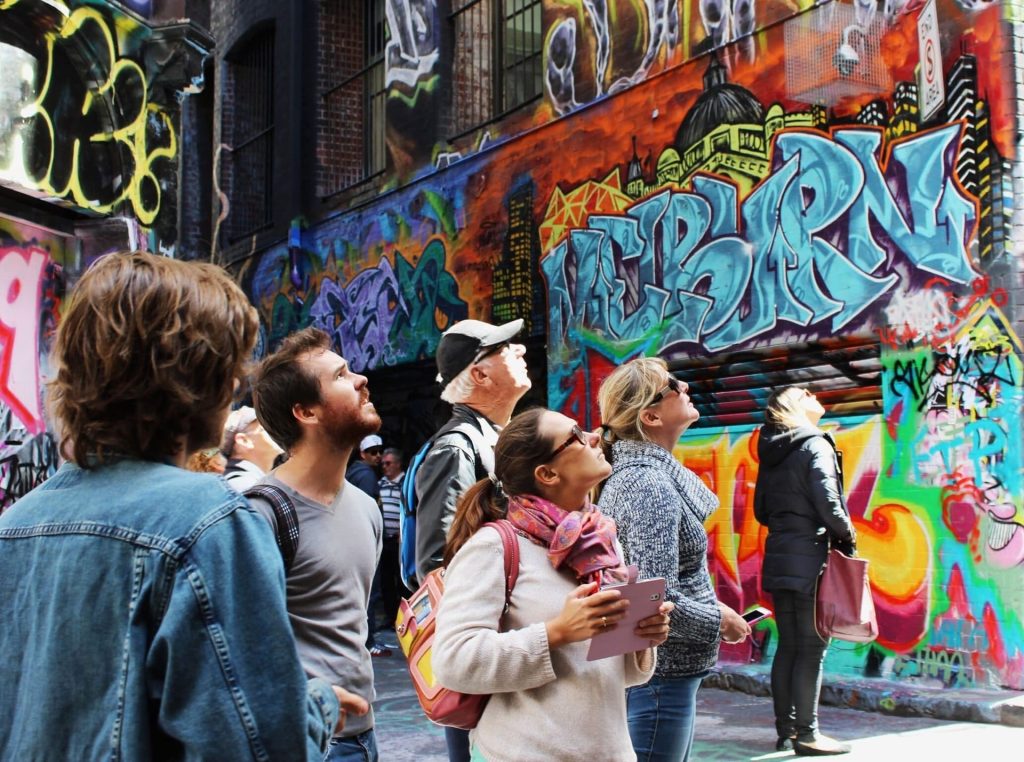
No discussion of Melbourne’s street art scene is complete without mentioning Hosier Lane, perhaps the most iconic laneway in Australia. Located in the heart of the CBD, opposite Federation Square, this narrow alley is a vibrant patchwork of murals, tags, and stencils. The walls are in a constant state of flux, layered with decades of work from amateur taggers to professional muralists. What makes Hosier Lane unique is that a gallery or city council does not curate it—its impermanence is its charm, reflecting the ever-changing nature of the street art movement itself. - Laneways as Open-Air Galleries
Beyond Hosier Lane, Melbourne’s laneways have become vital cultural arteries that pulse with creativity. Places like AC/DC Lane, Blender Lane, and Union Lane each have their own personality and history. These backstreets, once forgotten or overlooked, have been transformed into destinations in their own right. Walking through them offers an immersive artistic experience, with each turn revealing new layers of social commentary, artistic innovation, or playful experimentation. This democratization of art—free and accessible to all—is a key aspect of what makes Melbourne’s street art scene so compelling. - Fitzroy and Collingwood: Creative Hubs
The inner-city suburbs of Fitzroy and Collingwood are the spiritual homes of Melbourne’s street art culture. Known for their bohemian history, these areas have long been incubators for artists, musicians, and activists. Street art thrives here not just on alley walls but also on the facades of warehouses, shops, and even houses. Murals in Fitzroy often address themes of social justice, Aboriginal rights, feminism, and anti-capitalism, revealing the political dimension of Melbourne’s urban art. These suburbs reflect the broader identity of Melbourne—creative, diverse, and unafraid to challenge the status quo. - Local and International Talent
Melbourne’s walls are painted by a blend of local legends and visiting global stars. Renowned Australian artists like Adnate, Rone, and Lushsux have made significant contributions to the city’s visual landscape. Adnate, for instance, is known for his towering portraits of Indigenous Australians, merging realism with street style. Meanwhile, international artists such as Banksy have also left their mark here—some of Banksy’s original pieces in Melbourne are now protected by clear perspex to preserve their value. This mix of grassroots and high-profile talent adds depth and global appeal to Melbourne’s street art scene. - Legal Walls and Artistic Freedom
A key factor behind the success of street art in Melbourne is the presence of “legal walls”—areas where artists are permitted to paint without risk of prosecution. These zones encourage experimentation and skill-building while reducing the likelihood of illegal tagging in other parts of the city. Legal walls provide a rare balance between artistic freedom and urban order, fostering a respectful and sustainable street art culture. The City of Melbourne, along with local councils in Yarra and Moreland, have supported street art through mural commissions and public art programs, further legitimizing the movement. - Themes and Messages
Melbourne’s street art is not just decorative—it often carries strong messages about identity, politics, and culture. Murals tackle subjects such as climate change, gender equality, refugee rights, and First Nations sovereignty. For instance, large-scale portraits of Indigenous Australians by Adnate and others are powerful acknowledgments of cultural heritage and historical injustice. These artworks offer viewers more than visual stimulation; they invite reflection, conversation, and sometimes controversy. In this way, the street becomes a space not just for art, but for activism and storytelling. - The Role of Street Art Tours
The rise in popularity of Melbourne’s street art has led to a booming industry of guided street art tours. These walking tours, often led by local artists or art historians, offer deeper insight into the stories behind the works and the history of the movement. Participants learn about techniques like wheat-pasting, stenciling, and large-scale mural painting, while also exploring hidden laneways they might otherwise overlook. These tours help educate the public about the cultural value of street art and play a crucial role in preserving and promoting Melbourne’s urban art heritage. - Social Media and Street Art Fame
In the age of Instagram and TikTok, Melbourne’s street art has gained global visibility. Murals and installations are frequently tagged and shared, attracting visitors from around the world who want to photograph or film themselves against these colorful backdrops. While some purists argue that this trend can commercialize or trivialize the art form, others see it as a powerful way to broaden exposure and support artists. Either way, social media has undeniably played a significant role in putting Melbourne’s street art scene on the global map. - A Living, Breathing Art Form
What makes Melbourne’s street art scene truly unique is its constant state of evolution. Walls are painted over, tags are refreshed, and new messages appear overnight. This ever-changing nature reflects the pulse of the city—alive, diverse, and in motion. While some pieces achieve longevity and even preservation, many are fleeting, existing only for a few days or weeks. This impermanence challenges traditional ideas of art and ownership, making Melbourne’s street art a living conversation between the artist, the city, and its people.
Where to stay in Melbourne
- Best for First-Time Visitors: Melbourne CBD (Central Business District)
Why stay here?
You’re right in the heart of the action — walking distance to Federation Square, Flinders Street Station, laneways, museums, and shopping.
Top Hotels:
- The Langham Melbourne – luxury with Yarra River views.
- QT Melbourne – chic, artsy, great rooftop bar.
- Ibis Styles Melbourne Central – affordable, central, and convenient.
- Best for Foodies & Coffee Lovers: Fitzroy & Collingwood
Why stay here?
Trendy, artistic neighborhoods packed with cafes, street art, galleries, and amazing food.
Top Hotels & Stays:
- The Nunnery – cozy guesthouse in a former convent.
- Lyf Collingwood – modern co-living and stylish.
- Ovolo Laneways (nearby in East Melbourne) – hip and boutique.
- Best for Families: Southbank
Why stay here?
Riverside location with parks, kid-friendly attractions (SEA LIFE Aquarium, NGV), and plenty of space to walk.
Top Hotels:
- Crown Metropol – large rooms, pool, near entertainment complex.
- Novotel Melbourne South Wharf – modern and convenient.
- WRAP on Southbank – apartment-style rooms for families.
Things to do in Melbourne
- Explore the Laneways and Street Art
Wander through Hosier Lane, AC/DC Lane, and Centre Place to see Melbourne’s ever-changing graffiti and murals. The laneways are also filled with quirky cafes, boutiques, and photo ops.
- Visit the National Gallery of Victoria (NGV)
Australia’s oldest and most visited art museum. Offers free entry to the permanent collection and world-class exhibitions ranging from classical to contemporary art.
- Experience Melbourne’s Coffee Culture
Melbourne is one of the world’s coffee capitals. Try a flat white at Patricia Coffee Brewers, Market Lane, or Pellegrini’s. Every laneway has a hidden gem café.
Day trip from Melbourne
- Great Ocean Road
- 12 Apostles
- Loch Ard Gorge
- Rainforest walk in Otway National Park
- Surf towns like Lorne and Torquay
Why go: One of the world’s most scenic coastal drives with dramatic cliffs, beaches, and wildlife. Start early — it’s a full-day trip!
- Yarra Valley
- Wine tasting at world-class wineries (e.g., Domaine Chandon, Yering Station)
- Yarra Valley Dairy and Chocolaterie
- Hot air balloon ride (optional morning add-on)
Why go: A food and wine lover’s paradise just 1 hour from Melbourne.
- Phillip Island
- Penguin Parade at sunset
- Koala Conservation Reserve
- Nobbies Boardwalk
- Wildlife parks and beaches
Why go: See little penguins waddle ashore in one of Australia’s best wildlife experiences. Ideal for families.