
Introduction
Luxor is a historic city in southern Egypt, famous for its ancient temples and monuments. Once the capital of the ancient Egyptian kingdom of Thebes, it is home to incredible archaeological sites like the Karnak and Luxor Temples. Known as the world’s largest open-air museum, Luxor attracts visitors from around the world who come to explore its rich history and stunning ruins along the Nile River.
- Introduction to Luxor
Luxor, located in southern Egypt along the banks of the Nile River, is widely regarded as one of the most historically significant cities in the world. Known as the ancient city of Thebes, Luxor is often called the world’s greatest open-air museum due to its vast concentration of ancient monuments. It was the political and religious center of Egypt during the New Kingdom period (circa 1550-1070 BCE), a time of great wealth, power, and cultural development. Luxor today combines ancient history with modern life, attracting millions of tourists eager to experience its archaeological treasures.
- The Importance of Thebes in Ancient Egypt
In ancient times, Luxor was known as Thebes and served as the capital of Egypt during the New Kingdom. Thebes was a vital religious center, home to the powerful god Amun, whose worship dominated Egyptian spirituality. The city flourished under pharaohs such as Hatshepsut, Thutmose III, and Ramses II, who invested heavily in monumental architecture and religious structures. Thebes symbolized political might and religious devotion, making Luxor a city of both spiritual and governmental significance.
- Karnak Temple Complex
One of the most spectacular landmarks in Luxor is the Karnak Temple Complex. This vast complex was dedicated primarily to the god Amun-Ra and took over 1,000 years to build and expand. Karnak features massive pylons, colossal statues, intricately carved obelisks, and the famous Hypostyle Hall with its forest of towering columns. The temple was a focal point for religious festivals and ceremonies, particularly the Opet Festival, which celebrated the divine relationship between the pharaoh and the gods.
- Luxor Temple
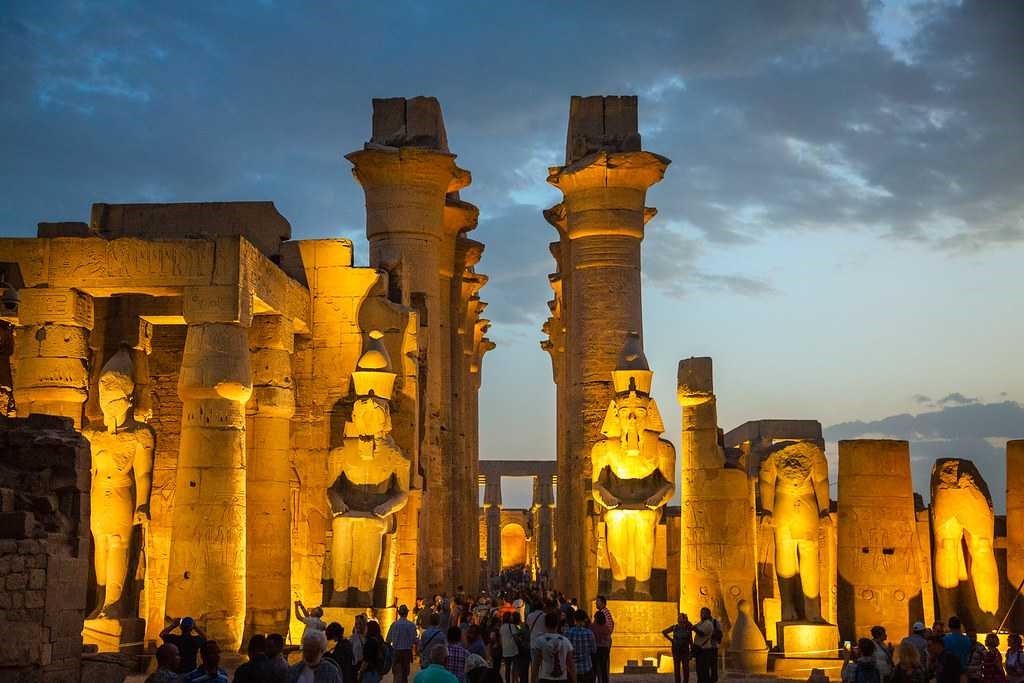
Another iconic site in Luxor is the Luxor Temple, located near the banks of the Nile. Unlike Karnak, Luxor Temple was primarily dedicated to the rejuvenation of kingship and was closely linked to the annual Opet Festival, during which the statues of gods were paraded between Karnak and Luxor. Built mostly by Amenhotep III and Ramses II, the temple features grand statues, beautifully decorated walls, and a unique combination of religious and royal symbolism, reflecting the intimate connection between pharaohs and the divine.
- The West Bank: Necropolis and Tombs
While the east bank of the Nile in Luxor hosts the temples, the west bank is known as the necropolis, or city of the dead. This area contains numerous tombs and mortuary temples where pharaohs and nobles were buried. The western side symbolizes the land of the dead in Egyptian mythology, as the sun sets there. Visitors to the west bank can explore the famous Valley of the Kings, Valley of the Queens, and the mortuary temple of Queen Hatshepsut, gaining insights into ancient Egyptian burial practices and beliefs about the afterlife.
- The Valley of the Kings: Royal Burial Ground
The Valley of the Kings is one of the most famous archaeological sites near Luxor, serving as the burial ground for New Kingdom pharaohs. Located on the west bank of the Nile, this valley contains over 60 tombs carved into the limestone hills, hidden to protect them from grave robbers. The tombs were elaborately decorated with scenes from Egyptian mythology and spells from the Book of the Dead intended to protect the deceased in the afterlife. Among the most famous discoveries here is the nearly intact tomb of Tutankhamun, which revealed a treasure trove of artifacts.
- Tomb Architecture and Decoration
The tombs in the Valley of the Kings are marvels of ancient Egyptian engineering and art. Designed as underground chambers, they often feature corridors, burial chambers, and side rooms. The walls are adorned with vivid paintings depicting gods, goddesses, and scenes of the afterlife. These decorations served both religious and magical purposes, guiding and protecting the pharaoh’s soul on its journey. Each tomb was customized for its occupant, reflecting their status and the religious beliefs of the time.
- The Discovery of Tutankhamun’s Tomb
The discovery of King Tutankhamun’s tomb in 1922 by Howard Carter is one of the most significant archaeological finds in history. Unlike many other tombs that had been looted, Tutankhamun’s tomb was largely intact, offering unparalleled insight into ancient Egyptian burial customs and treasures. The tomb contained exquisite artifacts, including the famous golden death mask, jewelry, chariots, and statues. This discovery sparked worldwide interest in Egyptology and continues to captivate people today.
- Modern Tourism and Preservation
Today, Luxor and the Valley of the Kings are major tourist destinations, drawing visitors from around the globe eager to experience the grandeur of ancient Egypt. Efforts have been made to balance tourism with preservation, as the delicate tombs and monuments are vulnerable to damage from humidity, pollution, and human traffic. Egyptian authorities, along with international organizations, work continuously to conserve these sites, ensuring that future generations can appreciate and study this rich heritage.
- Luxor’s Legacy and Cultural Impact
Luxor remains a symbol of ancient Egypt’s greatness, embodying the civilization’s architectural, religious, and artistic achievements. It continues to inspire archaeologists, historians, and travelers alike. The city’s monuments and the Valley of the Kings not only provide a window into the past but also contribute to Egypt’s cultural identity and economy. Luxor’s legacy is one of human creativity and the enduring quest to understand life, death, and the divine.
Where to stay in Luxor
- East Bank (City Center)
- The East Bank is where most of the modern city is located, including markets, restaurants, and shops.
- It’s close to major attractions like Luxor Temple and the Luxor Museum.
- Accommodation ranges from budget hotels to mid-range and luxury resorts.
- Good for travelers who want easy access to city life and convenient transport.
- West Bank (Near Valley of the Kings)
- Staying on the West Bank gives you proximity to the Valley of the Kings, Valley of the Queens, and mortuary temples.
- This area is quieter and more peaceful, with several boutique hotels and guesthouses.
- Ideal for visitors focused on archaeological sites and a more relaxed atmosphere.
- Nile River Cruises
- Many visitors choose to stay on a Nile cruise ship that sails between Luxor and Aswan.
- Cruises offer comfortable cabins, meals, and guided tours to temples.
- A unique way to explore multiple sites with convenience and luxury.
Things to do in Luxor
- Explore Karnak Temple
Wander through the vast Karnak Temple Complex, Egypt’s largest religious site. Marvel at the giant columns, obelisks, and sacred lakes while learning about the ancient rituals dedicated to the god Amun.
- Visit Luxor Temple
Located in the heart of Luxor city, this beautifully preserved temple is especially magical at sunset when it’s lit up. Discover its statues, carvings, and the ancient avenue of sphinxes that once connected it to Karnak.
- Tour the Valley of the Kings
Explore the famous burial site of New Kingdom pharaohs, including Tutankhamun and Ramses II. Walk through elaborately decorated tombs filled with hieroglyphics and ancient Egyptian art.
Day trip from Luxor
Morning:
- Valley of the Kings
Start early and head to the Valley of the Kings, the famed burial site of New Kingdom pharaohs. Explore several tombs, including Tutankhamun’s if you like, and marvel at the intricate hieroglyphics and artwork. - Temple of Hatshepsut (Deir el-Bahari)
Next, visit the stunning mortuary temple of Queen Hatshepsut. Its unique terraced design built into the cliffs is a striking contrast to the desert surroundings. - Colossi of Memnon
Stop briefly at these two massive stone statues, remnants of a once-grand mortuary temple of Pharaoh Amenhotep III. They are iconic landmarks on the West Bank.