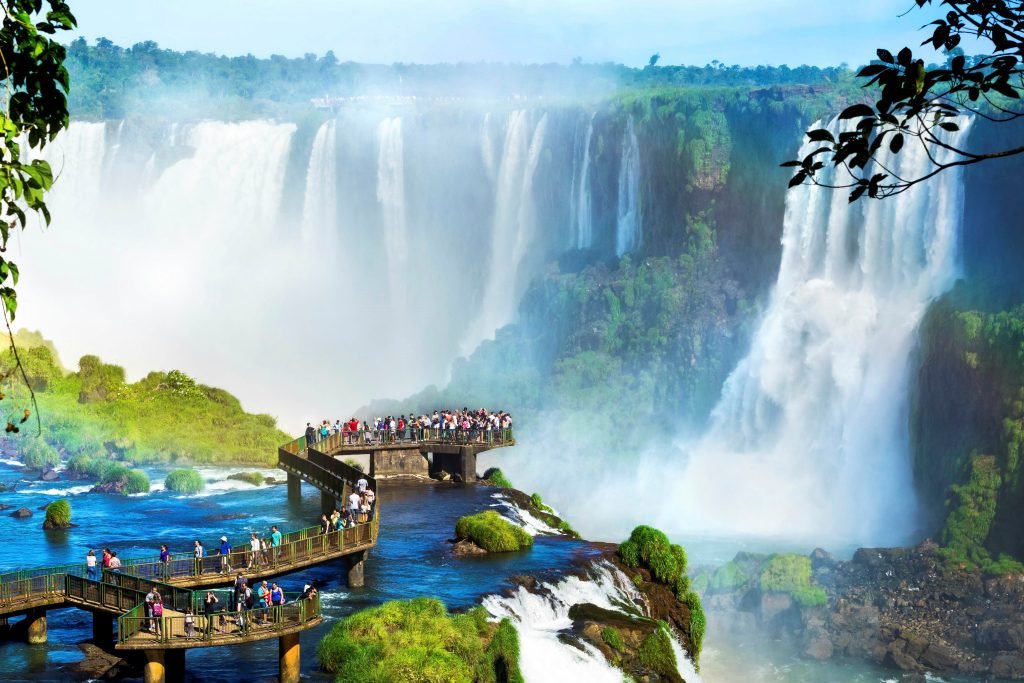

Introduction
The Iguazu Falls travel guide provides essential information for visiting one of the world’s largest and most stunning waterfall systems, located on the border of Argentina and Brazil. It includes tips on how to get there, the best times to visit, key attractions like the Devil’s Throat, differences between the Argentine and Brazilian sides, available tours, park entrance details, and nearby accommodations. The guide helps travelers plan an unforgettable trip to this UNESCO World Heritage Site surrounded by lush rainforest and abundant wildlife.
- Introduction to Iguazu Falls
Iguazu Falls is one of the most awe-inspiring natural wonders in the world, straddling the border between Argentina and Brazil. Comprising over 270 individual waterfalls spread across nearly 2 miles (3 kilometers), the falls are renowned for their breathtaking scale and raw power. The name “Iguazu” comes from the Guarani or Tupi words “y” (water) and “ûasú” (big), perfectly capturing the essence of this majestic site. Iguazu Falls is not only a UNESCO World Heritage Site but also a bucket-list destination for travelers worldwide, offering a perfect mix of natural beauty, adventure, and wildlife.
- How to Get to Iguazu Falls
The most common gateways to Iguazu Falls are the airports in Puerto Iguazú (Argentina) and Foz do Iguaçu (Brazil). Both cities are well-connected by domestic flights from major hubs like Buenos Aires, São Paulo, and Rio de Janeiro. International travelers often route through these cities before arriving. Once there, getting to the falls is straightforward with shuttle services, taxis, or rental cars. It’s important to decide whether you want to explore one side or both sides of the falls, as each country offers unique perspectives and experiences.
- When is the Best Time to Visit?
The climate around Iguazu Falls is subtropical, meaning it’s warm and humid year-round. However, the best time to visit is generally from March to May and August to October. These shoulder seasons avoid the heavy rains of the summer (December to February), which can make trails slippery and cause some park facilities to close. Visiting during the dry season offers better visibility and safer hiking conditions, while the rainy season, despite being wetter, swells the waterfalls to their most dramatic flows. Be prepared for humidity and pack accordingly.
- Exploring the Argentine Side
The Argentine side of Iguazu Falls offers the most extensive network of trails and close-up views of the waterfalls. Spanning about 67,000 hectares, Iguazú National Park features walking trails of varying lengths, from easy strolls to more challenging hikes. The highlight is the Garganta del Diablo (Devil’s Throat), a horseshoe-shaped waterfall where visitors can walk on catwalks right up to the edge of the roaring water. Boat rides beneath the falls, wildlife spotting, and visiting the visitor center are also popular activities here.
- Experiencing the Brazilian Side
The Brazilian side of Iguazu Falls, located in Iguaçu National Park, offers panoramic views that provide a sweeping perspective of the entire waterfall system. Though smaller in size compared to the Argentine side, the Brazilian side is famous for its well-maintained walkways and easy accessibility. From here, visitors get stunning photo opportunities and can appreciate the grandeur of the falls in a single view. The park also has a bird park nearby where travelers can see exotic tropical birds and other wildlife up close.
- Must-Do Activities
Beyond simply admiring the waterfalls, Iguazu Falls offers several exciting activities. The boat rides under the falls, often called “Gran Aventura,” provide an adrenaline-pumping experience as you get drenched by the powerful cascades. Hiking trails range from leisurely paths to jungle treks where you may spot toucans, monkeys, and coatis. For thrill-seekers, there are also helicopter tours offering aerial views. Don’t miss the ecological train in the Argentine park, which shuttles visitors to different trailheads while providing insights into the local ecosystem.
- Wildlife and Nature
Iguazu Falls is surrounded by rich subtropical rainforest teeming with biodiversity. Both national parks are home to over 80 mammal species, including jaguars, tapirs, and ocelots, as well as hundreds of bird species such as toucans and parrots. The lush vegetation and network of rivers create a thriving habitat for diverse flora and fauna. Visitors are encouraged to stay on marked trails to protect the environment and have the best chance of seeing wildlife in their natural habitat. Guided tours can offer deeper insight into the ecology of the area.
- Where to Stay
Both Puerto Iguazú (Argentina) and Foz do Iguaçu (Brazil) offer a wide range of accommodations, from budget hostels to luxury hotels and eco-lodges. Staying in Puerto Iguazú is ideal if you want to focus on the Argentine side, while Foz do Iguaçu is convenient for exploring Brazil’s viewpoint and additional attractions like the Itaipu Dam. Some lodges are located near the parks, providing early access and immersive nature experiences. Booking in advance is recommended, especially during high season or holidays.
- Travel Tips and Practical Information
When visiting Iguazu Falls, be sure to bring comfortable waterproof shoes, a rain jacket, sunscreen, insect repellent, and a hat. The trails can be wet and slippery, especially near the falls. Currency differs on each side (Argentine peso and Brazilian real), so plan accordingly. Most attractions require entrance fees, and park hours vary, so check ahead. If visiting both sides, allocate at least two full days to fully experience the falls. Hiring local guides can enrich your visit with cultural and environmental knowledge.
- Conclusion: Why Visit Iguazu Falls?
Iguazu Falls offers a unique blend of natural beauty, adventure, and cultural experience that few places on Earth can match. The combination of thunderous waterfalls, lush rainforest, diverse wildlife, and panoramic views create memories that last a lifetime. Whether you’re a nature lover, photographer, or thrill-seeker, Iguazu Falls caters to all interests. With proper planning, you can enjoy a seamless trip to one of the world’s greatest natural treasures, marveling at the sheer power and beauty of water in motion.
Where to Stay in Iguazu Falls
- Puerto Iguazu (Argentina)
This town is the main gateway for exploring the Argentine side of Iguazu Falls. It’s a charming, tourist-friendly town with plenty of restaurants, shops, and accommodations.
- Why stay here?
- Close to Iguazú National Park (about 15-20 minutes by car).
- More budget-friendly options and a variety of hotels, hostels, and boutique lodges.
- Vibrant local atmosphere with street markets and Argentine cuisine.
- Popular hotels:
- Loi Suites Iguazu Hotel – Luxury with jungle views.
- La Aldea de la Selva Lodge – Mid-range, close to nature.
- Hostel Bambu – Budget-friendly and social.
- Foz do Iguaçu (Brazil)
Foz do Iguaçu is the base for visiting the Brazilian side of the falls. It’s a larger city with more infrastructure and international flights.
- Why stay here?
- Convenient access to Iguaçu National Park.
- Good for combining a city vibe with nature visits.
- Close to attractions like the Itaipu Dam and Bird Park.
- Popular hotels:
- Belmond Hotel das Cataratas – The only hotel inside the Brazilian national park, offering exclusive early access to the falls.
- Recanto Cataratas Thermas Resort & Convention – Family-friendly resort with pools and spa.
- Viale Cataratas Hotel – Comfortable mid-range option.
- Lodges and Eco-Resorts Near the Parks
For a more immersive nature experience, some lodges and eco-resorts are located closer to the parks or even inside them.
- Advantages:
- Early entry into the parks before the crowds.
- Surrounded by jungle sounds and wildlife.
- Often offer guided tours and eco-activities.
- Examples:
- Yvy Hotel de Selva (Argentina) – A boutique eco-lodge in the jungle near Puerto Iguazu.
- San Martin Eco Resort (Brazil) – Close to the park, surrounded by nature.
Things to Do in Iguazu Falls
- Explore the Argentine Side of Iguazu Falls
Walk the extensive network of trails in Iguazú National Park. Don’t miss the Devil’s Throat (Garganta del Diablo) walkway, which takes you right to the edge of the most dramatic waterfall. There are also several other paths, like the Upper Circuit and Lower Circuit, offering different views and photo ops. - Visit the Brazilian Side for Panoramic Views
Head to Iguaçu National Park on the Brazilian side for sweeping, postcard-perfect vistas of the entire waterfall system. The trails here are shorter and easier, ideal for a half-day visit. - Take a Boat Ride Under the Falls
For an adrenaline rush, hop on a boat tour that takes you close under the falls. Prepare to get soaked but thrilled as you experience the raw power of the cascading water up close.
Day trip from Iguazu
Morning:
- Start Early at the Argentine Side (Iguazú National Park)
Head to the Argentine side to explore the extensive trails. Begin with the Upper Circuit for panoramic waterfall views, then do the Lower Circuit for closer, ground-level experiences. Finish with the highlight: the Devil’s Throat (Garganta del Diablo) The early start helps you avoid crowds and the midday heat.
Midday:
- Boat Ride Adventure
After the walks, take the thrilling Gran Aventura boat ride that brings you right under some of the biggest falls—prepare to get wet! It’s an unforgettable adrenaline rush and offers a unique perspective. - Lunch Break
Enjoy lunch either at one of the park’s restaurants or back in Puerto Iguazú, where you can try local Argentine cuisine like empanadas or grilled meats (asado).
Afternoon:
- Cross to the Brazilian Side (Iguaçu National Park)
After lunch, cross the border to the Brazilian side (remember your passport). The park here offers spectacular panoramic views of the falls from a single trail. It’s shorter and less strenuous than the Argentine trails but offers incredible photo opportunities. - Visit the Bird Park (Parque das Aves)
Just outside the Brazilian park entrance, stop at the Bird Park to see vibrant tropical birds and wildlife in a well-maintained sanctuary. It’s a peaceful contrast to the thunderous falls.
Late Afternoon:
- Optional Itaipu Dam Visit or Local Shopping
If time allows, take a quick trip to the nearby Itaipu Dam, one of the world’s largest hydroelectric power plants. Alternatively, explore Foz do Iguaçu’s markets for souvenirs and local crafts.