
Introduction
Seville is the vibrant capital of Spain’s Andalusia region, known for its rich history, stunning architecture, and passionate culture. It’s the birthplace of Flamenco, home to iconic landmarks like the Seville Cathedral, Giralda Tower, and Real Alcazar, and famous for its lively festivals such as Semana Santa and Feria de Abril. With its orange-scented streets, tapas bars, and blend of Moorish and Gothic influences, Seville offers a perfect mix of tradition, romance, and Southern Spanish charm.
- The Birthplace of Passion
While Flamenco originated in Andalusia as a whole, Seville holds a special place in its evolution. Rooted in the marginalized communities of Roma (Gypsies), Moors, Jews, and native Andalusians, Flamenco developed over centuries as a form of expression for the oppressed. In Seville, this art form matured, flourished, and gained recognition. The city’s diverse cultural history gave Flamenco its unique emotional depth, making Seville the emotional capital of the genre.
- Flamenco is More Than Dance
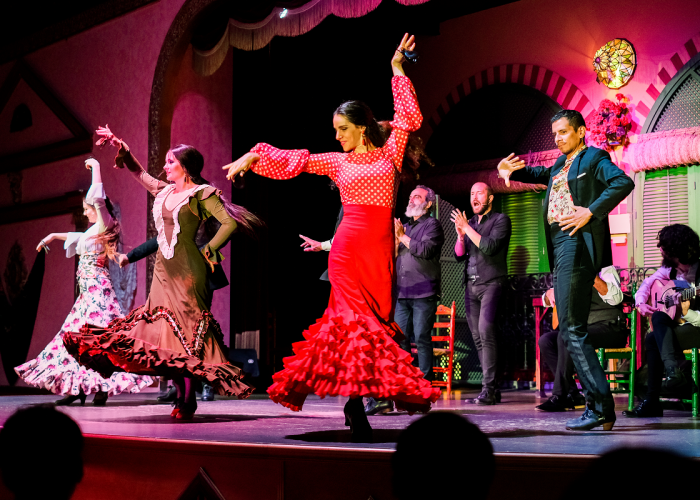
To many first-time viewers, Flamenco appears to be mostly dance. But it’s actually a trinity of expression: cante (singing), baile (dancing), and toque (guitar playing). Each component is essential, and in Seville, you’ll find performances where these elements blend seamlessly. The intense facial expressions, clapping (palmas), and footwork (zapateado) are all key ingredients of this soul-stirring art.
- Triana: The Soul of Flamenco
Located across the Guadalquivir River, Triana is a historic neighborhood often considered the cradle of Flamenco. Known for its ceramics and gypsy heritage, Triana produced many legendary Flamenco artists. Wander through its narrow streets, and you may still hear Flamenco echoes from private homes and small bars. Don’t miss the Centro de Interpretacion del Flamenco in the old Castillo de San Jorge for a cultural deep dive.
- Tablaos: The Modern Stage for Tradition
Tablaos are intimate venues designed specifically for Flamenco performances. These are not tourist traps; many are run by families with deep Flamenco roots and host some of the best artists in the region. Seville boasts excellent tablaos like Casa de la Memoria, El Palacio Andaluz, and Tablao El Arenal, where you can enjoy authentic, passionate performances often accompanied by dinner or drinks.
- The Role of Improvisation
One of the most captivating aspects of Flamenco is its spontaneity. While there are traditional forms (palos) and structures, Flamenco often relies on improvisation, especially in live settings. Artists communicate through eye contact, rhythms, and body language, creating a performance that is raw, immediate, and deeply emotional. In Seville, every show is unique—what you see one night will never be repeated exactly the same.
- Flamenco Festivals in Seville
Seville hosts several Flamenco festivals throughout the year that attract performers and fans from around the world. The Bienal de Flamenco, held every two years, is the most prestigious, showcasing the finest contemporary and traditional talent. The Festival de Jerez and Festival de la Guitarra in nearby cities are also worth attending. During these festivals, the city comes alive with spontaneous street performances and pop-up tablaos.
- Flamenco Schools and Classes
For those who want to go beyond watching and actually experience Flamenco, Seville offers numerous workshops and schools. Whether you’re a beginner or an advanced dancer, you’ll find courses tailored to your level. Institutions like Fundacion Cristina Heeren and Escuela Flamenco Sevilla offer both short-term tourist classes and intensive programs. Even a one-hour lesson can give you a new appreciation for the skill and athleticism Flamenco demands.
- Costumes and Symbols
The visual elements of Flamenco are just as important as the music and movement. Women often wear polka-dotted dresses with ruffles (trajes de flamenca), and men may wear tight trousers and vests. Accessories like mantones (shawls), abanicos (fans), and castanuelas (castanets) enhance the drama of the performance. These costumes aren’t just for show—they help tell the story, with every swish, snap, and stomp contributing to the overall effect.
- Flamenco and Emotion: The Concept of ‘Duende’
A central concept in Flamenco is duende, an untranslatable Spanish term referring to a deep, almost spiritual emotional connection between the performer and the audience. It’s not something that can be rehearsed or staged; it happens spontaneously when everything aligns—the music, the moment, the energy. Seville, with its historic venues and passionate artists, is the perfect place to feel this elusive, electrifying force.
- Supporting Authentic Flamenco
With the popularity of Flamenco among tourists, some venues may prioritize spectacle over authenticity. To truly appreciate the art form, choose shows that feature local, professional artists, and avoid large, flashy productions that dilute the tradition. Seek out family-run tablaos or performances in cultural centers. By doing so, you’re not just enjoying a performance—you’re helping to preserve a centuries-old tradition.
Where to stay in Seville
- Santa Cruz – For First-Time Visitors and History Lovers
This is Seville’s most famous and picturesque area, home to the Seville Cathedral, Giralda Tower, and the Alcazar. A maze of narrow, cobbled streets filled with tapas bars and orange trees.
- Why stay here: Central location, walking distance to top sights, romantic ambiance.
- Recommended stays:
- Hotel Casa 1800: Elegant boutique hotel steps from the cathedral.
- Hotel Alfonso XIII: Iconic 5-star luxury with Andalusian architecture.
- Hostal Callejon del Agua: Charming and budget-friendly.
- Triana – For Authentic Local Vibes and Flamenco
Across the Guadalquivir River, Triana is known for its ceramics, Flamenco culture, and vibrant, working-class roots. It feels less touristy but still close to major attractions.
- Why stay here: Authentic, artsy, great nightlife, Flamenco bars.
- Recommended stays:
- Zenit Sevilla: Modern comfort in a traditional setting.
- Monte Triana: A favorite mid-range option with great service.
- Triana House: Boutique guesthouse with local charm.
- El Arenal – For Culture and Tapas
Just west of Santa Cruz, El Arenal is known for the Maestranza bullring, the Torre del Oro, and fantastic food options. It’s slightly less touristy but still central.
- Why stay here: Cultural attractions, near the river, top-notch dining.
- Recommended stays:
- Hotel Kivir: Chic, riverside with rooftop views.
- Vincci La Rábida: Stylish hotel in a converted palace.
- Hotel Adriano: Comfortable and well-located.
Things to Do in Seville
- Explore the Real Alcazar
A breathtaking royal palace with Moorish, Gothic, and Renaissance architecture, the Real Alcazar is one of Seville’s most iconic landmarks. Wander through lush gardens, intricate tilework, and grand courtyards. Fans of Game of Thrones may recognize it as the Palace of Dorne.
- Tip: Book your ticket online in advance to skip the long lines.
- Visit the Seville Cathedral and La Giralda
The Seville Cathedral is the largest Gothic cathedral in the world and houses the tomb of Christopher Columbus. Climb the Giralda bell tower (originally a minaret) for panoramic views of the city.
- Don’t miss: The altarpiece inside—it’s the largest in Christendom.
- Watch a Flamenco Show
Experience the passion of Flamenco in its birthplace. Choose an intimate tablao like Casa de la Memoria or El Palacio Andaluz, or catch a spontaneous performance in the Triana district.
- Tip: Book an early show and follow it with late-night tapas.
Day Trips from Seville
- Cordoba – Moorish Marvels and Mezquita
- Travel time: ~45 minutes by high-speed train (AVE)
- Highlights:
- The breathtaking Mezquita-Catedral (mosque-cathedral)
- Roman Bridge over the Guadalquivir
- Historic Jewish Quarter and flower-filled patios
- Alcázar de los Reyes Cristianos
- Why go: It’s one of Spain’s most beautiful cities, and perfect for architecture and history lovers.
- Ronda – The City on the Cliff
- Travel time: ~2–2.5 hours by car or tour
- Highlights:
- The dramatic Puente Nuevo bridge over El Tajo Gorge
- Old and New Towns with stunning views
- Ronda’s bullring—one of the oldest in Spain
- Wine tasting at local bodegas
- Why go: For dramatic landscapes and one of Spain’s most picturesque towns.
- Cadiz – Coastal Charm and Golden Sands
- Travel time: ~1.5 hours by train
- Highlights:
- La Caleta beach and oceanfront promenade
- Cadiz Cathedral and Roman Theater
- Seafood tapas in the Mercado Central
- Watch the sunset from Castillo de San Sebastian
- Why go: A perfect mix of history, sea views, and relaxed beach town vibes.