
Introduction
Ecuador is a small South American country located on the equator, bordered by Colombia, Peru, and the Pacific Ocean. It’s known for its incredible natural diversity, including the Amazon rainforest, Andes mountains, and the Galápagos Islands. Ecuador has a rich cultural heritage with a mix of Indigenous, Spanish, and other influences. Its economy relies on agriculture, oil, tourism, and exports like bananas and seafood. Despite its size, Ecuador is one of the most biodiverse countries in the world.
- Location and Elevation
Ecuador’s cloud forests are primarily located along the eastern and western slopes of the Andes Mountains, stretching between 1,000 and 3,500 meters (3,280 to 11,500 feet) above sea level. These forests thrive in mountainous areas where moist air from the Amazon Basin rises and condenses into persistent clouds, creating a unique microclimate. This elevation range supports an environment that is neither tropical lowland rainforest nor high-altitude paramo, but a cool, misty forest ecosystem with consistent moisture.
- Climate and Cloud Cover
The defining feature of cloud forests is their constant or near-constant cloud cover, which keeps humidity levels very high, often near saturation. In Ecuador, this cloud cover results in frequent mist and fog that drape the forest canopy, limiting direct sunlight but providing a steady supply of moisture. This climate maintains cool temperatures year-round, usually between 10°C and 20°C (50°F to 68°F), and creates ideal conditions for the growth of epiphytes and mosses, which depend on atmospheric moisture.
- Biodiversity Hotspot
Ecuador’s cloud forests are among the most biologically diverse ecosystems in the world. Despite covering only a small portion of the country’s land area, these forests harbor an extraordinary variety of plants and animals. Scientists estimate thousands of species live here, many of which are endemic—found nowhere else on Earth. The complex structure of the forest, with multiple canopy layers, provides niches for a wide range of organisms.
- Unique Flora
The vegetation in Ecuador’s cloud forests is remarkable for its richness and variety. Trees are typically shorter and more twisted than those in lowland rainforests, often covered with mosses, lichens, and bromeliads. Epiphytes, which grow on other plants without harming them, are especially abundant. Orchids are famously diverse here, with some cloud forest areas boasting hundreds of orchid species. Ferns, bamboo, and giant tree ferns are also common, contributing to the dense and lush forest understory.
- Wildlife Diversity
These forests are critical habitats for many animal species, including some that are rare or endangered. Ecuador’s cloud forests are home to numerous bird species, such as the vibrant Andean cock-of-the-rock, toucans, and hummingbirds. Mammals like spectacled bears, ocelots, and various monkeys inhabit the dense forests. Amphibians, especially colorful frogs and salamanders adapted to moist environments, thrive here. The cloud forests also support many reptiles and countless insects, contributing to the ecosystem’s complexity.
- Ecological Importance
Cloud forests in Ecuador perform vital ecological functions beyond their biodiversity. They act as natural water towers, capturing moisture from clouds and fog, which helps regulate the water cycle. This water feeds rivers and streams that supply drinking water and irrigation to surrounding human communities. The forests also play a key role in carbon sequestration, storing large amounts of carbon in their vegetation and soil, which helps mitigate climate change impacts.
- Conservation Challenges
Despite their importance, Ecuador’s cloud forests face serious threats. Deforestation due to agriculture, logging, mining, and infrastructure development has led to habitat loss and fragmentation. Climate change poses another risk, potentially altering cloud patterns and reducing the moisture these forests depend on. Illegal hunting and human encroachment also threaten wildlife. Protecting these fragile ecosystems requires concerted conservation efforts and sustainable land-use planning.
- Protected Areas and Conservation Efforts
Ecuador has recognized the importance of its cloud forests and established several protected areas to conserve them. Notable examples include Podocarpus National Park, Mindo-Nambillo Protected Forest, and the Bellavista Cloud Forest Reserve. These parks safeguard critical habitats and promote ecotourism, which provides economic incentives to local communities while raising awareness about the forests’ value. Conservation programs often involve scientific research, community engagement, and reforestation projects.
- Ecotourism and Community Impact
Ecotourism in Ecuador’s cloud forests has grown in popularity due to their scenic beauty and rich biodiversity. Visitors come to experience birdwatching, hiking, and wildlife photography, often guided by local experts. This tourism supports local economies and encourages conservation by providing alternative livelihoods to deforestation-based activities. Responsible ecotourism also educates visitors about the ecological and cultural significance of these forests, fostering global stewardship.
- Cultural Significance
Beyond their ecological importance, Ecuador’s cloud forests hold deep cultural value for Indigenous and local communities. Many Indigenous groups consider these forests sacred and rely on them for traditional medicine, food, and spiritual practices. Their knowledge of the forest’s flora and fauna contributes to sustainable management and biodiversity conservation. Protecting cloud forests is thus not only an environmental priority but also a way to preserve Ecuador’s rich cultural heritage.
Where to stay in Ecuador
- Quito
The capital city offers a mix of budget hostels, mid-range hotels, and luxury accommodations. Popular areas include the historic Old Town for colonial charm, La Mariscal for nightlife and dining, and the upscale Gonzalez Suarez neighborhood. Great base for exploring nearby attractions like the Mitad del Mundo monument.
- Cuenca
Known for its beautiful colonial architecture, Cuenca has cozy guesthouses, boutique hotels, and budget hostels. The city is quieter and perfect for cultural exploration, with easy access to Cajas National Park.
- Banos
Ideal for adventure travelers and nature lovers, Banos offers hostels, eco-lodges, and small hotels. It’s famous for waterfalls, hot springs, and outdoor activities like rafting and hiking.
Things to do in Ecuador
- Explore Quito’s Historic Center
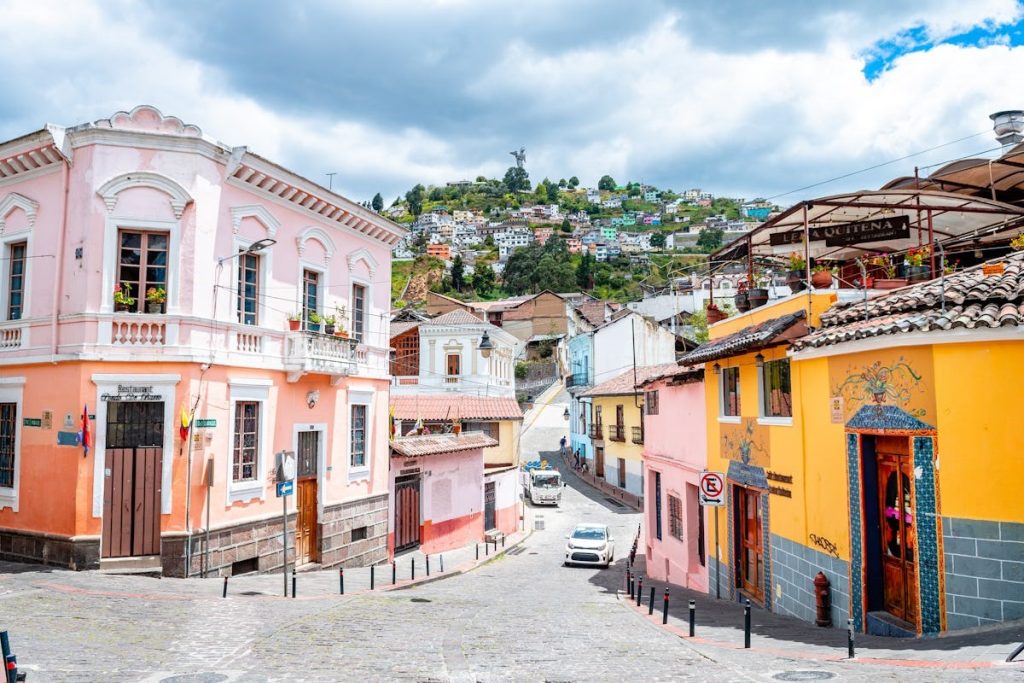
Wander through the UNESCO-listed Old Town with its colonial churches, plazas, and vibrant markets. Don’t miss La Compañía Church and the viewpoint at El Panecillo.
- Visit the Mitad del Mundo
Stand exactly on the equator line near Quito, visit the Intiñan Museum, and learn about the unique phenomena of the equator.
- Hike in the Andes
Trek in the scenic Andean mountains, including Cotopaxi National Park (home to one of the highest active volcanoes), Chimborazo (Ecuador’s tallest peak), and the Quilotoa crater lake.
Day trip from Ecuador
- Mitad del Mundo & Pululahua Crater
Visit the famous equator monument at Mitad del Mundo, then head to Pululahua, one of the few inhabited volcanic craters in the world, for a scenic hike and great views. - Otavalo Market
Explore the vibrant Indigenous market of Otavalo (about 2 hours from Quito), known for textiles, crafts, and local food. - Cotopaxi National Park
Take a day trip to see the stunning Cotopaxi volcano, hike around Limpiopungo Lagoon, or even try horseback riding in the park.