
Introduction
Athens is the capital of Greece and one of the world’s oldest cities, with a recorded history spanning over 3,400 years. Known as the birthplace of democracy, philosophy, and Western civilization, Athens played a central role in ancient Greece. It is famous for its historical landmarks like the Acropolis, the Parthenon, and the Ancient Agora.
- The Acropolis and the Parthenon
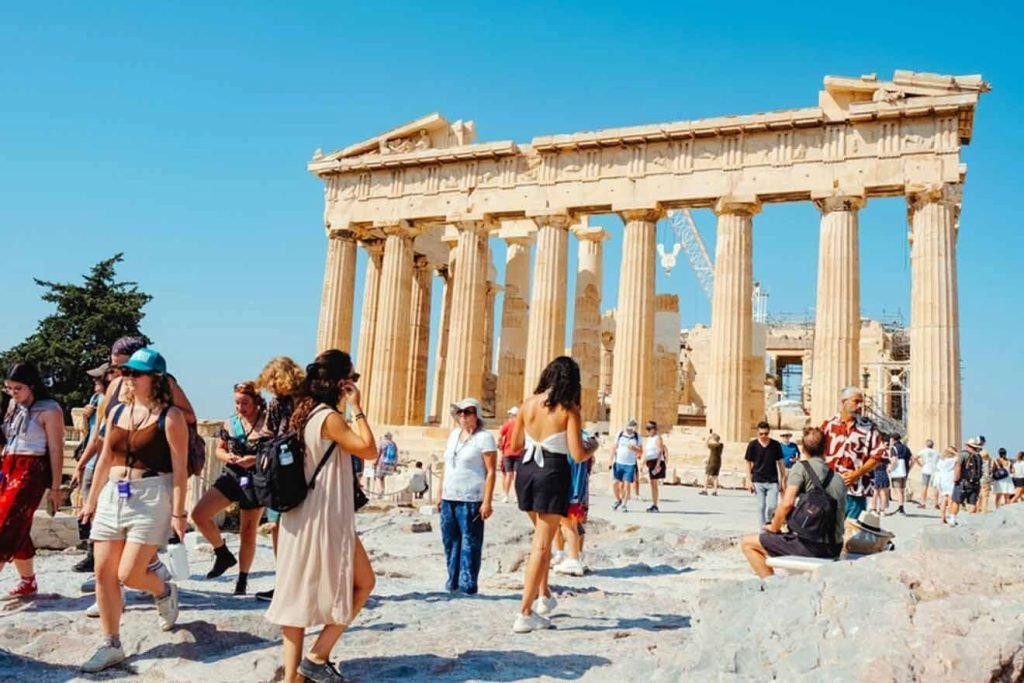
At the heart of Athens stands the Acropolis, an ancient citadel perched on a rocky hill overlooking the city. The Acropolis is home to several significant monuments, the most famous being the Parthenon. Built in the 5th century BCE, the Parthenon was dedicated to Athena, the city’s patron goddess, and exemplifies classical Greek architecture. It is celebrated for its perfect proportions, Doric columns, and intricate sculptures, many of which depict mythological scenes. The Acropolis symbolizes the cultural and political achievements of Athens during its Golden Age under Pericles.
- The Ancient Agora of Athens
The Ancient Agora was the social, political, and commercial center of ancient Athens. This open-air marketplace was where citizens gathered to discuss politics, philosophy, and daily affairs. Key structures here include the Stoa of Attalos, a reconstructed colonnaded walkway that now houses the Agora Museum, and the Temple of Hephaestus, one of the best-preserved ancient Greek temples. The Agora gives insight into the democratic ideals and public life of Athens.
- The Temple of Olympian Zeus
Also known as the Olympieion, this colossal temple was dedicated to Zeus, the king of the Greek gods. Although construction began in the 6th century BCE, it was not completed until Roman times, nearly 600 years later. The temple once featured 104 massive Corinthian columns, of which only a few remain standing today. Its grand scale reflected the power of both the city and its rulers, especially during the Roman Empire’s influence in Greece.
- The Theatre of Dionysus
Nestled on the southern slope of the Acropolis, the Theatre of Dionysus is considered the world’s first theater and the birthplace of Greek drama. Dedicated to Dionysus, the god of wine and theater, it hosted festivals where playwrights like Sophocles, Euripides, and Aeschylus premiered their works. The theater could seat up to 17,000 spectators and was an important cultural hub in ancient Athens.
- The Odeon of Herodes Atticus
Built in 161 CE by the wealthy Roman Herodes Atticus in memory of his wife, this stone theater is renowned for its excellent acoustics and stunning setting beneath the Acropolis. Unlike the open-air Theatre of Dionysus, the Odeon had a roof and was used primarily for musical performances. Today, it remains a vibrant venue for concerts and the Athens Festival, bridging ancient culture with modern entertainment.
- Hadrian’s Library
Constructed by the Roman Emperor Hadrian in 132 CE, Hadrian’s Library was not just a place for books, but also a cultural complex that included lecture halls and reading rooms. The site reflects Rome’s influence over Athens and its role as a center of learning and philosophy during the Roman period. The ruins give a sense of the intellectual vibrancy of the city long after the classical era.
- The Roman Agora
Built to serve as the new marketplace during Roman times, the Roman Agora sits just east of the Ancient Agora. It includes the well-preserved Tower of the Winds, an ancient octagonal clocktower and weather station, which helped regulate city life. The Roman Agora highlights the continued evolution of Athens as a thriving metropolis blending Greek and Roman elements.
- Kerameikos Cemetery
The Kerameikos was the ancient cemetery and potters’ quarter of Athens. This archaeological site contains funerary sculptures, graves, and parts of the city’s defensive walls. It provides unique insights into Athenian burial customs, art, and daily life. Visitors can explore the remains of the Dipylon Gate, the city’s main entrance during classical times, located near this area.
- The Erechtheion
Located on the Acropolis, the Erechtheion is an extraordinary temple dedicated to both Athena and Poseidon. It is famous for its Porch of the Caryatids, where six elegant female statues serve as architectural supports instead of columns. The temple’s unusual asymmetrical design reflects the complex religious significance of the site, believed to mark the mythical contest between Athena and Poseidon for the city’s patronage.
- Philopappos Hill
Also known as the Hill of the Muses, Philopappos Hill offers a peaceful retreat from the bustling city and panoramic views of the Acropolis and Athens. It is named after Gaius Julius Antiochus Epiphanes Philopappos, a prominent Roman consul buried here. The hill features ancient monuments, pathways, and is a popular spot for locals and tourists alike to connect with nature and history simultaneously.
Where to Stay in Athens
- Plaka — The Historic Heart
- Why stay here? Plaka is Athens’ oldest neighborhood, right beneath the Acropolis. It’s famous for its charming narrow streets, neoclassical architecture, traditional tavernas, and proximity to major landmarks.
- Best for: First-time visitors, history lovers, and those wanting to be close to major sites.
- Accommodation: Boutique hotels, guesthouses, and charming inns.
- Monastiraki — Vibrant and Central
- Why stay here? Monastiraki is a lively area known for its flea market, cafes, and street art. It’s also a transport hub, making it easy to explore the rest of Athens.
- Best for: Budget travelers, shoppers, and nightlife seekers.
- Accommodation: Hostels, budget hotels, and mid-range options.
- Syntagma — City Center & Luxury
- Why stay here? Syntagma Square is the city’s commercial and political center, home to the Greek Parliament. It’s close to upscale shops, restaurants, and has excellent public transport.
- Best for: Business travelers, luxury seekers, and those wanting central convenience.
- Accommodation: Luxury hotels, international chains, and stylish apartments.
Things to Do in Athens
- Explore the Acropolis and the Parthenon
- The iconic symbol of Athens and ancient Greece.
- Climb up the hill to see the Parthenon, Erechtheion, and breathtaking city views.
- Don’t miss the Acropolis Museum nearby to see artifacts and learn the history.
- Wander through the Ancient Agora
- Stroll the ruins of the marketplace where democracy was born.
- Visit the Temple of Hephaestus, one of the best-preserved Greek temples.
- Enjoy the peaceful atmosphere and imagine ancient public life.
- Visit the National Archaeological Museum
- Home to the world’s largest collection of Greek antiquities.
- See incredible sculptures, pottery, and artifacts from all over Greece.
- Perfect for history buffs and culture lovers.
Day trip from Athens
- Delphi — The Center of the Ancient World
- About 2.5 hours from Athens by car or bus.
- Visit the archaeological site with the famous Oracle of Delphi, the Temple of Apollo, ancient theater, and stadium.
- Explore the Delphi Museum showcasing artifacts from the site.
- Experience breathtaking views of the surrounding mountains and valley.
- A perfect trip for history lovers and mythology fans.
- Cape Sounion and the Temple of Poseidon
- Around 1.5 hours southeast of Athens along the scenic Athenian Riviera.
- Visit the Temple of Poseidon, perched dramatically on a cliff overlooking the Aegean Sea.
- Enjoy stunning sunset views — one of the most beautiful in Greece.
- Combine with a stop at nearby beaches or seaside tavernas.
- Hydra Island
- Take a 1.5 to 2-hour ferry from Piraeus port.
- A charming, car-free island with cobblestone streets, traditional mansions, and crystal-clear waters.
- Perfect for walking, swimming, and enjoying fresh seafood.
- Ideal for a relaxing day away from the city buzz.