
Introduction
Australia is a vast island continent located in the Southern Hemisphere, known for its diverse landscapes, unique wildlife, and multicultural cities. It is the world’s sixth-largest country by land area, featuring everything from tropical rainforests and arid deserts to pristine beaches and modern urban centers. Famous for landmarks such as the Sydney Opera House, the Great Barrier Reef, and Uluru, Australia is a popular destination for nature lovers, adventure seekers, and cultural explorers.
- Ancient Origins and Continuity
Aboriginal culture in Australia is recognized as one of the oldest continuous cultures in the world, with origins tracing back over 60,000 years. This remarkable longevity means that Aboriginal people have sustained cultural practices, beliefs, and artistic traditions through millennia, adapting to environmental changes while preserving core spiritual and social values. Their connection to the land, or “Country,” is foundational, shaping every aspect of life and cultural expression.
- The Dreamtime: Spiritual and Cultural Foundation
Central to Aboriginal culture is the concept of the Dreamtime (also called Dreaming), a complex system of creation stories that explain how the world and its natural features were formed by ancestral beings. These stories convey moral codes, laws, and social structures, guiding community life and relationship with nature. Dreamtime narratives are passed down through oral tradition, ceremony, song, dance, and art, serving as a living spiritual framework for Indigenous peoples.
- Connection to Country
For Aboriginal Australians, “Country” is far more than physical land; it encompasses the spiritual, cultural, and ancestral connection to place. This relationship informs daily life, cultural identity, and artistic practices. Artworks often represent specific sacred sites, animals, and plants tied to individual clans or language groups, reinforcing the bond between people and their environment.
- Traditional Artistic Materials and Techniques
Aboriginal art traditionally employs natural materials sourced from the environment, including ochre pigments in reds, yellows, and whites, charcoal, bark, wood, and stone. Techniques vary widely across regions, from rock engravings and paintings in central Australia to bark paintings in northern Australia. Body painting and ceremonial decoration are also vital art forms, used in rituals to invoke spiritual power and cultural identity.
- Dot Painting and Symbolism
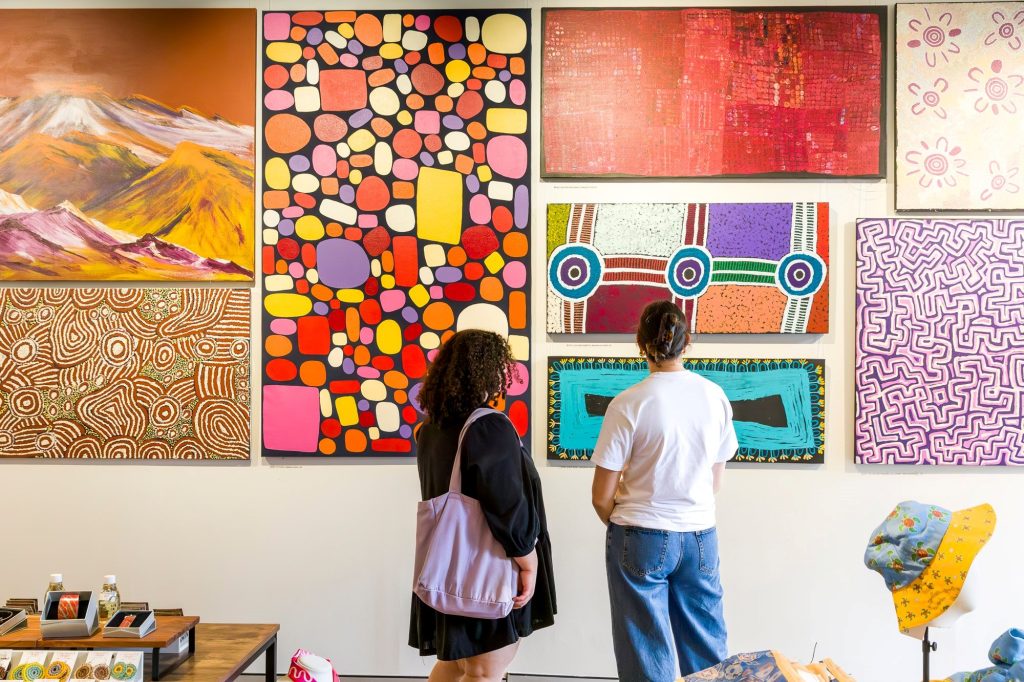
One of the most internationally recognized Aboriginal art styles is dot painting, which originated with the Papunya Tula artists in the 1970s. This style uses intricate dots and geometric patterns to represent Dreamtime stories, landscapes, and maps. Symbols in these paintings carry deep meanings—depicting waterholes, tracks, animals, and ancestral beings—often serving as a coded language to preserve knowledge within the community.
- Rock Art: Ancient Stories on Stone
Rock art is among the oldest surviving expressions of Aboriginal creativity, with some sites dating back tens of thousands of years. Found throughout Australia, these artworks include stencils, engravings, and paintings depicting animals, human figures, and ceremonial scenes. Sites like those in Kakadu National Park and the Kimberley region are UNESCO-listed for their cultural and archaeological significance, preserving a direct link to ancient cultural practices.
- Role of Art in Storytelling and Law
Art is not just decorative but a vital medium for storytelling, education, and maintaining law within Aboriginal societies. Through visual symbols, artworks encode knowledge about kinship, land management, survival skills, and spiritual beliefs. These artistic expressions reinforce cultural identity and community cohesion, ensuring that traditions and laws are passed accurately across generations.
- Contemporary Aboriginal Art Movement
Since the late 20th century, Aboriginal art has gained global recognition, with many Indigenous artists blending traditional themes and methods with contemporary styles and media. Artists like Emily Kame Kngwarreye, Rover Thomas, and Clifford Possum Tjapaltjarri have brought Aboriginal art to international galleries and auctions, helping to raise awareness of Indigenous cultures and social issues while generating economic benefits for communities.
- Art and Social Justice
Aboriginal art is also a powerful form of activism and social commentary, addressing issues such as land rights, identity, and the impact of colonization. Through art, Indigenous Australians voice their experiences and aspirations, promoting reconciliation and cultural survival. Public artworks, exhibitions, and festivals play crucial roles in educating non-Indigenous audiences and fostering cross-cultural understanding.
- Preservation and Cultural Revival
Efforts to preserve Aboriginal culture and art include community-led initiatives, government support, and collaborations with museums and cultural institutions. Language revitalization, land rights claims, and cultural education programs work alongside art centers to sustain traditional knowledge and creative practices. Aboriginal art remains a living tradition, continually evolving while honoring its ancient roots and inspiring new generations.
Where to stay in Australia
- Sydney
- Where to stay: Central Business District (CBD), The Rocks, Darling Harbour, Bondi Beach
- Types: Luxury hotels (e.g., Shangri-La), boutique hotels, serviced apartments, budget hostels
- Why: Close to iconic sights like the Sydney Opera House and Harbour Bridge, plus beaches and vibrant nightlife.
- Melbourne
- Where to stay: CBD, Fitzroy, St Kilda, Southbank
- Types: Trendy boutique hotels, stylish apartments, budget hostels, luxury hotels
- Why: Known for art, cafes, laneways, and cultural events, plus proximity to the Great Ocean Road.
- Great Barrier Reef (Cairns, Port Douglas, Airlie Beach)
- Where to stay: Cairns (for reef tours), Port Douglas (luxury and nature), Airlie Beach (gateway to Whitsundays)
- Types: Resorts, eco-lodges, budget hotels, backpacker hostels
- Why: Access to reef snorkeling/diving and tropical rainforests.
Things to do in Australia
- Explore the Great Barrier Reef
Dive or snorkel among vibrant coral reefs and marine life in the world’s largest coral reef system, located off the coast of Queensland.
- Visit Sydney’s Iconic Landmarks
Climb the Sydney Harbour Bridge, tour the Sydney Opera House, and relax at Bondi or Manly Beach.
- Experience the Outback and Uluru
See the stunning red rock monolith Uluru at sunset, learn about Aboriginal culture, and explore the nearby Kata Tjuta rock formations.
Day trip from Australia
From Sydney:
Blue Mountains National Park
Just about 1.5–2 hours west of Sydney, the Blue Mountains offer stunning cliffs, waterfalls, and eucalyptus forests. Highlights include the Three Sisters rock formation, Scenic World rides, and walking trails like the Wentworth Falls track.
From Melbourne:
Phillip Island
Around 90 minutes from Melbourne, Phillip Island is famous for its nightly Penguin Parade, where you can watch little penguins waddle ashore. You’ll also find koalas, beautiful beaches, and the rugged Nobbies coastline.
From Brisbane:
Moreton Island
Just an hour’s ferry ride from Brisbane, Moreton Island is a sand island with amazing snorkelling, sand dunes for tobogganing, and dolphin feeding at Tangalooma Resort.