
Introduction
New Zealand is a beautiful island country located in the southwestern Pacific Ocean, made up mainly of two large islands—the North Island and the South Island—plus numerous smaller islands. Known for its stunning natural landscapes, from rugged mountains and fjords to pristine beaches and lush forests, New Zealand offers diverse environments and outdoor adventures.
1. Location and Overview
Abel Tasman National Park is located at the northwestern tip of New Zealand’s South Island, nestled between the Tasman Bay and Golden Bay. It lies within the Nelson-Tasman region and is easily accessible from the nearby towns of Motueka, Kaiteriteri, and Marahau. Although it is New Zealand’s smallest national park, covering approximately 22,500 hectares, it is one of the most visited due to its spectacular coastal scenery, mild climate, and variety of outdoor activities. Established in 1942, the park was named after the Dutch explorer Abel Tasman, who was the first European to sight New Zealand in 1642.
2. Natural Beauty
Abel Tasman National Park is famous for its breathtaking landscapes. The coastline is lined with golden sandy beaches, rocky headlands, secluded bays, and crystal-clear turquoise waters. Inland, the park features native beech and broadleaf forests, steep ridges, and lush valleys. The contrast between the bright blue sea and dense green forest makes the park a paradise for photographers and nature lovers. Its unique beauty, especially the golden beaches like Anchorage, Torrent Bay, and Bark Bay, is unlike any other national park in the country.
3. Abel Tasman Coast Track
The Abel Tasman Coast Track is one of New Zealand’s 10 official Great Walks and is a major draw for visitors. This 60-kilometer trail follows the coastline from Marahau to Wainui Bay, passing through dense forest, crossing suspension bridges, and revealing stunning coastal views at every turn. It typically takes 3 to 5 days to complete the entire track, though many choose to hike shorter sections. The trail is well-maintained, suitable for a range of fitness levels, and features huts and campsites along the way for overnight stays.
4. Water-Based Activities
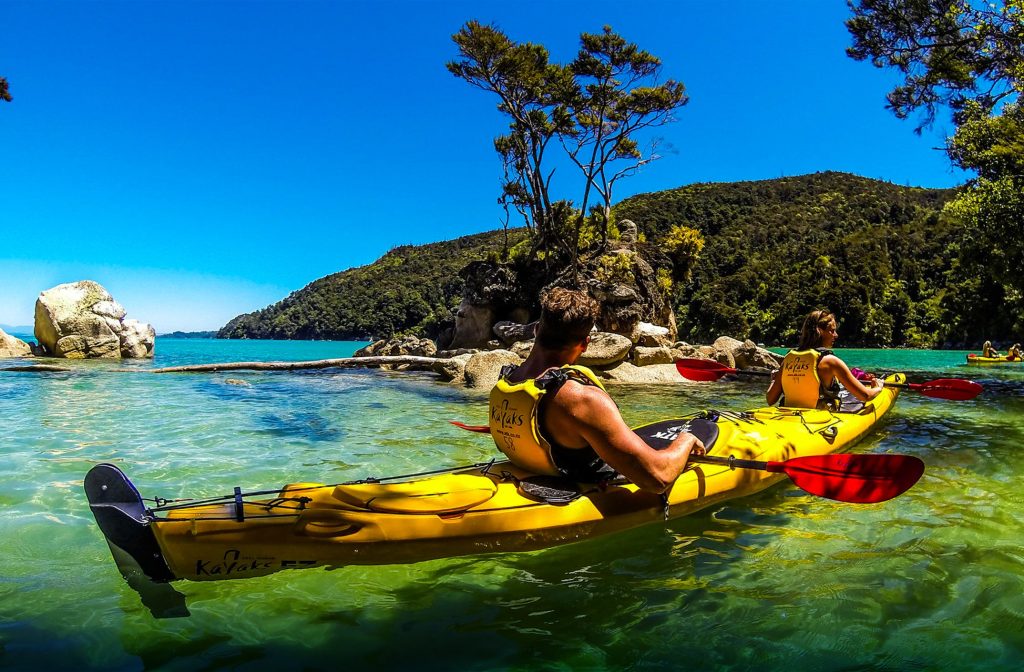
Thanks to its coastal geography, Abel Tasman National Park is ideal for water-based activities. Kayaking is especially popular, allowing visitors to explore sea caves, tidal lagoons, and beaches that are not accessible by foot. Guided kayak tours are available, or visitors can rent equipment and paddle independently. Water taxis and scenic boat tours also operate throughout the park, offering a convenient way to see its highlights. Snorkeling and paddleboarding are also popular in the park’s calm bays, where marine life can be seen in the clear waters.
5. Wildlife and Marine Life
The park is a haven for native wildlife. Along the coast, New Zealand fur seals (kekeno) can often be seen sunbathing on rocks or swimming in the sea. Bottlenose dolphins, little blue penguins, and occasional orcas also visit the area. Birdwatchers will enjoy spotting a variety of forest and shore birds, including tūī, bellbirds, fantails, and oystercatchers. The marine reserve areas near the park protect ecosystems rich with fish, shellfish, and coral-like bryozoans, offering incredible biodiversity.
6. Climate and Best Time to Visit
Abel Tasman National Park enjoys one of the sunniest climates in New Zealand, with long, warm summers and mild winters. The best time to visit is during the warmer months, from November to April, when conditions are perfect for hiking, swimming, and kayaking. However, the park can be visited year-round, and the cooler off-season months often mean fewer crowds. Rain is relatively light, but visitors should still be prepared for changing weather, especially when hiking or camping.
7. Accommodation and Facilities
There are several types of accommodation available in and around Abel Tasman National Park. Within the park, the Department of Conservation (DOC) operates campsites and huts along the Coast Track. These need to be booked in advance, especially in peak season. Just outside the park in towns like Marahau and Kaiteriteri, visitors will find lodges, backpacker hostels, holiday parks, and private eco-retreats. Tour operators in these towns also offer transport, guided hikes, and water taxi services, making it easy to plan a visit.
8. Conservation and Sustainability
As a protected national park, conservation is a top priority in Abel Tasman. Ongoing efforts are made to preserve its natural ecosystems, control invasive species, and support native flora and fauna. The park has benefited from initiatives such as Project Janszoon, which aims to restore its ecological health by removing pests and reintroducing native bird species. Visitors are encouraged to follow Leave No Trace principles, respect wildlife, and support sustainable tourism practices to help protect this natural treasure for future generations.
9. Cultural Significance
The area that is now Abel Tasman National Park holds significant cultural value for local Māori iwi (tribes), particularly Ngāti Rārua, Ngāti Tama, and Te Ātiawa. The coastline was traditionally used for fishing, gathering food, and seasonal travel. Many place names in the park have Māori origins, and cultural stories are associated with landmarks throughout the area. In recent years, partnerships between the government and local iwi have helped incorporate traditional knowledge and cultural heritage into the park’s management.
10. Accessibility and Visitor Experience
Abel Tasman National Park is one of the most accessible national parks in New Zealand. It’s just a short drive from the city of Nelson and well-serviced by roads leading to park entrances at Marahau and Kaiteriteri. The combination of a walkable coastal track, water taxi access, and excellent visitor infrastructure makes it easy to explore for all types of travelers—from families and casual hikers to serious trampers and kayakers. Whether visiting for a day or embarking on a multi-day journey, the park offers an unforgettable experience immersed in the natural beauty and unique character of New Zealand.
Where to stay in New Zealand
North Island
- Auckland – Gateway to NZ
- Why stay? Vibrant city life, harbor views, shopping, and food.
- Top areas: CBD (Central Business District), Ponsonby, Viaduct Harbour, Parnell.
- Recommended stays:
- Luxury: Park Hyatt Auckland, SO/ Auckland
- Mid-range: Hotel Grand Windsor, M Social
- Budget: Haka Lodge, Attic Backpackers
- Rotorua – Culture & Geothermal Wonders
- Why stay? Māori culture, geysers, hot springs.
- Top areas: City Center, Lake Rotorua, Whakarewarewa.
- Recommended stays:
- Luxury: Pullman Rotorua, Regent of Rotorua
- Mid-range: Quest Rotorua Central, Prince’s Gate Hotel
- Budget: Rotorua Thermal Holiday Park, Rock Solid Backpackers
- Taupo – Adventure & Lakeside Scenery
- Why stay? Lake Taupo, skydiving, hiking.
- Top areas: Lakefront, Taupo Central.
- Recommended stays:
- Luxury: Hilton Lake Taupo
- Mid-range: Acacia Lake View Motel
- Budget: Taupo Urban Retreat, Haka Lodge Taupo
Things to do in New Zealand
- Explore Milford Sound (Fiordland National Park)
Often called the “Eighth Wonder of the World,” Milford Sound offers breathtaking fjords, towering waterfalls, and wildlife like seals and dolphins. Take a scenic cruise or kayak through the dramatic landscapes.
- Visit Hobbiton Movie Set
Fans of The Lord of the Rings and The Hobbit will love touring the Hobbiton movie set in Matamata. Wander through the Shire with its charming hobbit holes, gardens, and the Green Dragon Inn.
- Go Bungee Jumping in Queenstown
Queenstown is the adventure capital of New Zealand and home to the original commercial bungee jump. Try the Kawarau Bridge jump for an adrenaline rush with stunning river views.
Day trip from New Zealand
- From Auckland: Waiheke Island
Just a 40-minute ferry ride from Auckland, Waiheke Island offers stunning beaches, boutique wineries, olive groves, and great cafes. Enjoy wine tastings, art galleries, and coastal walks all in one day.
- From Wellington: Martinborough Wine Region
About an hour’s drive from Wellington, Martinborough is famous for its Pinot Noir and charming village vibe. Spend the day visiting cellar doors, enjoying gourmet food, and exploring local shops.
- From Queenstown: Glenorchy and Paradise Valley
A scenic 45-minute drive from Queenstown, Glenorchy is the gateway to incredible hiking trails and stunning landscapes used in The Lord of the Rings. Paradise Valley offers incredible photo ops and peaceful nature.