
Stop 1: Kuala Lumpur – The Capital of Flavors
Your journey begins in Kuala Lumpur, the buzzing capital where gleaming skyscrapers stand tall beside colonial buildings and bustling street markets.
Start the Day with Nasi Lemak
Kick off your food tour with Nasi Lemak, Malaysia’s national dish. It’s a fragrant coconut milk rice dish served with sambal (spicy chili paste), crispy anchovies, roasted peanuts, a hard-boiled egg, and cucumber slices. Variations might include fried chicken, beef rendang, or sambal squid.
Where to try it: Village Park Restaurant in Damansara Uptown is a local legend.
Chinatown Delights
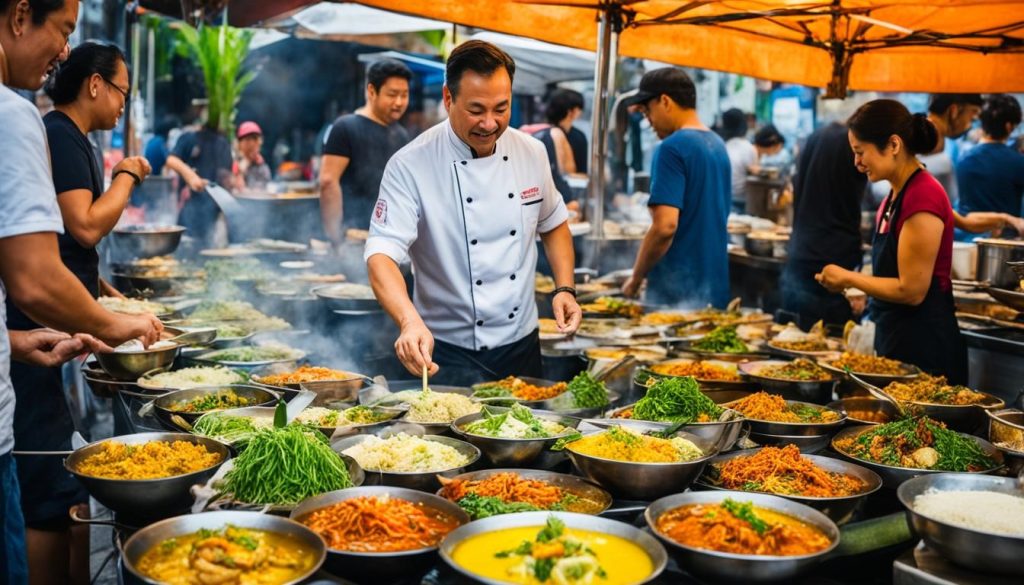
Head to Petaling Street, KL’s Chinatown, where the aroma of wok-fried noodles and herbal broths fills the air.
- Try Char Kway Teow, a smoky stir-fried flat noodle dish with prawns, Chinese sausage, and bean sprouts.
- Sip on Bak Kut Teh, a comforting herbal pork rib soup, slow-cooked with a medley of spices.
Modern Malaysian Cuisine
For something elevated, book a table at Dewakan, a fine-dining restaurant that reinvents traditional Malaysian ingredients with modern techniques. It’s a must for food adventurers looking to see how far local cuisine can be pushed.
Stop 2: Penang – The Street Food Capital
No Malaysian food tour is complete without visiting Penang, often dubbed the food capital of Malaysia. This UNESCO World Heritage city blends Chinese, Indian, and Malay cultures with incredible harmony — and flavor.
George Town Street Food Tour
George Town’s hawker stalls are legendary.
- Asam Laksa is a must-try: a tangy fish-based noodle soup with tamarind, mackerel, mint, cucumber, and pineapple.
- Hokkien Mee (prawn noodle soup) combines spicy broth with yellow noodles, prawns, and pork slices.
- Don’t miss Char Koay Teow here, cooked over charcoal for that signature smoky “wok hei.”
Tip: Head to Gurney Drive and Chulia Street Night Market for the best selection.
Little India Flavors
In Penang’s Little India, the air is thick with the scent of spices and sizzling tandoors.
- Grab a banana leaf rice meal, served with curries, pickles, papadum, and vegetables.
- Snack on samosas, vadai, and roti canai while soaking in the vibrant colors and music.
Stop 3: Ipoh – Underrated and Delicious
Tucked between Kuala Lumpur and Penang, Ipoh is an emerging foodie haven that deserves your attention.
White Coffee & Kaya Toast
Start your day with Ipoh white coffee, a creamy, caramel-like brew made with margarine-roasted beans, served sweet with condensed milk. Pair it with kaya toast (coconut jam and butter on toast) for a quintessential Malaysian breakfast.
Bean Sprout Chicken (Nga Choy Kai)
A specialty of Ipoh, this dish features poached chicken and crunchy bean sprouts served with soy sauce and sesame oil, often accompanied by rice or noodles.
Where to try it: Lou Wong and Onn Kee are two rival establishments across the street from each other — locals are split on which is better!
Stop 4: Malacca – A Taste of Heritage
Malacca (Melaka), a historical port town, is where Portuguese, Dutch, and British influences have mingled with local traditions for centuries — and nowhere is this more evident than in the food.
Nyonya Cuisine
Malacca is the birthplace of Nyonya (Peranakan) cuisine, a blend of Chinese ingredients and Malay spices.
- Try Ayam Pongteh (braised chicken with fermented soybean paste) and Udang Masak Lemak Nenas (prawns in a pineapple coconut curry).
- Kuih — colorful, bite-sized traditional cakes — are a Nyonya staple.
Where to eat: Nancy’s Kitchen and Aunty Lee are popular for home-style Peranakan dishes.
Satay Celup
For a unique hotpot-style experience, try Satay Celup, where skewers of raw meat, tofu, and vegetables are dipped into a bubbling satay peanut sauce.
Where to go: Capitol Satay is the place to be — expect long lines, but it’s worth the wait.
Stop 5: Sabah & Sarawak – Borneo’s Culinary Treasures
Venture east to Malaysian Borneo for flavors you won’t find anywhere else in the country.
Sabah: Hinava & Tuaran Mee
In Sabah, sample Hinava, a Kadazan-Dusun dish made from raw fish marinated in lime juice, ginger, and chili — think of it as a Malaysian ceviche.
Tuaran Mee, a local egg noodle dish stir-fried with vegetables and pork, is a must in the town of Tuaran.
Sarawak: Laksa & Kek Lapis
Sarawak Laksa is a rich, spicy noodle soup that’s lighter than Penang’s asam laksa, made with a unique spice paste and coconut milk.
Finish with a slice of Kek Lapis Sarawak, a rainbow-layered cake that’s as beautiful as it is tasty.
Snacks, Desserts, and Drinks to Try Anywhere
You’ll find these delights all over Malaysia:
- Teh Tarik: Frothy pulled milk tea that’s both performance art and comfort drink.
- Cendol: Shaved ice with coconut milk, palm sugar syrup, and green rice flour jelly.
- Roti Canai: Flaky, buttery flatbread best dipped in dhal or curry.
- Apam Balik: A sweet peanut pancake folded in half and sold at night markets.
- Pisang Goreng: Deep-fried banana fritters perfect as a crispy snack.
Tips for a Malaysian Food Tour
1. Eat Like a Local
Don’t be afraid of plastic stools and open-air stalls — this is where the best food is found. Look for places packed with locals.
2. Bring Tissues & Hand Sanitizer
Some stalls don’t offer napkins or handwashing stations. Stay prepared so nothing slows your feast.
3. Be Open to Spice
Many dishes pack a punch. If you’re sensitive, ask for “kurang pedas” (less spicy) when ordering.
4. Timing is Everything
Some specialties are only available in the morning or at night markets. Do a little research or ask locals to catch them at their best.