

Introduction
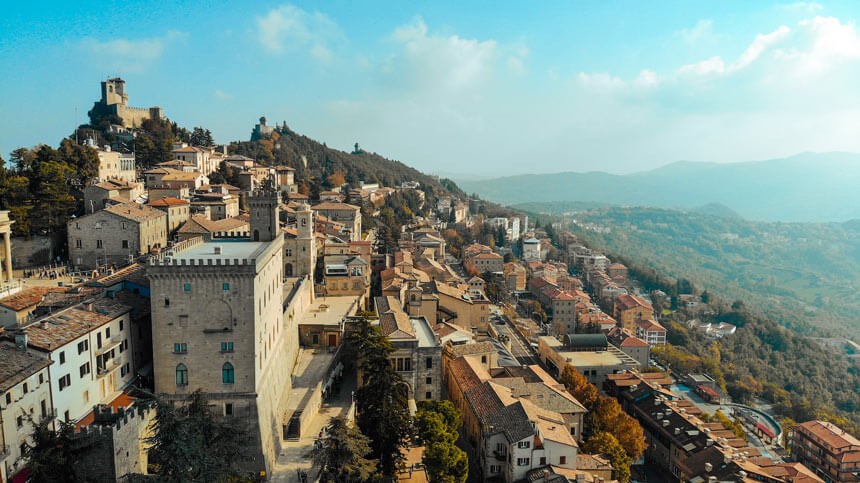
San Marino is a tiny, landlocked country surrounded by Italy. It’s one of the world’s smallest and oldest republics, founded in AD 301. Known for its medieval architecture and mountainous landscapes, San Marino has a population of around 34,000 people. It operates as a parliamentary republic with a strong emphasis on independence and tradition. Despite its size, it has its own government, currency (Euro), and even issues its own stamps and coins.
- Getting There and Around
San Marino has no airport or train station. The most common way to reach it is by traveling to nearby Italian cities like Rimini or Bologna by plane or train, then taking a bus or taxi to San Marino. From Rimini, several buses run daily to the city center, taking around 45 minutes.
Once inside San Marino, the historic center is quite compact and best explored on foot. If you want to visit the three famous towers or other landmarks spread across the hilltops, be prepared for some uphill walking. Alternatively, there are local minibusses that can help you get around if walking is difficult.
- Best Time to Visit
The ideal times to visit San Marino are during spring (April to June) and autumn (September to October), when the weather is mild and the crowds are smaller. Summers can get hot and more crowded, especially with tourists from Italy and neighboring countries. Winters are quiet but can be chilly and sometimes foggy.
If you prefer festivals and events, try to time your visit around one of San Marino’s many cultural celebrations, like the medieval festival in early July or the Christmas market, which adds a festive charm to the town.
- Must-See Attractions
The three iconic towers — Guaita, Cesta, and Montale — are the symbols of San Marino and offer incredible panoramic views. Don’t miss visiting the Guaita Tower, the oldest and most famous.
The Palazzo Pubblico (Town Hall) is also worth seeing, especially its striking architecture and the surrounding Piazza della Libertà.
The Basilica di San Marino, dedicated to the country’s founder, is another key religious site with beautiful interiors.
Finally, take time to stroll through the narrow cobblestone streets, visit small museums like the State Museum, and enjoy the peaceful atmosphere of the medieval town.
- Currency and Payments
Although San Marino is not an EU member, it uses the Euro (€) as its official currency. Most shops, restaurants, and hotels accept credit/debit cards, but it’s a good idea to carry some cash for smaller vendors or market stalls.
San Marino also issues its own Euro coins with unique designs, which are popular souvenirs.
- Language
Italian is the official language of San Marino. While many people in the tourist industry speak some English, learning a few basic Italian phrases can enhance your experience and help with communication in smaller shops or less touristy areas.
- Shopping and Souvenirs
San Marino is known for its duty-free shopping, making it a great place to buy perfumes, cosmetics, watches, and electronics at competitive prices.
Local crafts include ceramics, jewelry, and coins. The unique San Marino Euro coins and stamps are sought-after collectibles.
Don’t forget to explore small artisan shops for handmade souvenirs and local delicacies like honey and wine.
- Food and Drink
San Marino’s cuisine closely mirrors Italian cuisine, featuring fresh pasta, cured meats, cheeses, and delicious pastries.
Try local specialties such as “Torta Tre Monti” — a layered wafer cake named after the three towers — or “piadina,” a type of flatbread sandwich.
There are numerous cafes and trattorias in the historic center where you can enjoy coffee, gelato, or a hearty meal while soaking in the views.
- Cultural Etiquette
San Marino is proud of its independence and traditions. When visiting religious sites, dress modestly and be respectful.
Tipping is appreciated but not mandatory; rounding up the bill or leaving 5-10% is common practice.
It’s polite to greet shopkeepers and restaurant staff with a “Buongiorno” (Good day) or “Buonasera” (Good evening).
- Accommodation
While San Marino offers several hotels and guesthouses within the historic center, options can be limited and may book up quickly during peak seasons.
Staying in Rimini or nearby Italian towns can be a convenient alternative, with easy transport connections to San Marino.
Booking in advance is highly recommended, especially if visiting during festivals or holidays.
- Safety and Practical Tips
San Marino is one of the safest countries in the world, with very low crime rates. Usual travel precautions apply, but you can generally explore without worry.
Public restrooms may be limited in the historic center, so plan accordingly.
San Marino is mountainous, so comfortable shoes are a must for walking on steep, uneven streets.
Lastly, keep an eye on opening hours for museums and shops, as they may close for lunch or have shorter winter hours.
- Historic Center (City of San Marino)
- Why stay here?
The heart of San Marino’s charm is in its medieval old town, perched on Mount Titano. Staying here means you’re steps away from the famous Three Towers, museums, restaurants, and stunning views. - Types of accommodation:
Small boutique hotels, guesthouses, and some charming B&Bs. - Examples:
- Hotel Titano
- Hotel Rosa
- Hotel Cesare
- Pros:
Walkable to major attractions, lots of atmosphere, beautiful views. - Cons:
Limited parking, cobblestone streets, might be pricier.
- Borgo Maggiore
- Why stay here?
Borgo Maggiore is the second-largest town in San Marino, just below the historic center. It’s more modern and has easier access by car, plus a cable car that goes up to the old town. - Types of accommodation:
Mid-range hotels and guesthouses. - Pros:
More parking, more budget-friendly options, easy transport to the old town. - Cons:
Less historic charm than the old town itself.
- Falciano, Serravalle, and Other Suburbs
- Why stay here?
These areas are more residential and commercial, often offering larger hotels and resorts with more modern amenities. Good for families or longer stays. - Types of accommodation:
Larger hotels, resorts, and business hotels. - Pros:
More affordable, more parking, quieter at night. - Cons:
Requires transport to the old town (bus or taxi).
- Visit the Three Towers
- Guaita, Cesta, and Montale towers are the iconic symbols of San Marino.
- Explore medieval architecture and enjoy panoramic views of the surrounding countryside and Italy.
- Explore the Historic Center
- Wander through cobblestone streets lined with charming shops, cafes, and historic buildings.
- Don’t miss Piazza della Libertà with its statue of Liberty and the Palazzo Pubblico (Town Hall).
- Palazzo Pubblico & Government Museum
- Tour the elegant town hall and see historical exhibits explaining San Marino’s unique government and history.
Trip from San Marino
Morning: Explore Rimini
- Travel: Take a bus or taxi down from San Marino to Rimini (about 45 minutes).
- What to do:
- Stroll along Rimini’s famous beach promenade — beautiful sandy beaches and seaside cafes.
- Visit Arco d’Augusto, the ancient Roman arch, and the nearby Tiberius Bridge, iconic Roman landmarks.
- Walk around Piazza Cavour, the historic city center with shops and markets.
Lunch: Try Fresh Seafood or Italian Classics
- Grab lunch at a seaside restaurant or a traditional trattoria in Rimini’s old town.
Afternoon: Visit Gradara Castle
- Travel: From Rimini, take a short drive or taxi (about 30 minutes) to Gradara Castle, a stunning medieval fortress famed for its role in the legend of Paolo and Francesca (inspired by Dante’s Divine Comedy).
- What to do:
- Explore the castle’s towers, ramparts, and beautifully preserved medieval interiors.
- Enjoy panoramic views of the surrounding hills and countryside.
- Learn about the history and romance behind the castle with guided tours or info panels.