

Introduction
Switzerland is a small, landlocked country in Central Europe, known for its stunning Alpine landscapes, political neutrality, and high quality of life. It shares borders with France, Germany, Italy, Austria, and Liechtenstein. Switzerland has four national languages—German, French, Italian, and Romansh—reflecting its cultural diversity.
- Introduction to Jungfraujoch – The Top of Europe
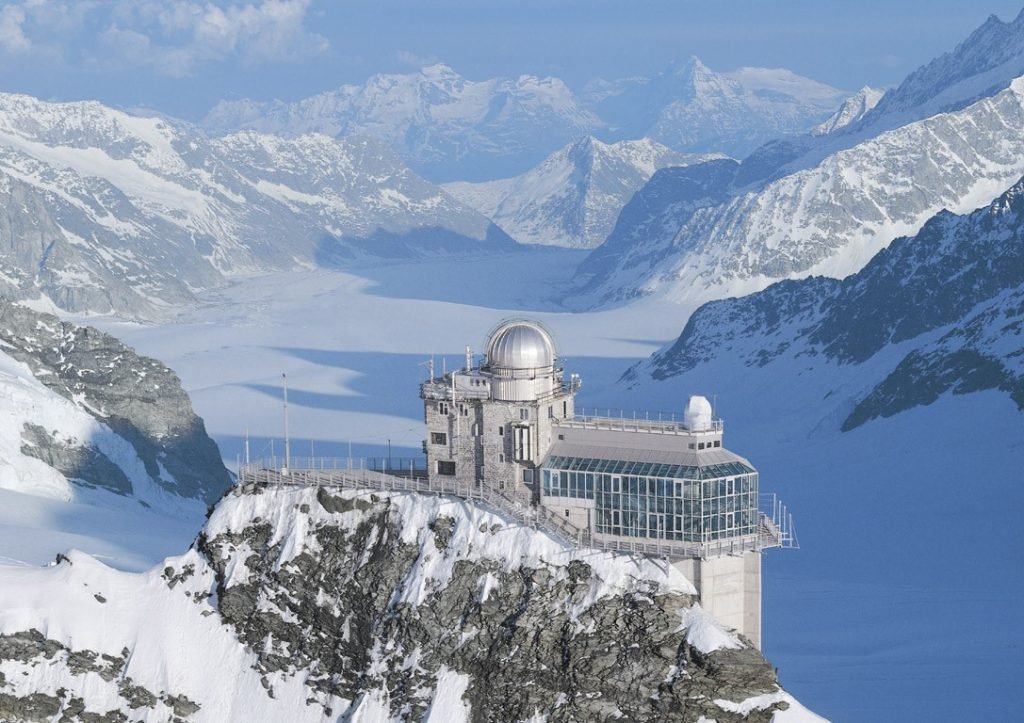
Nestled high in the Bernese Alps, Jungfraujoch is famously dubbed the “Top of Europe” due to its dramatic altitude of 3,454 meters (11,332 feet) above sea level. This awe-inspiring destination lies between the iconic peaks of the Jungfrau and Mönch, offering panoramic views of the Aletsch Glacier—the longest glacier in the Alps. Recognized as a UNESCO World Heritage Site, Jungfraujoch combines natural wonder with cutting-edge tourism infrastructure, making it a must-visit for both adventure seekers and casual travelers in Switzerland. - Getting There – The Scenic Journey
Reaching Jungfraujoch is an adventure in itself, typically starting from Interlaken, Grindelwald, or Lauterbrunnen. The most popular route involves a cogwheel train ride via Kleine Scheidegg, where travelers transfer to the historic Jungfrau Railway. This train climbs through a tunnel inside the Eiger and Mönch mountains, with stops at panoramic viewing points such as Eigerwand and Eismeer. Alternatively, the new Eiger Express cableway from Grindelwald Terminal to Eigergletscher offers a faster and more scenic connection, reducing travel time and enhancing the journey. - Best Time to Visit
Jungfraujoch is open year-round, and the best time to visit depends on your interests. For snow sports and winter wonderland landscapes, visit between December and March. For clearer skies and hiking opportunities, June through September is ideal. Summer also offers slightly more stable weather, although even then, snow is possible due to the altitude. Visiting early in the morning can help you avoid crowds and enjoy better visibility before clouds roll in. - Weather and What to Wear
Due to its high altitude, Jungfraujoch experiences cold temperatures year-round, often below freezing even in summer. Layered clothing, including a waterproof outer layer, gloves, a hat, and sunglasses, is essential. Good walking shoes or boots are also recommended for snow-covered or icy paths. UV radiation is stronger at higher altitudes, so sunscreen is a must. Always check the weather forecast before your trip, as visibility can change rapidly, affecting the experience. - Highlights and Attractions
Jungfraujoch offers a wide array of attractions. Start with the Sphinx Observatory, one of the highest observatories in the world, providing spectacular views of the surrounding Alps. The Ice Palace, carved into the glacier, showcases intricate ice sculptures and tunnels. Don’t miss the Plateau, an outdoor snow area where you can walk, take photos, or just soak in the Alpine splendor. The Lindt Swiss Chocolate Heaven is a sweet bonus, offering insights into chocolate making and, of course, tasty samples. - Activities and Experiences
Beyond sightseeing, Jungfraujoch is a hub for unique activities. Visitors can try snow tubing, sledding, or even skiing in summer on specially prepared slopes. For a more serene experience, take a walk along the glacier trail or book a guided glacier hike. During the warmer months, mountaineers can embark on challenging climbs or traverse from Jungfraujoch to nearby huts. There’s also the Alpine Sensation, an immersive exhibition that blends history and emotion, commemorating the efforts of the railway’s construction workers. - Food and Dining Options
Despite its remote location, Jungfraujoch has several dining options catering to different tastes. The Top of Europe Restaurant offers traditional Swiss cuisine like rösti and bratwurst alongside international dishes, all with breathtaking views. For a quick bite, there’s a self-service cafeteria and snack bars. Prices tend to be higher due to the logistical challenges of transporting supplies to such altitudes, but the dining experience with panoramic Alpine views is worth the premium. - Photography Tips
Photographers will find Jungfraujoch a dream come true. The vast glacial landscapes, dramatic peaks, and architectural contrasts offer endless compositions. For the best light, arrive early or stay until late afternoon. Use a wide-angle lens to capture the enormity of the surroundings, and bring a spare battery—cold weather can drain them quickly. The Sphinx Terrace and the Plateau are ideal spots for panoramic shots. Respect posted signs and barriers; safety is a priority in high-altitude environments. - Environmental Awareness and Sustainability
As a heavily visited natural site, Jungfraujoch places a strong emphasis on sustainable tourism. The Jungfrau Railway company has implemented eco-friendly initiatives, including energy-efficient trains and waste reduction strategies. Travelers are encouraged to respect the environment by staying on marked paths, not littering, and minimizing their ecological footprint. Supporting local businesses and learning about the Alpine ecosystem are great ways to contribute to the area’s preservation. - Practical Tips and Final Thoughts
Booking tickets in advance is highly recommended, especially during peak seasons. The Swiss Travel Pass offers discounts and added convenience for international travelers. Allow a full day for the trip, factoring in train schedules and possible weather delays. Acclimatization can be a concern due to the altitude, so take it slow, stay hydrated, and avoid strenuous activity initially. Visiting Jungfraujoch is a once-in-a-lifetime experience that combines the raw beauty of the Alps with a profound sense of achievement. Whether you’re marveling at glaciers, walking through ice tunnels, or simply enjoying the silence of the snow, it’s a destination that leaves a lasting impression.
Where to stay in Switzerland
For City Lovers
Zurich – Best for luxury, nightlife, and art
- Why stay Switzerland’s largest city with excellent museums, shopping, and lakefront charm.
- Top hotels:
- Baur au Lac (Luxury)
- 25hours Hotel Langstrasse (Trendy, mid-range)
- Hotel Marta (Budget-friendly, central)
Geneva – Ideal for international culture and lakeside relaxation
- Why stay scenic lake views, high-end shopping, and UN-related sites.
- Top hotels:
- Four Seasons Hotel des Bergues (Luxury)
- Hotel Rotary Geneva (Boutique)
- ibis Genève Centre Gare (Budget)
Bern – For historic charm and central location
- Why stay Switzerland’s capital with medieval streets and easy rail access to other cities.
- Top hotels:
- Hotel Schweizerhof Bern & Spa (Luxury)
- Hotel Savoy (Mid-range)
- Hotel Kreuz Bern (Affordable, great location)
For Nature & Adventure Seekers
Interlaken – Gateway to the Alps and adventure sports
- Why stay ideal base for exploring Jungfrau, Lauterbrunnen, Grindelwald.
- Top hotels:
- Victoria Jungfrau Grand Hotel & Spa (Luxury)
- Hotel Interlaken (Mid-range, historic)
- Backpackers Villa Sonnenhof (Budget-friendly)
Zermatt – Best for mountain views and skiing (or summer hiking)
- Why stay Iconic Matterhorn views, car-free town, and upscale ambiance.
- Top hotels:
- The Omnia (Luxury, modern chalet)
- Hotel Matterhorn Focus (Boutique, scenic)
- Youth Hostel Zermatt (Budget with amazing views)
Grindelwald or Lauterbrunnen – For Alpine charm
- Why stay picturesque, great access to trails, cable cars, and waterfalls.
- Top hotels:
- Eiger Mountain & Soul Resort (Grindelwald)
- Hotel Silberhorn (Lauterbrunnen)
- Hotel Staubbach (Budget, Lauterbrunnen)
For Scenic & Peaceful Retreats
Lucerne – Best mix of culture and nature
- Why stay historic old town, lake cruises, and access to Mt. Pilatus/Rigi.
- Top hotels:
- Hotel des Balances (Luxury, in old town)
- Art Deco Hotel Montana (Lake views)
- Backpackers Lucerne (Budget near lake)
St. Moritz – For alpine luxury and lakes
- Why stay: Glamorous mountain resort town, great for hiking or high-end relaxation.
- Top hotels:
- Badrutt’s Palace Hotel (Ultra-luxury)
- Hotel Steffani (Classic mid-range)
- Youth Hostel St. Moritz (Budget)
Things to do in Switzerland
- Explore the Swiss Alps
- Top locations: Zermatt (Matterhorn), Jungfrau Region (Grindelwald, Lauterbrunnen), St. Moritz
- Activities: Hiking, cable cars, summer skiing, glacier walks, mountain photography
- Ride Scenic Trains
- Glacier Express: From Zermatt to St. Moritz, a panoramic ride through the Alps
- Bernina Express: Crosses into Italy via UNESCO landscapes
- GoldenPass Line: Through the Swiss Riviera and Lake Geneva region
- Gotthard Panorama Express: Combines boat and train travel
- Discover Historic Cities
- Zurich: Art, shopping, nightlife, and Lake Zurich
- Lucerne: Chapel Bridge, Old Town, and Mt. Pilatus
- Bern: UNESCO-listed old town with medieval charm
- Geneva: International institutions, Lake Geneva, Jet d’Eau fountain
Day trip from Switzerland
From Zurich
- Lucerne
- 45–60 min by train
- Highlights: Chapel Bridge, Lake Lucerne, Old Town, Mt. Pilatus or Mt. Rigi (via boat & cable car)
- Why go: Perfect mix of lakeside relaxation and mountain views
- Rhine Falls (Schaffhausen)
- 1 hour by train
- Highlights: Europe’s largest waterfall, boat rides, viewing platforms
- Why go: Quick and spectacular nature escape
From Lucerne
- Mt. Titlis (Engelberg)
- 45 min to Engelberg + cable car
- Highlights: Ice cave, glacier walks, Cliff Walk bridge
- Why go: Experience snow and ice even in summer