

Introduction
Florence is a historic city in central Italy and the capital of the Tuscany region. Known as the birthplace of the Renaissance, it played a crucial role in the development of art, architecture, and culture in Europe. Home to iconic figures like Leonardo da Vinci, Michelangelo, and Dante, Florence boasts world-famous landmarks such as the Duomo (Cathedral of Santa Maria del Fiore), the Uffizi Gallery, and the Ponte Vecchio. Its rich heritage, stunning art collections, and preserved medieval charm make it one of the most visited and culturally significant cities in the world.
- The Uffizi Gallery: Renaissance Masterpieces
The Uffizi Gallery is one of the world’s premier art museums, home to a dazzling collection of Renaissance works. Founded by the Medici family in the 16th century, it houses masterpieces by Botticelli, Leonardo da Vinci, Michelangelo, and Raphael. The “Birth of Venus” and “Primavera” by Botticelli are particularly iconic. The gallery itself is a work of art, with its grand corridors, vaulted ceilings, and stunning Arno River views.
- Florence Cathedral and Brunelleschi’s Dome
The Cathedral of Santa Maria del Fiore, also known as the Duomo, dominates Florence’s skyline with its remarkable red-tiled dome. Designed by Filippo Brunelleschi, the dome was an architectural marvel of its time and remains a symbol of Renaissance ingenuity. Inside the cathedral, you’ll find intricate frescoes, including Giorgio Vasari’s “Last Judgment,” which spans the interior of the dome. Climbing to the top offers panoramic views of the city and a close-up look at its brilliant structure.
- Michelangelo’s David at the Accademia Gallery
The Accademia Gallery is best known for housing Michelangelo’s iconic statue of David, sculpted between 1501 and 1504. Standing over 17 feet tall, David represents both physical perfection and spiritual strength, carved from a single block of marble. The gallery also showcases other works by Michelangelo and a series of unfinished sculptures known as the Prisoners, offering a unique glimpse into the artist’s creative process.
- Palazzo Vecchio: Power and Politics
Overlooking Piazza della Signoria, the Palazzo Vecchio has served as Florence’s political heart for centuries. Originally the seat of the Republic of Florence, it now functions as both a museum and city hall. The interior is richly decorated with frescoes and sculptures, including rooms adorned by Vasari and statues from Donatello. The Hall of the Five Hundred, built for public assemblies, is particularly grand and steeped in political history.
- The Medici Legacy
The powerful Medici family shaped Florence’s art, politics, and economic prosperity from the 15th to the 18th century. As great patrons of the arts, they funded countless projects and nurtured the talents of artists like Michelangelo and Botticelli. Visiting the Medici Chapels, San Lorenzo Church, and the Palazzo Medici Riccardi reveals their architectural tastes and deep influence on the city’s development. Their tombs, decorated by Michelangelo, are both artistic and historic marvels.
- Santa Croce: Final Resting Place of Legends
The Basilica of Santa Croce is often called the Temple of the Italian Glories because it is the burial site of Florence’s most revered figures, including Michelangelo, Galileo, Machiavelli, and Rossini. Beyond the tombs, the church features beautiful frescoes by Giotto and his followers, capturing biblical stories in vivid detail. The attached museum also contains Cimabue’s famous crucifix, damaged in the 1966 flood but still deeply moving.
- Ponte Vecchio: The Timeless Bridge
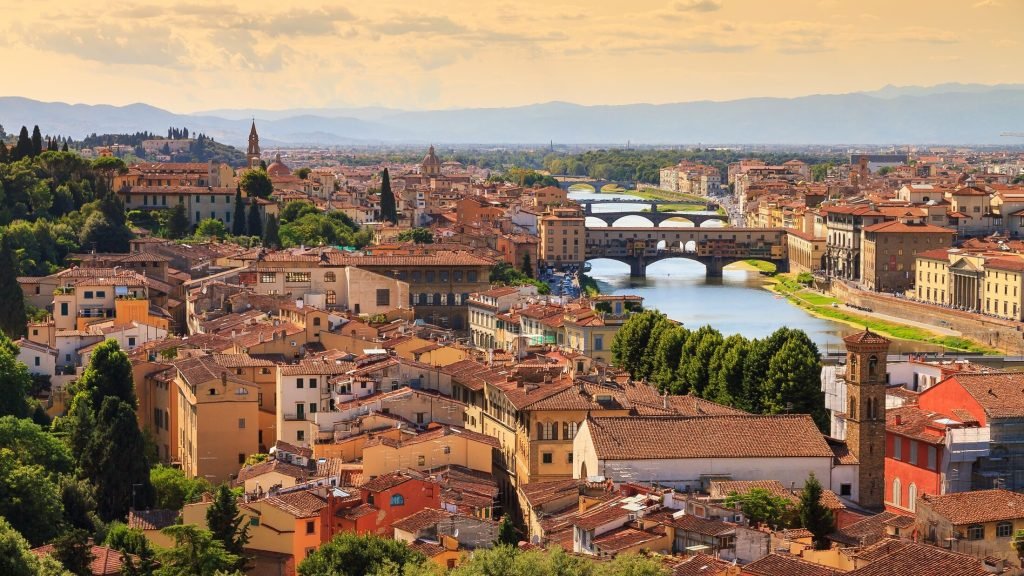
The Ponte Vecchio, Florence’s oldest and most famous bridge, has spanned the Arno River since medieval times. Originally home to butchers, the bridge now hosts a row of jewelry shops, maintaining a tradition that dates back to the Medici era. Above it runs the Vasari Corridor, a secret passage built for the Medici to move safely between the Uffizi and the Pitti Palace. The bridge is both a functional crossing and a romantic symbol of Florence’s enduring charm.
- Bargello Museum: Sculptural Treasures
Often overlooked, the Bargello Museum holds one of Italy’s finest collections of Renaissance sculpture. Housed in a former barracks and prison, it includes works by Donatello, Michelangelo, and Ghiberti. Donatello’s bronze “David”—the first free-standing nude male sculpture since antiquity—is a highlight, revealing a more youthful and introspective version of the biblical hero. The museum also includes weaponry, ceramics, and decorative arts, enriching the story of Florence’s artistic evolution.
- The Pitti Palace and Boboli Gardens
The Pitti Palace, once the residence of the Medici and later the royal family of Italy, is a sprawling complex of art galleries and royal apartments. Inside, you’ll find the Palatine Gallery, filled with paintings by Raphael, Titian, Rubens, and Caravaggio. Behind the palace lie the Boboli Gardens, a vast landscape of fountains, sculptures, and manicured paths. Together, they offer a glimpse into the opulence of Florentine nobility and the lifestyle of its elite patrons.
- San Miniato al Monte: A Peaceful Perspective
For a more tranquil experience and a sweeping view of the city, head to San Miniato al Monte, a Romanesque church perched on a hill above Florence. Dating back to the 11th century, it features intricate mosaics, medieval architecture, and a serene cemetery where notable Florentines are buried. From the terrace, you can admire the skyline dominated by Brunelleschi’s dome and reflect on the city’s rich tapestry of faith, art, and history.
Where to stay in Florence
- Historic Center (Duomo, Uffizi, Piazza della Signoria)
- Best for: First-time visitors, culture lovers, walking access to main sights
- Highlights: Steps from the Duomo, Uffizi Gallery, and Ponte Vecchio
- Stay here if you want to be in the heart of Florence’s art and history.
- Recommended hotels:
- Hotel Brunelleschi – Elegant, central, with views of the Duomo
- Hotel Pendini – Mid-range charm with classic Florentine decor
- Santa Maria Novella
- Best for: Easy train access, shopping, convenience
- Highlights: Near the main train station and designer boutiques
- Stay here if you’re arriving/departing by train or want modern amenities nearby.
- Recommended hotels:
- The Place Firenze – Luxury boutique near the station
- Hotel Alba Palace – Affordable and comfortable
- Oltrarno (South of the Arno River)
- Best for: Local vibes, artisans, quieter stays
- Highlights: Boboli Gardens, Pitti Palace, authentic eateries
- Stay here if you prefer a relaxed, artsy atmosphere away from crowds.
- Recommended hotels:
- Hotel Lungarno – Riverside luxury with art-filled interiors
- Ad Astra – Chic rooms overlooking private gardens
Things to do in Florence
- Explore the Uffizi Gallery
- Marvel at Renaissance masterpieces by Botticelli, Michelangelo, Leonardo da Vinci, and Raphael.
- Don’t miss The Birth of Venus and Primavera by Botticelli.
- Climb the Duomo (Cathedral of Santa Maria del Fiore)
- Ascend Brunelleschi’s Dome for sweeping views of the city.
- Admire the cathedral’s marble facade and Vasari’s frescoes inside.
- See Michelangelo’s David at the Accademia Gallery
- One of the most famous sculptures in the world, symbolizing Florence’s spirit of independence and genius.
Day trip from Florence
- Chianti Wine Region
- Travel time: ~1 hour by car
- Highlights: Rolling vineyards, wine tastings, medieval towns like Greve in Chianti
- Why go: Ideal for a relaxed day of wine, food, and countryside views
- Tip: Join a wine tour or rent a car for flexibility
- Siena
- Travel time: ~1.5 hours by bus/train
- Highlights: Piazza del Campo, Siena Cathedral, medieval streets
- Why go: A Gothic gem with a strong historic rivalry with Florence
- Tip: Visit during the Palio horse race (July & August) for a unique cultural experience
- San Gimignano
- Travel time: ~1.5 hours by car or bus
- Highlights: Medieval towers, scenic hilltop views, gelato
- Why go: Known as the “Medieval Manhattan” for its tower-studded skyline
- Tip: Climb Torre Grossa for panoramic vistas