
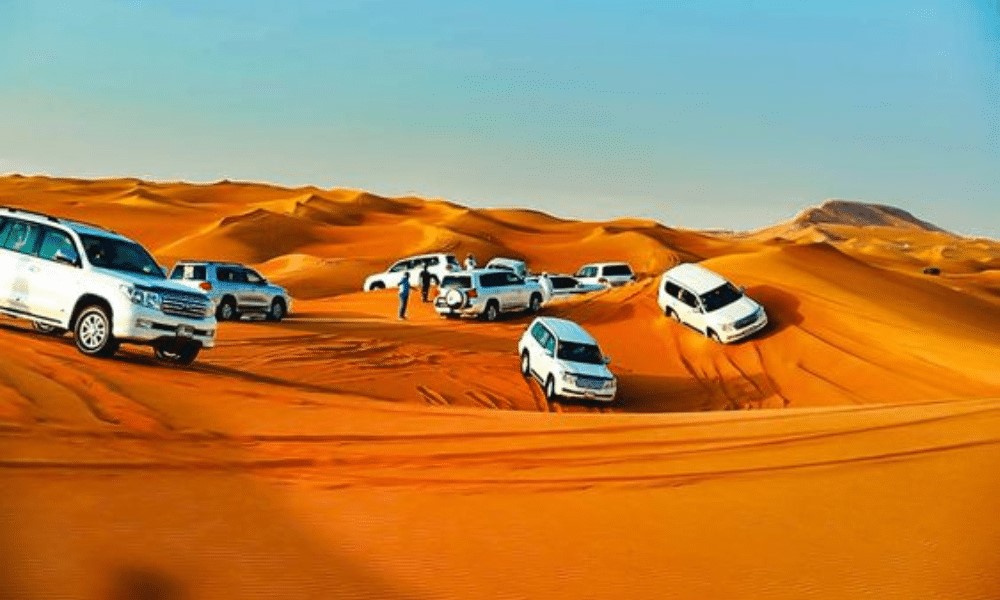

- Choose the Right Type of Safari
Desert safaris come in various styles, and the one you choose should match your interests and comfort level. Here are the most popular options:
Morning Safari
Perfect for early risers and those who want to avoid the heat. Morning safaris typically include dune bashing, sandboarding, and sometimes camel rides.
Evening Safari
This is the most popular option. It usually includes a mix of activities like dune bashing, camel rides, sandboarding, and ends with dinner, cultural performances, and star-gazing.
Overnight Safari
Ideal for adventure seekers. Spend a night under the stars in a desert camp. These safaris offer an authentic Bedouin-style experience and are less crowded than the evening tours.
Private Safari
For a more intimate or family-oriented experience, a private safari allows you to set your own pace and enjoy personalized service.
Travel Express Tip: Book through reputable tour operators, check customer reviews, and make sure the package includes insurance and certified drivers.
- Dress Appropriately for the Desert Climate
Desert temperatures can be extreme—scorching during the day and chilly at night. Here’s how to dress smartly:
- Loose, light-colored clothing: Helps reflect the sun and keeps you cool.
- Long sleeves and pants: Protects you from the sun and sand.
- Sunglasses and a wide-brimmed hat: Essential for sun protection.
- Comfortable shoes: Closed-toe shoes or sandals that are easy to remove (you’ll be stepping into fine sand often).
- A scarf or shemagh: Useful for covering your face in case of strong winds or a sandstorm.
Travel Express Tip: Avoid heavy perfumes—they may attract desert insects!
- Pack Smart: Essentials to Bring
When packing for a desert safari, less is more, but don’t leave behind the essentials:
- Sunscreen (SPF 30 or higher)
- Reusable water bottle (stay hydrated!)
- Power bank (limited charging options in the desert)
- Camera or smartphone with extra memory (you’ll want to capture every moment)
- Lip balm and moisturizer (desert air is very dry)
- Small backpack to carry your essentials
Travel Express Tip: Don’t forget wet wipes and hand sanitizer—they’re lifesavers in the desert.
- Know What to Expect from the Activities
Here’s a sneak peek into the common activities on a desert safari and how to prepare for them:
Dune Bashing
A thrilling ride over sand dunes in a 4×4 vehicle. Not for the faint-hearted!
- Tip: Eat light before the ride—motion sickness is common.
- Note: Not recommended for pregnant women or those with back problems.
Camel Riding
A slow, scenic way to enjoy the desert. Camel rides are usually short but fun.
- Tip: Hold on tight and lean back when the camel stands or sits down.
Sandboarding
Like snowboarding, but on sand dunes. No experience needed—just good balance!
- Tip: Wear shoes that are easy to clean or go barefoot.
Quad Biking
Available in some safari packages, this is a self-driving adventure across the dunes.
- Tip: Always wear a helmet and follow the guide’s instructions.
- Respect the Desert Environment and Culture
Deserts may seem barren, but they are fragile ecosystems. Here’s how to be a responsible traveler:
- Don’t litter: Always take your trash back with you.
- Avoid picking plants or disturbing wildlife
- Follow your guide’s instructions: They know the terrain and safety protocols.
- Respect local customs: Dress modestly and be courteous to local staff and performers.
Travel Express Tip: Choose eco-friendly safari operators who follow sustainable tourism practices.
- Enjoy the Cultural Experiences
Most evening and overnight safaris include cultural elements that offer a glimpse into traditional desert life:
- Henna painting
- Traditional music and dance (like Tanoura and belly dancing)
- Shisha (hookah) lounges
- Arabic coffee and dates
- Buffet dinner with local and international cuisine
Travel Express Tip: These experiences are included in most packages—don’t skip them! They’re a highlight of the trip.
- Know the Best Time to Go
Timing your safari well can enhance the experience:
Best Time of Year:
- October to April: Cooler temperatures and pleasant weather.
- Avoid summer months (June–August): Temperatures can soar above 45°C (113°F).
Best Time of Day:
- Morning: Best for cooler weather and photography.
- Evening: Ideal for sunset views and cultural programs.
- Overnight: Great for stargazing and avoiding the tourist crowd.
Travel Express Tip: Desert sunsets are spectacular—bring a good camera or phone with night mode!
- Safety First
Your safety is our priority. Here are some important precautions:
- Stay hydrated: Drink water frequently, especially during physical activities.
- Follow the guide: Never wander off alone—deserts can be disorienting.
- Keep your phone charged and have emergency contacts handy.
- Check your travel insurance: Ensure it covers adventure activities.
- Tell someone your itinerary: Especially if doing a private or overnight tour.
- Photography Tips for Stunning Shots
The desert offers incredible photo ops—golden dunes, camels, sunsets, and starry skies. Here’s how to get the perfect shot:
- Use the golden hour (just after sunrise or before sunset)
- Bring a tripod for night photography or long exposures
- Get creative with shadows and dune patterns
- Shoot in RAW format if using a DSLR, for better editing flexibility
Travel Express Tip: Be respectful if photographing locals—ask permission first.
- Embrace the Unexpected
The desert is unpredictable. From shifting weather to surprise wildlife sightings, every safari is unique.
- Be flexible: Weather or sand conditions may alter the itinerary.
- Go with the flow: The charm of the desert lies in its surprises.
- Enjoy the silence: The stillness of the desert is a rare and peaceful experience.