

1. A Glimpse into Petra’s History
Petra was once the thriving capital of the Nabataean kingdom as early as the 4th century BCE. The Nabataeans were skilled traders and masterful architects, known for carving massive structures directly into the sandstone cliffs. Petra served as a major crossroads between Arabia, Egypt, and the Mediterranean, making it a hub of commerce and culture.
Rediscovered in 1812 by Swiss explorer Johann Ludwig Burckhardt, Petra remained hidden for centuries, shrouded in local legend. Today, the city stands as a testament to human ingenuity and resilience.
2. Getting to Petra
Most international travelers arrive in Jordan via Queen Alia International Airport in Amman, the capital city. From there, Petra is approximately a 3.5-hour drive south. You can reach Petra by:
- Rental car – Offers flexibility for stops along the scenic Desert Highway.
- Tour bus – Many tour companies offer day trips or overnight options from Amman, Aqaba, or the Dead Sea.
- Public bus – JETT buses are a reliable and budget-friendly option.
The entrance to Petra is in the town of Wadi Musa, which has plenty of hotels, restaurants, and services for travelers.
3. Best Time to Visit Petra
Petra is open year-round, but the ideal times to visit are:
- Spring (March to May) and Autumn (September to November): Pleasant temperatures and clear skies make exploring comfortable.
- Summer (June to August): Expect high heat—often above 35°C (95°F). Hydration and sun protection are essential.
- Winter (December to February): Chilly mornings and possible rain, but fewer crowds.
To beat the crowds, start your visit early in the morning or late in the afternoon.
4. Tickets and Entry
Petra is managed by the Petra Development and Tourism Region Authority. Entry fees (as of 2025) are:
- 1-day ticket: 50 JD (~$70)
- 2-day ticket: 55 JD (~$77)
- 3-day ticket: 60 JD (~$84)
If you’re staying overnight in Jordan, you’ll avoid higher entry fees for same-day visitors from Israel or cruise ships.
Consider the Jordan Pass, which bundles your visa fee and entrance to over 40 attractions—including Petra.
5. Must-See Highlights in Petra
1. The Siq
Your Petra journey begins with a walk through the Siq, a 1.2-kilometer (0.75-mile) narrow gorge with towering walls up to 80 meters high. The natural beauty of the Siq, combined with Nabataean carvings and water channels, creates a mystical atmosphere.
2. The Treasury (Al-Khazneh)
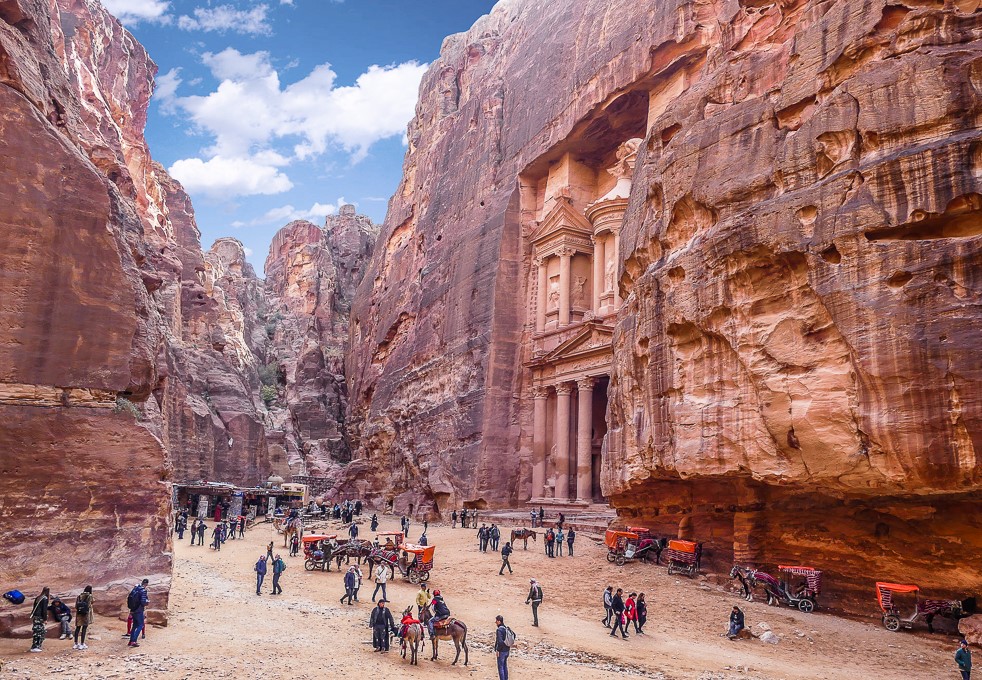
At the end of the Siq, the view suddenly opens to reveal the iconic Treasury—Petra’s most famous monument. Carved out of rose-colored stone, it stands 39 meters tall. Despite its name, it was likely a royal tomb, not a treasure house.
3. The Street of Facades
Continue along a path lined with dozens of tombs and monumental facades carved into the cliff face. This area offers insights into Nabataean funerary architecture.
4. The Theatre
Carved entirely out of rock, Petra’s Roman-style theatre could seat over 8,000 spectators. It reflects the city’s blend of Nabataean and Greco-Roman influences.
5. The Royal Tombs
This group of grand mausoleums includes the Urn Tomb, Silk Tomb, Corinthian Tomb, and Palace Tomb. Their elaborate facades are best viewed in the afternoon light.
6. The Monastery (Ad Deir)
A challenging 800-step climb from the valley floor leads to the Monastery, Petra’s largest monument. Less crowded than the Treasury, it’s a favorite for many travelers. The views from the surrounding plateaus are absolutely stunning.
7. High Place of Sacrifice
A climb to this sacred mountaintop rewards hikers with sweeping views and a look at ancient altars used for religious rituals.
6. Petra by Night
For a truly unforgettable experience, attend Petra by Night, held on select evenings. The path through the Siq and the area in front of the Treasury are illuminated by over 1,500 candles. Traditional Bedouin music fills the air as stars glitter overhead.
Note: This is a separate ticket (17 JD) and requires advance booking.
7. What to Pack
Comfort and practicality are key when visiting Petra. Be sure to bring:
- Comfortable walking shoes (you’ll walk several kilometers)
- Hat and sunglasses
- Sunscreen
- Water bottle
- Snacks or energy bars
- Camera or smartphone
- Light jacket (especially in cooler months)
Avoid carrying heavy bags, and pack light for easier hiking.
8. Local Culture and Etiquette
Jordan is a predominantly Muslim country, and it’s important to respect local customs. In Petra:
- Dress modestly, especially women (shoulders and knees covered)
- Ask permission before photographing people, especially Bedouins
- Support local artisans by purchasing handmade crafts and souvenirs
- Tipping is appreciated but not mandatory
You’ll find locals to be incredibly warm and welcoming. Don’t hesitate to strike up a conversation—many speak English, especially in tourist areas.
9. Dining in Petra and Wadi Musa
You’ll find a range of restaurants and cafes in Wadi Musa, from traditional Jordanian cuisine to international options. Must-try dishes include:
- Mansaf: Jordan’s national dish—lamb cooked in fermented yogurt sauce served with rice.
- Maqluba: A flavorful upside-down rice and vegetable dish.
- Zarb: A Bedouin barbecue cooked underground.
- Kunafa: A sweet cheese pastry topped with syrup.
Many hotels offer buffet breakfasts and packed lunches for day trippers.
10. Where to Stay
From budget hostels to luxurious resorts, Wadi Musa has accommodation for every traveler:
- Luxury: Mövenpick Resort Petra, Petra Marriott Hotel
- Mid-range: Petra Moon Hotel, Petra Guest House
- Budget: The Town Seasons Hotel, Valentine Inn
For a unique experience, consider staying at a Bedouin camp nearby, such as Seven Wonders Bedouin Camp or Little Petra Bedouin Camp. You’ll enjoy traditional meals, music, and incredible stargazing.
11. Adventure Activities
Petra isn’t just for history lovers—it’s a playground for adventurers:
- Hiking Trails: Explore off-the-beaten-path routes like the Back Trail to the Monastery, Wadi Farasa, and Jabal Haroun.
- Horseback Riding: Short rides are available from the visitor center to the Siq entrance.
- Camel Rides: Available in the main valley—be sure to agree on prices beforehand.
- Jeep Tours: Nearby Wadi Rum offers stunning desert landscapes and 4×4 excursions.
12. Travel Tips from Travel Express
- Start Early: The park opens at 6:00 AM—early risers avoid crowds and heat.
- Take Your Time: One day is not enough. Ideally, spend 2-3 days exploring.
- Stay Hydrated: Water is sold inside the site, but prices may be higher.
- Wear Layers: Desert weather can fluctuate dramatically between day and night.
- Respect the Site: Avoid climbing on monuments or removing stones/artifacts.
13. Day Trips from Petra
- Wadi Rum: A surreal desert landscape made famous by “Lawrence of Arabia” and “The Martian.”
- Little Petra (Siq al-Barid): A smaller but charming archaeological site just 15 minutes from Petra.
- Dana Biosphere Reserve: Jordan’s largest nature reserve, perfect for hiking and wildlife spotting.
- Aqaba: Jordan’s Red Sea resort town—ideal for snorkeling, diving, or relaxing on the beach.