
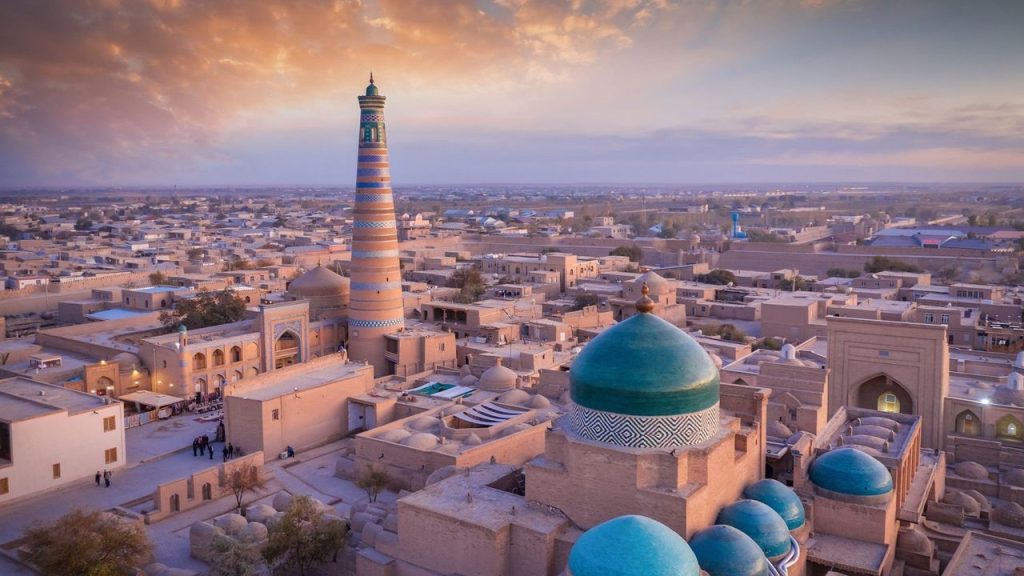

Samarkand: The Jewel of the East
Samarkand is often referred to as the crown jewel of the Silk Road—and for good reason. This ancient city, founded over 2,750 years ago, rivals Rome and Athens in age and significance. It rose to fame during the reign of Tamerlane (Timur), the 14th-century conqueror who made Samarkand his imperial capital.
Must-See Attractions:
Registan Square
One of the most iconic sights in all of Central Asia, Registan Square is framed by three majestic madrasahs (Islamic schools): Ulugh Beg, Sher-Dor, and Tilya-Kori. Their blue-tiled mosaics and soaring minarets are a testament to Islamic art and architecture.
Shah-i-Zinda
A breathtaking necropolis, Shah-i-Zinda features a corridor of mausoleums adorned with turquoise domes and intricate tilework. It’s also a sacred site, believed to house the tomb of Qusam ibn-Abbas, a cousin of Prophet Muhammad.
Gur-e-Amir Mausoleum
This is the final resting place of Timur himself, along with several members of his dynasty. The golden ceiling inside the mausoleum is absolutely mesmerizing.
Don’t Miss:
A stroll through Siab Bazaar, where the scent of spices, fresh fruit, and traditional non (bread) fills the air. This is the perfect spot to interact with locals and sample authentic Uzbek street food.
Bukhara: The Holy City
If Samarkand dazzles you with its grandeur, Bukhara will captivate you with its spiritual ambiance and ancient charm. Known as a center of Islamic theology and Sufism, Bukhara has over 140 historical monuments packed into a compact, walkable old town.
Must-See Attractions:
The Ark Fortress
This massive royal complex dates back over 2,000 years and served as a residence for Bukhara’s emirs. Wander through its museums and imagine the grandeur of royal courts and military strategy rooms.
Kalon Minaret & Mosque
Often called the “Tower of Death” (legend says criminals were thrown from its top), this 48-meter minaret has stood since the 12th century. The mosque and nearby Mir-i-Arab Madrasah form a stunning architectural trio.
Lyabi-Hauz Ensemble
An oasis in the heart of the old city, Lyabi-Hauz is a peaceful plaza surrounded by madrasahs and teahouses. It’s the perfect place to sip green tea and watch the world go by.
Don’t Miss:
Exploring the trading domes (Toqi Sarrafon, Toqi Telpak Furushon, and Toqi Zargaron), where merchants once sold everything from silk to spices. Today, they house artisans selling handwoven carpets, ceramics, and embroidered textiles.
Khiva: A Living Open-Air Museum
Unlike Samarkand and Bukhara, Khiva feels like a time capsule. Surrounded by desert and fortified walls, its inner city—Itchan Kala—has been fully preserved as a UNESCO World Heritage Site.
Must-See Attractions:
Kalta Minor Minaret
This squat, turquoise-tiled minaret was meant to be the tallest in the Islamic world, but construction halted suddenly. Today, it’s one of the most photographed landmarks in Khiva.
Kunya-Ark Citadel
Built in the 17th century, this fortress within the fortress served as the residence of Khiva’s rulers. From the watchtower, you’ll get a panoramic view of the entire walled city.
Islam Khoja Complex
This includes the tallest minaret in Khiva and a beautiful madrasah. The view from the top is especially stunning at sunset.
Don’t Miss:
Walking along the city walls at dusk. The golden light casts dramatic shadows over the ancient mud-brick architecture, creating a surreal, magical atmosphere.
Cultural Encounters: More Than Just Monuments
The true magic of Uzbekistan’s Silk Road cities lies not only in their architecture but also in the warmth of their people and richness of their traditions.
Cuisine
From sizzling shashlik (kebabs) to hearty plov (a national rice dish cooked with lamb, carrots, and onions), Uzbek cuisine is comfort food at its finest. Try local samsa (savory pastries) straight out of a clay oven, or sip on sweet green tea in a traditional chaikhana.
Crafts
Uzbekistan is a paradise for art lovers and collectors. Each region boasts its own craft specialties—from Suzani embroidery in Bukhara to ceramics in Rishtan and silk weaving in Margilan. Don’t leave without a hand-dyed scarf, a hand-knotted carpet, or a carved wooden box as a souvenir.
Hospitality
In Uzbek culture, guests are considered blessings. Expect warm welcomes, spontaneous invitations for tea, and genuine conversations that transcend language barriers.
Getting Around
Uzbekistan has made huge strides in its tourism infrastructure in recent years. High-speed trains now link Tashkent, Samarkand, Bukhara, and Khiva, making travel between cities efficient and comfortable. Domestic flights and private drivers are also available for those seeking flexibility.
Pro Tip from Travel Express:
Consider taking a guided tour for deeper insights into each city’s history. Many local guides are passionate storytellers who bring the Silk Road to life with legends and lore.
When to Go
The best times to visit Uzbekistan are spring (April to June) and autumn (September to November). During these months, the weather is pleasant, and the cities are at their most photogenic. Summers can be extremely hot, especially in desert regions, while winters are cold and dry but quieter and atmospheric.