
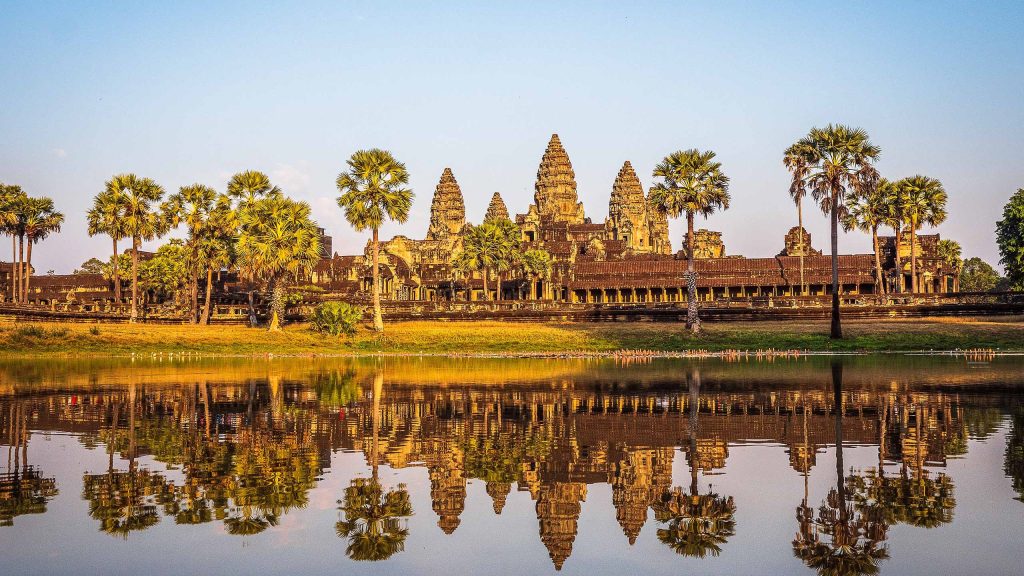

A Timeless Marvel: What is Angkor Wat?
Angkor Wat, meaning “City of Temples,” is the crown jewel of the Angkor Archaeological Park near the town of Siem Reap. Built in the early 12th century by King Suryavarman II, this massive temple complex was originally dedicated to the Hindu god Vishnu before gradually transforming into a Buddhist site. Spanning over 400 acres, Angkor Wat is considered the largest religious monument in the world.
What sets Angkor Wat apart is its perfect harmony between symmetry and symbolism. From its lotus-bud towers to its endless galleries of bas-reliefs, every corner of the temple tells a story — not just of Cambodia’s spiritual beliefs, but of its cultural and artistic zenith.
When to Visit Angkor Wat
The best time to visit Angkor Wat is during the cool, dry season from November to March. The weather is more comfortable for exploring the vast ruins, and the skies are often clear — perfect for photography. April to June can get very hot, while the monsoon season (July to October) brings fewer crowds and lush green surroundings, making it a favorite for those seeking a more serene experience.
Pro Tip: Visit the temple complex at sunrise. Watching the sun rise behind Angkor Wat’s silhouette is an unforgettable moment — a true rite of passage for any traveler.
Getting There
The gateway to Angkor Wat is Siem Reap, a vibrant town just a few kilometers from the temple complex. Siem Reap is well connected by air with direct flights from major cities in Asia like Bangkok, Singapore, and Kuala Lumpur. Once you arrive, it’s easy to get around via tuk-tuk, bike, or private tour vehicles.
What to See and Explore
While Angkor Wat itself is the star attraction, the Angkor Archaeological Park spans over 1,000 temples and ruins, each with its own unique charm. Here are a few highlights you won’t want to miss:
- Angkor Wat
The centerpiece of the complex, Angkor Wat is best explored early in the morning. Walk across the moat, marvel at the five iconic towers, and explore the intricately carved galleries that depict scenes from Hindu mythology and Khmer history. Don’t miss the central tower — climb it for panoramic views and a glimpse into the spiritual heart of the site.
- Bayon Temple
Located in the nearby city of Angkor Thom, Bayon is famed for its massive stone faces smiling down from every tower. These enigmatic expressions, believed to represent either King Jayavarman VII or the bodhisattva Avalokiteshvara, give the temple an ethereal and mysterious vibe.
- Ta Prohm
If you’ve seen Tomb Raider, you’ll recognize this temple. Ta Prohm is one of the few temples left in its “natural” state, with massive tree roots intertwining through crumbling stone walls. It’s haunting, powerful, and incredibly photogenic — a reminder of nature’s relentless embrace.
- Preah Khan, Banteay Srei, and More
Each temple in the Angkor complex has a unique story to tell. Preah Khan is sprawling and atmospheric, with corridors that seem to go on forever. Banteay Srei, known as the “Citadel of the Women,” features some of the finest carvings in Cambodia, etched in pink sandstone.
Cultural Etiquette and Tips
Visiting Angkor Wat is not just a sightseeing trip — it’s a cultural experience. Here are some tips to help you make the most of your visit:
- Dress modestly: Shoulders and knees should be covered when visiting temples. Light, breathable clothing is ideal.
- Respect the sacred: These are still active religious sites. Be mindful of your behavior — don’t climb on sacred structures or touch carvings.
- Hire a local guide: A knowledgeable guide can provide historical context and share hidden stories you might miss on your own.
- Stay hydrated: It can get hot. Bring water, wear sunscreen, and take breaks.
Siem Reap: Your Launchpad to Angkor
While Angkor Wat is the main attraction, Siem Reap is a destination in its own right. This charming town offers a great mix of culture, cuisine, and nightlife. Don’t miss:
- Pub Street: A lively area filled with restaurants, bars, and night markets. Great for unwinding after a day of temple hopping.
- Old Market (Psar Chas): For local handicrafts, spices, and souvenirs.
- Cambodian cuisine: Try dishes like amok trey (coconut fish curry), lok lak (stir-fried beef), and fresh spring rolls. Visit a traditional restaurant or take a cooking class.
- Cultural shows: Enjoy an Apsara dance performance to dive deeper into Khmer culture.
Responsible Tourism
At Travel Express, we believe in traveling responsibly and respectfully. When visiting Angkor Wat, remember that you’re stepping into a place of deep spiritual and historical significance. Here’s how you can help preserve it:
- Stick to marked paths to prevent further erosion.
- Avoid littering and carry reusable water bottles.
- Support local businesses by buying from artisans and dining at locally-owned restaurants.
- Follow temple etiquette, especially around monks and religious ceremonies.
Capture the Moment
Angkor Wat is a photographer’s paradise. Whether you’re using a smartphone or DSLR, you’ll find magic around every corner. Best times to shoot?
- Sunrise: The reflection of the temple in the lotus pond is iconic.
- Golden hour: Late afternoon light creates a warm, dreamy glow over the stone carvings.
- Night photography: Special events sometimes allow night access — don’t miss a chance to capture the temple under the stars.
Extend Your Adventure
If you have more time, Cambodia has much more to offer beyond Angkor Wat:
- Tonlé Sap Lake: Visit floating villages and learn about traditional life on Southeast Asia’s largest freshwater lake.
- Phnom Penh: The capital city offers a deeper dive into Cambodia’s modern history with sites like the Royal Palace and Tuol Sleng Genocide Museum.
- Battambang: Known for its colonial architecture and arts scene, this laid-back town is perfect for off-the-beaten-path exploration.
- Kampot and Kep: Scenic riverside towns with charming vibes, pepper plantations, and delicious seafood.