

What Are the Chocolate Hills?
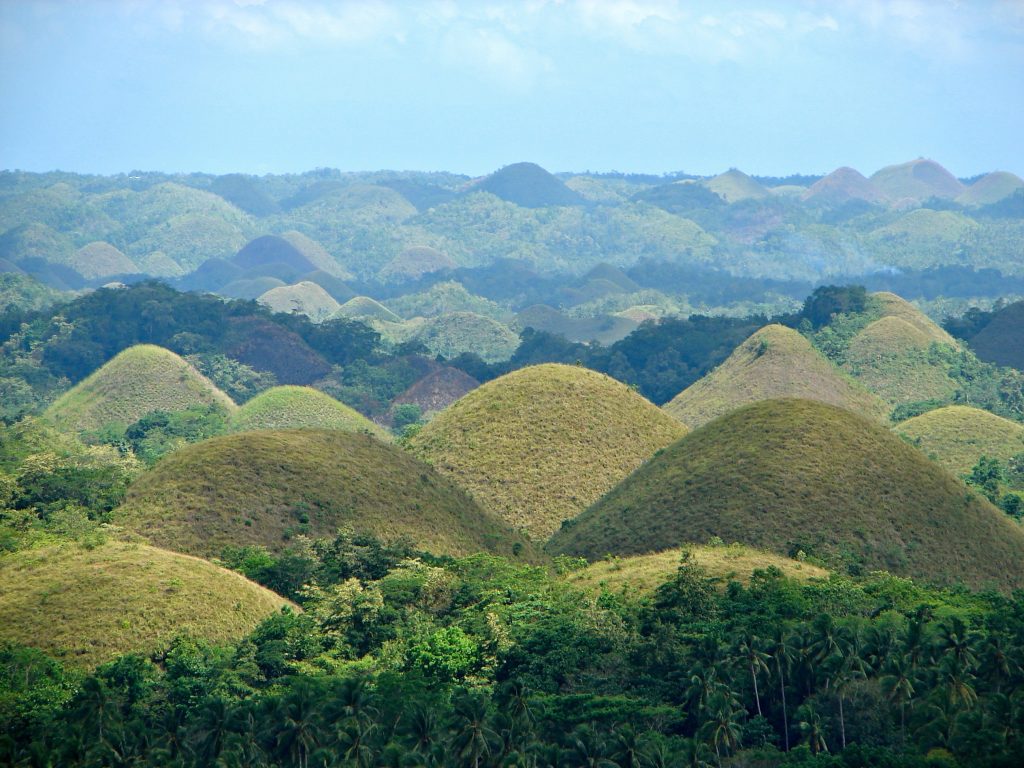
At first glance, the Chocolate Hills look like a man-made landscape designed with computer precision. These perfectly cone-shaped hills are formed from limestone covered with grass, which during the dry season turns a deep brown — hence the name “Chocolate Hills.” In total, there are around 1,268 to 1,776 hills, depending on who you ask and how you count.
Spread across the towns of Carmen, Batuan, and Sagbayan in the province of Bohol, these formations rise anywhere from 30 to 50 meters high, with some reaching up to 120 meters. Despite their symmetrical appearance, these hills are entirely natural — a rare geological phenomenon that continues to puzzle scientists to this day.
Legends and Folklore: Myths Behind the Mounds
In true Philippine fashion, the Chocolate Hills are steeped in folklore as rich as the landscape itself. One of the most popular legends tells the story of two giants who engaged in a mighty battle, hurling boulders and rocks at each other for days. Exhausted from the fight, they eventually made peace and left the battlefield, but not before leaving behind their mess — which became the Chocolate Hills.
Another romantic tale speaks of a giant named Arogo, who fell in love with a mortal woman named Aloya. When she passed away, Arogo was so heartbroken that his tears turned into hills, creating a landscape that would immortalize his sorrow.
While science provides a different explanation, these stories add a layer of magic and mystery to the already enchanting scenery.
How Were They Really Formed?
From a geological standpoint, the Chocolate Hills were formed through the weathering of marine limestone, sitting on top of an impermeable layer of clay. Over thousands — possibly millions — of years, rainwater, erosion, and tectonic activity carved the land into these near-perfect conical shapes. The uniformity of the hills remains a mystery, making the area a subject of both academic study and tourist fascination.
In 1988, the Chocolate Hills were declared a National Geological Monument, and in 2006, they were added to the Philippines’ tentative list for UNESCO World Heritage status — a testament to their natural and cultural significance.
When to Visit: Timing is Everything
The best time to visit the Chocolate Hills is during the dry season, typically from November to May, when the grass turns brown and gives the hills their famous “chocolate” color. During the rainy season (June to October), the hills are lush and green — still beautiful, but with a very different vibe.
Whether brown or green, the hills are stunning year-round. If you’re a photographer or just someone who loves dramatic landscapes, sunrise and sunset are ideal times to capture the beauty of the hills in their best light.
Getting There: The Journey to Bohol
Bohol is easily accessible via Tagbilaran Airport (soon to be the Bohol–Panglao International Airport), which receives domestic flights from Manila, Cebu, and other major Philippine cities. From the airport, the Chocolate Hills are about 55 kilometers away, or around 1.5 to 2 hours by car.
You can also reach Bohol via ferry from Cebu, making it a perfect side trip for those already exploring the Visayas region. Once in Bohol, you’ll find a variety of transportation options, including vans for hire, guided tours, and even scooters if you’re feeling adventurous.
The Best Views: Where to Experience the Chocolate Hills
- Chocolate Hills Complex – Carmen
This is the most popular viewpoint, located in Carmen, the geographic center of the hills. After climbing a staircase of around 214 steps, you’ll be rewarded with a 360-degree panoramic view that captures the majesty of this surreal landscape.
Facilities include:
- A visitor center
- Café and souvenir shops
- Viewing deck with telescopes
- Sagbayan Peak
For a quieter, more family-friendly experience, head to Sagbayan Peak. This area combines scenic views with whimsical elements like cartoon statues, a butterfly dome, and a children’s playground — great for those traveling with kids.
- ATV Adventures
Why settle for just looking when you can explore the hills up close? Local operators offer ATV (All-Terrain Vehicle) tours around the base of the hills, adding a touch of adrenaline to your sightseeing.
Things to Do Nearby
🐵 Visit the Philippine Tarsier Sanctuary
Just a short drive from the Chocolate Hills, the Philippine Tarsier Sanctuary in Corella offers a chance to see one of the world’s smallest primates up close. These bug-eyed, nocturnal creatures are unique to the Philippines and a must-see when in Bohol.
🚤 Cruise the Loboc River
Enjoy a serene river cruise complete with a buffet lunch and live music. The Loboc River is one of Bohol’s hidden gems and a great way to relax after a day of sightseeing.
🏝️ Explore Panglao Island
If your idea of paradise involves white sand beaches, turquoise waters, and world-class diving, Panglao Island is just the place. It’s connected to Bohol by a bridge and makes for a perfect beach escape.
Travel Tips: What to Know Before You Go
- Wear comfortable shoes — You’ll be climbing stairs at the viewpoints.
- Bring sun protection — Hats, sunscreen, and sunglasses are your best friends.
- Stay hydrated — Especially during the dry season when it can get quite hot.
- Respect the environment — Don’t litter and avoid climbing on the hills.
- Book in advance if you’re visiting during peak season (December to April).
Where to Stay: Accommodations in Bohol
Whether you’re a luxury traveler or on a backpacker’s budget, Bohol has accommodations to suit every style:
- Luxury: Amorita Resort (Panglao), South Palms Resort
- Mid-range: Fox & Firefly Cottages, Bohol Bee Farm
- Budget: Alona Hammocks, Anda Backpackers Lodge
If you’re looking to stay close to the Chocolate Hills, you can opt for lodges in Carmen or Sagbayan, though options here are more limited and basic.
Why You Should Visit the Chocolate Hills
The Chocolate Hills are more than just a natural attraction — they are a symbol of Filipino heritage, creativity, and resilience. Visiting them is like stepping into a living postcard, where each hill tells a story that goes beyond geology or legend. It’s about connection — to nature, to history, and to the soulful beauty of the Philippines.
Whether you’re a nature lover, a thrill-seeker, or a culture enthusiast, the Chocolate Hills offer something unforgettable. With easy access, plenty of nearby attractions, and a backdrop unlike