

Why Yogyakarta Is a Temple Lover’s Paradise
Nestled in central Java, Yogyakarta (often affectionately called Jogja) is a cultural capital that beautifully blends tradition and modernity. It is the gateway to Indonesia’s most famous temples, with roots that stretch back over a thousand years. The temples here are not just religious sites—they are symbols of Indonesia’s rich heritage, artistic expression, and architectural genius.
Whether you’re a history buff, a spiritual seeker, or a curious wanderer, the temples of Yogyakarta offer a profound glimpse into ancient Southeast Asian civilizations.
1. Borobudur Temple: The Crown Jewel of Central Java
🕉 A UNESCO World Heritage Site
📍 Location: Magelang (about 40 km from Yogyakarta)
🕰 Best time to visit: Sunrise
Let’s start with Borobudur, the world’s largest Buddhist temple and a true marvel of ancient engineering. Built in the 9th century during the Sailendra Dynasty, Borobudur is constructed from over 2 million volcanic stone blocks, arranged into nine stacked platforms topped with a grand central dome.
What makes Borobudur truly mesmerizing is its symbolic design. The structure represents the Buddhist path to enlightenment, with over 2,600 relief panels and 504 Buddha statues that tell stories from Buddhist scriptures.
For the ultimate experience, catch the sunrise from the top of Borobudur. As the morning mist lifts and the golden light washes over the stone stupas, you’ll understand why this place is considered one of the world’s greatest spiritual wonders.
Travel Tip: Arrive early and book a sunrise tour through a local guide. Bring a light jacket—it can get chilly in the early hours.
2. Prambanan Temple: A Masterpiece of Hindu Architecture
🕉 Another UNESCO World Heritage Site
📍 Location: About 17 km from Yogyakarta
🕰 Best time to visit: Late afternoon or during the evening Ramayana Ballet
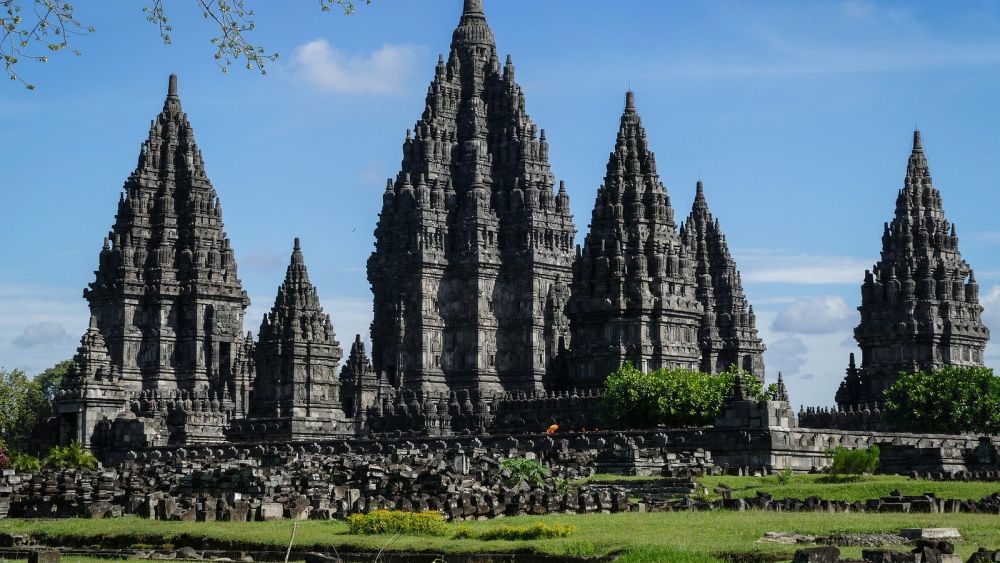
Next on the list is Prambanan, a towering complex of Hindu temples that showcases the splendor of ancient Javanese art and religion. Built in the 9th century, around the same time as Borobudur, Prambanan is dedicated to the Trimurti: Brahma (the Creator), Vishnu (the Preserver), and Shiva (the Destroyer).
The central temple of Shiva Mahadeva rises 47 meters into the sky, surrounded by smaller temples that form a mesmerizing symmetrical layout. The detailed bas-reliefs on the temple walls depict stories from the Ramayana, one of Hinduism’s most revered epics.
To truly bring the temple to life, don’t miss the Ramayana Ballet, performed on an open-air stage with the lit-up temple as the backdrop. Traditional dance, music, and drama converge in a spectacle that’s both cultural and spiritual.
Travel Tip: Combine your visit to Prambanan with a stop at Ratu Boko Palace, located nearby, especially at sunset.
3. Sewu Temple: A Hidden Gem Near Prambanan
📍 Location: Just north of Prambanan
🕰 Best time to visit: Anytime before noon
While Borobudur and Prambanan often steal the spotlight, Sewu Temple quietly impresses those who take the time to explore it. Meaning “A Thousand Temples” in Javanese, Sewu is a Buddhist temple complex that was once one of the largest in the region.
Though less restored than Borobudur, Sewu has a mystical, untouched charm. Walking among its silent, weathered ruins offers a more intimate, off-the-beaten-path experience.
Travel Tip: Rent a bike or use the shuttle service to explore the full temple compound shared by Prambanan, Sewu, and nearby Lumbung and Bubrah temples.
4. Plaosan Temple: The Temple of Love
📍 Location: 1.5 km northeast of Prambanan
🕰 Best time to visit: Golden hour or early morning
With its unique blend of Buddhist and Hindu architectural elements, Plaosan Temple stands as a symbol of unity and harmony. Legend says that this temple was built as a love offering by a Buddhist princess for her Hindu prince—a story beautifully reflected in its dual design.
The twin main temples and serene courtyards make Plaosan a peaceful and photogenic spot, especially during sunrise or sunset.
Travel Tip: This temple is less crowded than Borobudur or Prambanan—perfect for a quiet moment of reflection or some great photography.
5. Kalasan Temple: A Temple with Elegant Carvings
📍 Location: 13 km east of Yogyakarta city center
🕰 Best time to visit: Early morning
Kalasan is the oldest Buddhist temple in Central Java, built in the 8th century and dedicated to Tara, a female bodhisattva. The temple is known for its elegant Kala carvings, slender structure, and a unique coating once used to protect the stone from weathering.
Though modest in size, Kalasan’s historical significance and artistic detail make it a worthwhile stop on your temple tour.
6. Sambisari Temple: The Underground Wonder
📍 Location: 12 km northeast of Yogyakarta
🕰 Best time to visit: Mid-morning
Imagine stumbling upon an ancient temple buried under layers of volcanic ash—that’s the story of Sambisari Temple. Discovered in 1966, this 9th-century Hindu temple was hidden underground for centuries after Mount Merapi’s eruption.
Today, Sambisari sits in a sunken courtyard, giving visitors the feeling of descending into a secret past. The carvings are remarkably well-preserved, and the layout offers insights into early Javanese temple design.
Travel Tip: The surrounding park is beautifully maintained, ideal for a relaxing stroll or picnic.
7. Candi Ijo: Temple Above the Clouds
📍 Location: Bukit Ijo (Green Hill), about 18 km east of Yogyakarta
🕰 Best time to visit: Sunset
Perched high on a hill, Candi Ijo is one of the highest temples in Yogyakarta, offering breathtaking panoramic views of the surrounding plains. Dating back to the 10th century, the temple complex consists of a main shrine and several smaller structures.
While the temple itself is modest, the location makes it magical. Watching the sun dip below the horizon from this vantage point is an experience you’ll never forget.
Travel Tip: Pair your visit with nearby Tebing Breksi, a scenic cliff area with artistic carvings and photo spots.
Travel Express Tips for Exploring Yogyakarta’s Temples
To make the most of your temple adventures, here are some tips from our travel experts:
🌞 Dress Respectfully
Many temples are active spiritual sites. Wear modest clothing—cover your shoulders and knees.
📷 Photography Etiquette
Photography is allowed at most sites, but avoid climbing on ancient structures or disturbing ceremonies. Drones may require special permits.
🧭 Get a Local Guide
Guides can share fascinating stories and hidden symbolism you might miss on your own.
🚌 Transport Options
Join a guided tour, hire a private driver, or rent a scooter for flexibility. Roads are generally good, but traffic can get busy around major sites.
🧃 Stay Hydrated & Energized
Pack water, snacks, and sunblock—especially if you plan to explore multiple sites in one day.
Where to Stay in Yogyakarta
Whether you’re traveling on a budget or seeking luxury, Yogyakarta has something for everyone. Here are a few picks:
- Luxury: Hotel Tentrem Yogyakarta – Elegant and tranquil, perfect after a long temple day.
- Mid-range: Gallery Prawirotaman Hotel – Stylish, great location, and great service.
- Budget: The Packer Lodge Yogyakarta – Clean, social, and traveler-friendly.