
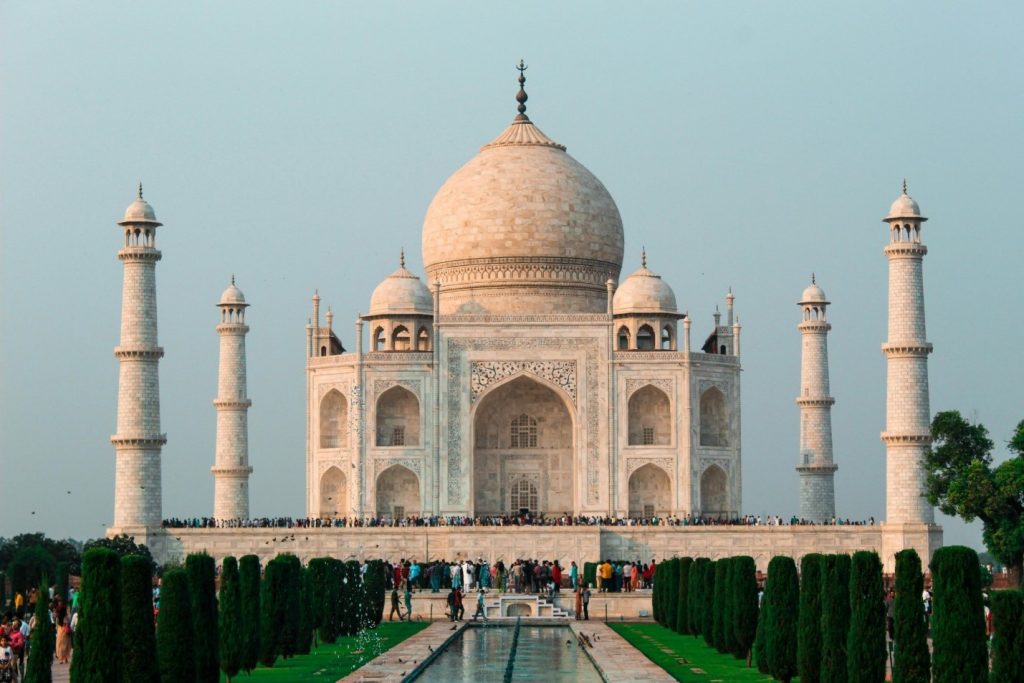

. Why Visit the Taj Mahal?
The Taj Mahal is not only a UNESCO World Heritage Site, but also one of the New Seven Wonders of the World. Commissioned by Emperor Shah Jahan in 1632 in memory of his wife Mumtaz Mahal, this gleaming white mausoleum is a masterpiece of Mughal architecture. The symmetry, intricate inlays, calligraphy, and its emotional backstory make it a destination that touches hearts across cultures.
2. Best Time to Visit the Taj Mahal
Seasons Matter:
- October to March (Best Time): The weather is pleasant, with cool mornings and evenings—ideal for sightseeing.
- April to June (Hot Season): Expect high temperatures, sometimes crossing 40°C (104°F). Carry sunscreen, sunglasses, and water if you visit during this time.
- July to September (Monsoon): Rain can dampen your plans, but the gardens are lush and the crowds thinner.
Time of Day:
- Early Morning (6:00 AM – 9:00 AM): This is the best time to visit. The soft golden light enhances the beauty of the marble, and the crowds are minimal.
- Full Moon Nights: The Taj Mahal glows under moonlight and limited night viewings are allowed five nights a month—two days before and after the full moon and on the night itself. Book these tickets in advance!
3. How to Get to the Taj Mahal
By Air:
- The nearest airport is Agra Airport (AGR), but it has limited connectivity.
- Most travelers fly into Delhi (DEL) and then travel by road or train to Agra (approx. 3–4 hours).
By Train:
- Gatimaan Express and Shatabdi Express are two high-speed trains from Delhi to Agra.
- Agra Cantt Station is the main railway station in Agra.
By Road:
- Well-connected via Yamuna Expressway from Delhi. Buses, taxis, and self-drive options are available.
4. Entry Gates & Ticketing Tips
There are three gates to enter the Taj Mahal:
- East Gate (less crowded)
- West Gate (main entrance, more crowded)
- South Gate (closes in the evening)
Ticket Prices (As of 2025):
- Indian Citizens: ₹50
- SAARC/BIMSTEC countries: ₹540
- Foreign Tourists: ₹1,100
- Additional for Mausoleum Entry: ₹200
Tickets can be purchased online via the Archaeological Survey of India (ASI) website or at the counters. Online booking is recommended to avoid long queues.
Tips:
- Foreign tourists get a bottle of water and shoe covers included in their ticket.
- Children below 15 years: Free entry.
- Large bags and drones are not allowed inside.
- Always carry a valid ID.
5. Dress Code and What to Bring
While there’s no official dress code, it’s respectful to dress modestly. India can be quite hot, so opt for light, breathable clothes that cover shoulders and knees.
Essentials to Carry:
- Water bottle (refillable)
- Hat or umbrella
- Sunscreen
- Camera/Smartphone
- Power bank
- Hand sanitizer and tissues
- Shoe covers (or prepare to go barefoot in some areas)
6. Photography Tips
The Taj Mahal is one of the most photographed monuments in the world. Here are some tips to get the best shots:
- Classic Reflection Shot: From the long pool on the main walkway leading to the tomb.
- From the Diana Bench: Also known as the “Princess Diana bench,” it’s a favorite photo spot.
- Alternate Angles: Head to Mehtab Bagh across the Yamuna River for a stunning sunset silhouette.
- Use a Wide-Angle Lens: To capture the full grandeur of the monument.
Pro tip: Drones are banned, so keep your aerial photography dreams grounded.
7. Guided Tours vs. Solo Travel
Hiring a guide can enrich your visit with historical context, architectural details, and insider stories. Official guides are available at the entrance. Avoid touts outside the complex who may overcharge.
Alternatively, consider audio guides or apps with AR/VR experiences for a modern twist to your exploration.
8. Food & Facilities
No food is allowed inside the Taj Mahal complex, but you can find plenty of options nearby.
Where to Eat Near the Taj Mahal:
- Pinch of Spice – Popular among tourists for Indian cuisine.
- The Salt Cafe – Rooftop dining with views of the Taj.
- Joney’s Place – A budget-friendly option loved by backpackers.
Restrooms and cloakrooms are available near the gates, and free drinking water stations are inside.
9. Nearby Attractions in Agra
Make the most of your trip by visiting other gems in and around Agra:
- Agra Fort (2.5 km from Taj Mahal): A UNESCO site that served as a royal residence.
- Mehtab Bagh: A Mughal garden perfect for a sunset Taj view.
- Tomb of Itimad-ud-Daulah (“Baby Taj”): A precursor to the Taj, with intricate marble work.
- Fatehpur Sikri (35 km): A historic city built by Emperor Akbar, rich with palaces and mosques.
10. Cultural Etiquette and Safety Tips
Do’s:
- Be respectful: The Taj is also a tomb.
- Follow signs and instructions from security personnel.
- Ask for permission before photographing people.
- Be cautious of monkeys—they’re around, especially near Agra Fort and Mehtab Bagh.
Don’ts:
- Don’t bring drones, tripods, tobacco, or chewing gum inside.
- Don’t deface the monument—it’s a criminal offense.
- Avoid aggressive touts offering “free” services.
Agra is generally safe, but like in any tourist destination, keep your belongings secure and be cautious with strangers.
11. Taj Mahal for Couples and Solo Travelers
The Taj Mahal is romantic by nature—it’s literally a monument to love. Couples will find its gardens perfect for quiet strolls and memorable photographs.
Solo travelers will find the site meditative and inspiring. It’s a great spot for introspection, sketching, or photography.
12. Sustainable Travel Tips
Let’s help preserve the beauty of the Taj for generations to come:
- Use the battery-operated shuttles from the parking area instead of polluting vehicles.
- Don’t litter. Use dustbins provided.
- Respect the sanctity of the place.
- Support local artisans and buy souvenirs from government-approved stores.