
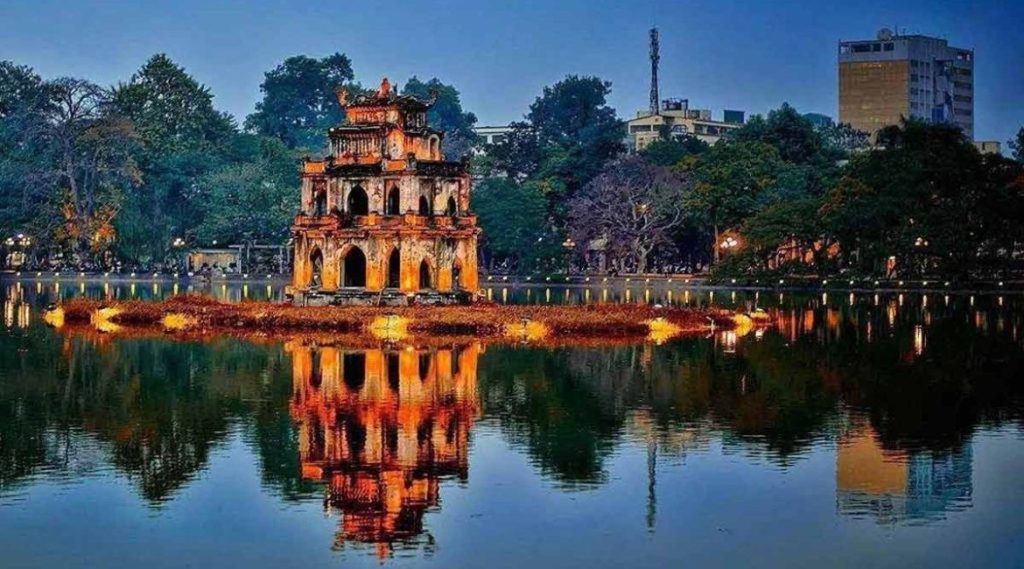

1. Hoan Kiem Lake and Ngoc Son Temple
At the heart of Hanoi lies Hoan Kiem Lake, a tranquil body of water surrounded by the bustling streets of the Old Quarter. Known as the “Lake of the Restored Sword,” it is steeped in legend and a symbol of Hanoi. According to the tale, a 15th-century emperor, Le Loi, was granted a magical sword by a divine turtle in the lake, which he used to defeat the Chinese invaders. After the war, the emperor returned the sword to the turtle, which is said to live in the lake.
A striking feature of Hoan Kiem Lake is the Ngoc Son Temple. Located on an island in the northern part of the lake, this small yet enchanting temple is dedicated to the national hero General Tran Hung Dao and the mythical turtle. Visitors can cross the picturesque The Huc Bridge to reach the temple, which offers a peaceful retreat from the surrounding urban bustle.
2. The Old Quarter
No visit to Hanoi is complete without wandering through its Old Quarter. This historic district, often referred to as the “36 Streets,” was originally a hub for merchants who sold their wares in individual streets. Today, it is one of the most vibrant areas of the city, with colorful storefronts, ancient architecture, and a sensory overload of smells, sounds, and sights.
As you walk through the narrow streets, you’ll encounter a variety of local shops selling everything from silk products and wooden carvings to street food. Be sure to try Hanoi’s famous dish, Pho, a flavorful noodle soup, at one of the many small restaurants that line the streets. The Old Quarter is also home to several temples, traditional houses, and markets, making it a perfect place to soak in the essence of Hanoi.
3. Ho Chi Minh Mausoleum Complex
Hanoi is home to the final resting place of Ho Chi Minh, the revered leader of Vietnam’s independence movement. The Ho Chi Minh Mausoleum is an imposing structure located in the heart of the city, and it is one of the most significant landmarks in Vietnam. The mausoleum is open to the public, and visitors can pay their respects to the “Uncle Ho” by viewing his embalmed body, which is preserved in a glass coffin.
Adjacent to the mausoleum is the Ho Chi Minh Museum, which offers a fascinating insight into the life and legacy of Ho Chi Minh. You can also visit his Stilt House, a modest wooden house where he lived from 1958 to 1969, and the One Pillar Pagoda, an iconic structure that symbolizes the city’s resilience and spirit.
4. Temple of Literature
For those interested in Vietnam’s rich cultural and educational history, the Temple of Literature is a must-visit attraction. Built in 1070, the Temple of Literature is dedicated to Confucius, and it was once the site of Vietnam’s first university. The temple complex is a serene and beautifully landscaped area, with ponds, courtyards, and classical architecture.
As you stroll through the temple, you’ll come across stone tablets that commemorate the names of scholars who passed the imperial exams, as well as ornate pavilions and altars dedicated to Confucius and other notable figures in Vietnamese history. The Temple of Literature is not only a symbol of learning and culture but also a peaceful retreat from the city’s hustle and bustle.
5. Vietnam Museum of Ethnology
For those interested in learning more about the diverse ethnic groups that make up Vietnam’s population, the Vietnam Museum of Ethnology is a fascinating stop. Located a little outside of Hanoi’s city center, this museum offers a deep dive into the country’s rich cultural heritage, featuring exhibits on the traditions, customs, and lifestyles of Vietnam’s 54 ethnic groups.
The museum’s outdoor area is home to a collection of traditional houses from different ethnic groups, providing visitors with a glimpse into how various communities live in Vietnam’s rural areas. Inside the museum, you’ll find displays of traditional clothing, musical instruments, and artifacts that tell the story of Vietnam’s cultural diversity.
6. West Lake and Tran Quoc Pagoda
West Lake (Ho Tay) is the largest lake in Hanoi and one of the city’s most picturesque spots. Surrounded by lush greenery and elegant villas, it offers a peaceful escape from the city’s fast pace. West Lake is ideal for a leisurely stroll, a boat ride, or simply relaxing by the water.
On the eastern shore of West Lake, you’ll find the Tran Quoc Pagoda, one of the oldest and most beautiful Buddhist temples in Hanoi. This pagoda, which dates back over 1,500 years, is famous for its stunning architecture and serene atmosphere. The pagoda stands on a small island in the lake and is an important pilgrimage site for local Buddhists.
7. Hanoi Opera House
For fans of the arts and architecture, the Hanoi Opera House is a must-see. Built in 1911 during the French colonial period, this grand building is a masterpiece of French colonial architecture, with its ornate facade and classic design. The opera house is still in use today, hosting a variety of performances, including operas, ballets, and concerts.
Visitors can take a guided tour of the opera house or, if timing allows, attend a performance. The building’s French-style architecture and cultural significance make it a key part of Hanoi’s historical and artistic heritage.
8. Hanoi Train Street
A unique and quirky attraction in Hanoi is Hanoi Train Street, where trains pass by only a few inches away from the front doors of people’s homes and cafes. Located in the Old Quarter, this narrow street is famous for its proximity to the railway tracks, and it’s become a popular spot for both locals and tourists who want to witness this unusual sight.
At certain times of the day, the trains zoom by, and the street clears as residents quickly move their tables, chairs, and motorbikes to make way for the train. After the train passes, the street returns to its normal hustle and bustle, with locals setting up shops, cafes, and outdoor seating.
9. Thang Long Water Puppet Theatre
For a truly unique Vietnamese cultural experience, don’t miss a performance at the Thang Long Water Puppet Theatre. Water puppetry, an ancient Vietnamese art form, originated in the Red River Delta and has been a part of Hanoi’s cultural life for centuries. The performances are held in a pool of water, with wooden puppets controlled by skilled puppeteers using long rods hidden beneath the water’s surface.
The performances typically tell traditional Vietnamese folk tales, myths, and legends, and are accompanied by live music played on traditional instruments. A visit to the water puppet theatre is a great way to immerse yourself in the country’s artistic heritage and have a bit of fun while you’re at it.
10. Night Markets
Hanoi’s Night Markets, held every weekend in the Old Quarter, offer a vibrant and exciting experience for those who enjoy shopping and street food. The markets are a sensory overload, with brightly lit stalls selling everything from clothing and souvenirs to fresh produce and local delicacies.
In addition to shopping, the Night Market is also a great place to sample street food. From banh mi (Vietnamese sandwiches) to nem chua (fermented pork), the food here is a reflection of Hanoi’s culinary richness. The Night Market stretches along several streets, creating a festive atmosphere that is perfect for a night out.
11. Vietnam Fine Arts Museum
If you’re a fan of art, make sure to visit the Vietnam Fine Arts Museum. This museum houses an impressive collection of Vietnamese art, ranging from traditional works to contemporary pieces. The museum’s exhibits cover various artistic periods and styles, including folk art, religious art, and revolutionary art. The museum’s building is itself an architectural gem, with a blend of French colonial and traditional Vietnamese elements.
12. The Perfume Pagoda
A bit farther from Hanoi, but well worth the trip, is the Perfume Pagoda (Chua Huong). This sprawling religious complex is located in the mountains and is one of the most important pilgrimage sites in Vietnam. The pagoda is reached by a boat ride along a serene river, surrounded by lush greenery and stunning limestone cliffs.
The Perfume Pagoda is home to many temples, caves, and shrines, all set in a stunning natural environment. Pilgrims and tourists alike come to visit the pagoda, especially during the annual Perfume Pagoda Festival, which takes place from January to March.