

Introduction
Antarctica is Earth’s southernmost continent, located around the South Pole. It’s the coldest, windiest, and driest continent, covered almost entirely by ice. Despite its harsh conditions, Antarctica is home to unique wildlife like penguins, seals, and whales. It’s a place of scientific research, pristine natural beauty, and extreme adventure, attracting explorers and scientists from around the world.
- Introduction to Antarctica’s Ice World
Antarctica, Earth’s southernmost continent, is a frozen landscape almost entirely covered by ice. Around 98% of Antarctica is blanketed by a massive ice sheet that contains nearly 70% of the world’s freshwater. The continent’s harsh climate, extreme cold, and isolation make it one of the most unique environments on the planet. The ice found here is mainly in the form of glaciers and icebergs, which play a vital role in Earth’s climate, ocean systems, and sea level regulation.
- What Are Glaciers?
Glaciers in Antarctica are thick, slow-moving masses of ice formed over thousands of years as layers of snow accumulate and compress. These glaciers flow downhill under their own weight, eventually reaching the sea. In Antarctica, there are two major ice sheets: the East Antarctic Ice Sheet, which is larger and more stable, and the West Antarctic Ice Sheet, which is smaller but more vulnerable to melting. These glaciers are dynamic systems that respond to both atmospheric and oceanic conditions.
- How Icebergs Are Formed
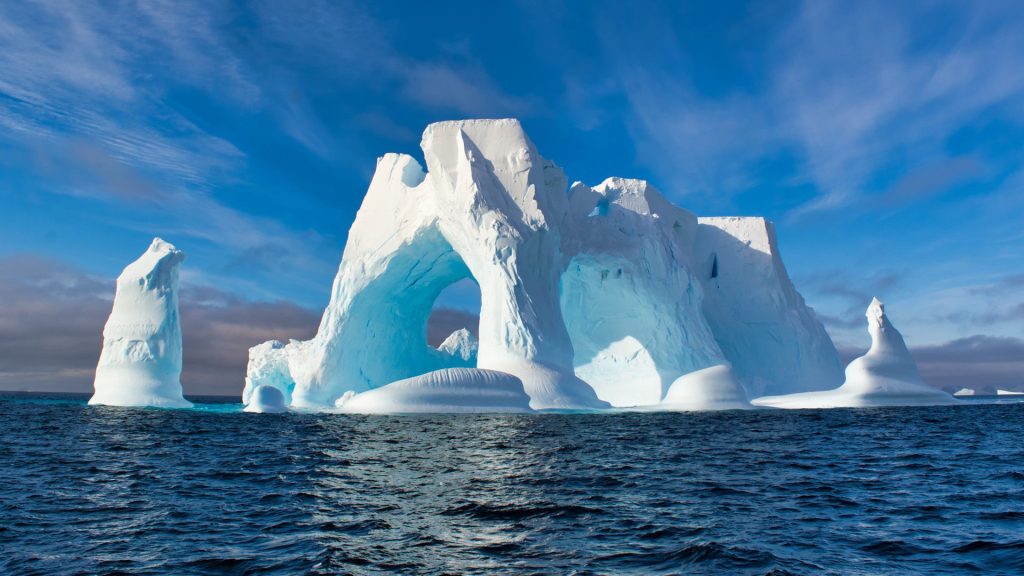
Icebergs are large chunks of freshwater ice that break off, or calve, from glaciers or ice shelves and float in the ocean. In Antarctica, this calving process is a natural part of the glacier lifecycle. Icebergs vary in size, from small pieces known as “growlers” to massive ones that can be hundreds of kilometers long. The majority of an iceberg is submerged underwater—only about 10% is visible above the surface, making them potentially hazardous to ships.
- Major Glaciers and Ice Shelves in Antarctica
Some of the most well-known glaciers in Antarctica include the Thwaites Glacier, Pine Island Glacier, and Lambert Glacier. These glaciers are key areas of study due to their size and sensitivity to warming temperatures. Additionally, large ice shelves such as the Ross Ice Shelf and the Larsen Ice Shelf act as floating extensions of the continent’s ice. When these ice shelves break apart, they can accelerate the flow of inland glaciers into the sea, contributing to sea level rise.
- The Role of Icebergs and Glaciers in the Climate System
Antarctic glaciers and icebergs have a profound effect on the global climate. The vast white ice reflects sunlight, helping to regulate Earth’s temperature in a process called the albedo effect. Additionally, when glaciers melt, they release fresh water into the ocean, which can affect ocean currents and marine ecosystems. The melting of Antarctic ice is closely monitored because it influences global sea levels, weather patterns, and ocean salinity.
- The Impact of Climate Change
In recent decades, climate change has accelerated the melting of glaciers in Antarctica, particularly in the western region and the Antarctic Peninsula. Warmer ocean temperatures are eroding glaciers from below, causing faster ice loss. The breakup of parts of the Larsen Ice Shelf and the rapid retreat of the Thwaites and Pine Island Glaciers are examples of this trend. If large sections of Antarctica’s ice were to melt, global sea levels could rise by several meters, threatening coastal communities around the world.
- Scientific Research and Monitoring
Scientists study Antarctica’s ice using a combination of satellite imagery, field expeditions, radar, and ice core drilling. NASA’s ICESat missions and the European Space Agency’s CryoSat are key tools for measuring changes in ice thickness and coverage. Ice cores, drilled deep into glaciers, provide valuable information about Earth’s past climate going back hundreds of thousands of years. Ongoing research helps scientists understand current changes and predict future impacts.
- Iceberg Movements and Ocean Currents
Once icebergs break off from glaciers or ice shelves, they are carried by ocean currents. Some Antarctic icebergs travel thousands of kilometers, slowly melting as they move into warmer waters. These moving icebergs can transport freshwater and nutrients into distant parts of the ocean, supporting marine life. However, they can also pose navigation hazards to ships, especially if they drift into major shipping routes.
- Human Presence and Environmental Protection
Although no one permanently lives in Antarctica, scientists and support staff inhabit research stations across the continent year-round. The Antarctic Treaty, signed in 1959 by multiple countries, ensures that Antarctica is used only for peaceful and scientific purposes. Under this agreement, environmental protection is a priority, including the preservation of its glaciers, icebergs, and ecosystems. Tourism is regulated to minimize its impact on the fragile environment.
- The Future of Antarctic Ice
The future of Antarctica’s ice is a major concern for scientists, environmentalists, and policymakers. If current trends continue, more glaciers may retreat, and larger icebergs may break off, leading to increased sea level rise. Efforts to reduce greenhouse gas emissions are crucial to slowing the pace of warming in Antarctica. The continent’s icy landscape is not just a distant wilderness—it is deeply connected to the health of our entire planet. Protecting Antarctica’s glaciers and icebergs means protecting the future of life on Earth.
Where to Stay in Antarctica
- Research Stations
The most permanent “accommodations” in Antarctica are the scientific research stations operated by various countries. These facilities house scientists and support staff year-round, but they generally don’t accept tourists overnight. However, some expeditions include brief visits to these stations where visitors can learn about research and life in Antarctica. - Expedition Cruises
The most common way tourists “stay” in Antarctica is on board expedition cruise ships. These vessels serve as both transport and accommodation, offering cabins with varying levels of comfort—from cozy shared rooms to luxury suites. Cruises range from basic to high-end, often featuring expert guides, naturalists, and even zodiac boats for landing on shore. - Icebreaker Ships
Some tours use icebreaker ships capable of navigating thicker sea ice to reach more remote parts of Antarctica. These ships also have onboard cabins and facilities similar to cruise ships but with a stronger focus on exploration and adventure.
Things to Do in Antarctica
- Wildlife Watching
Antarctica is famous for its unique wildlife. You can observe penguins (like Adélie, Gentoo, and Emperor), seals (such as Weddell and leopard seals), whales (including orcas and humpbacks), and a variety of seabirds. Wildlife is most active during the summer months, making it an unforgettable experience. - Zodiac Boat Excursions
Small inflatable boats called Zodiacs allow visitors to get close to icebergs, glaciers, and wildlife along the coast. These excursions offer a thrilling and intimate way to explore areas that larger ships can’t access. - Kayaking
For the more adventurous, kayaking among the ice floes and around pristine shorelines offers a unique perspective on Antarctica’s icy wilderness. Guided tours provide safety and help you
Day trip from Antarctica
- Zodiac Landings
Most Antarctic cruises include multiple short day trips using Zodiac boats to land on the continent or nearby islands. These landings let you explore wildlife colonies, glaciers, and historic sites for a few hours before returning to the ship. - Hiking Excursions
During these day landings, guided hikes on the ice or rocky shorelines allow visitors to experience Antarctica’s terrain safely. - Visits to Research Stations
Some day trips include stops at scientific research stations, where you can learn about ongoing Antarctic research.