

Introduction
Iceland is a Nordic island nation located in the North Atlantic Ocean, known for its stunning natural landscapes, including volcanoes, glaciers, waterfalls, geysers, and hot springs. Despite its name, much of Iceland is green in summer, while volcanic activity and geological forces shape its dramatic terrain. The country has a small population, with most people living in the capital, Reykjavík. Iceland is famous for its renewable energy use, rich Viking history, and natural wonders like the Northern Lights and the Blue Lagoon. It’s a top destination for nature lovers and adventure travelers.
- A Legendary Route through Iceland’s Natural Beauty
Iceland’s Golden Circle is a classic route that displays the best of the country’s natural wonders in a relatively short loop, easily explored in a day or two. It starts and ends in Reykjavík, making it perfect for visitors with limited time who still want a powerful taste of Iceland’s epic landscapes. The route includes Pingvellir National Park, the Geysir geothermal area, and the Gullfoss waterfall, forming the core of this incredible journey. - Pingvellir National Park – Where History Meets Geology
Pingvellir (Thingvellir) is more than just a scenic location—it’s the birthplace of Iceland’s democracy. The park was the site of the world’s first parliament, the Althing, established in 930 AD. It’s also a geological wonder, where you can see the rift between the North American and Eurasian tectonic plates. Walking through the Almannagjá gorge gives you the rare opportunity to quite literally stand between continents. - The Geysir Geothermal Area – Earth’s Fiery Power
In the heart of the Golden Circle lies the Geysir geothermal area, home to bubbling hot springs, steam vents, and geysers. Although the original “Great Geysir” now erupts infrequently, its neighbor Strokkur puts on a spectacular show every 5–10 minutes, shooting boiling water up to 20 meters in the air. This natural performance is one of Iceland’s most photographed and thrilling sights. - Gullfoss – The Golden Waterfall
Next on the route is Gullfoss, a breathtaking two-tiered waterfall that plunges into a narrow canyon carved by glacial waters. Its name means “Golden Falls,” possibly due to the golden hue that sometimes glows in the mist. The sheer power and beauty of Gullfoss make it one of Iceland’s most beloved landmarks, especially when framed by snow in winter or rainbows in summer. - Hidden Gems Along the Golden Circle
Beyond the main three stops, the Golden Circle is dotted with other hidden treasures. The Kerid volcanic crater, with its vivid red slopes and turquoise lake, is a photographer’s dream. You can also visit local farms for fresh Icelandic food, soak in geothermal pools like the Secret Lagoon, or explore off-the-beaten-path waterfalls and lava fields, all within easy reach. - A Journey Through All Seasons
The Golden Circle is beautiful year-round. In summer, the Midnight Sun gives you nearly 24 hours of daylight to explore at your leisure. In winter, the snowy landscape transforms the route into a serene, otherworldly experience. Icy waterfalls, frozen geysers, and frost-covered lava fields add a whole new level of enchantment—and best of all, this is when the Northern Lights often appear. - The Northern Lights – A Celestial Light Show
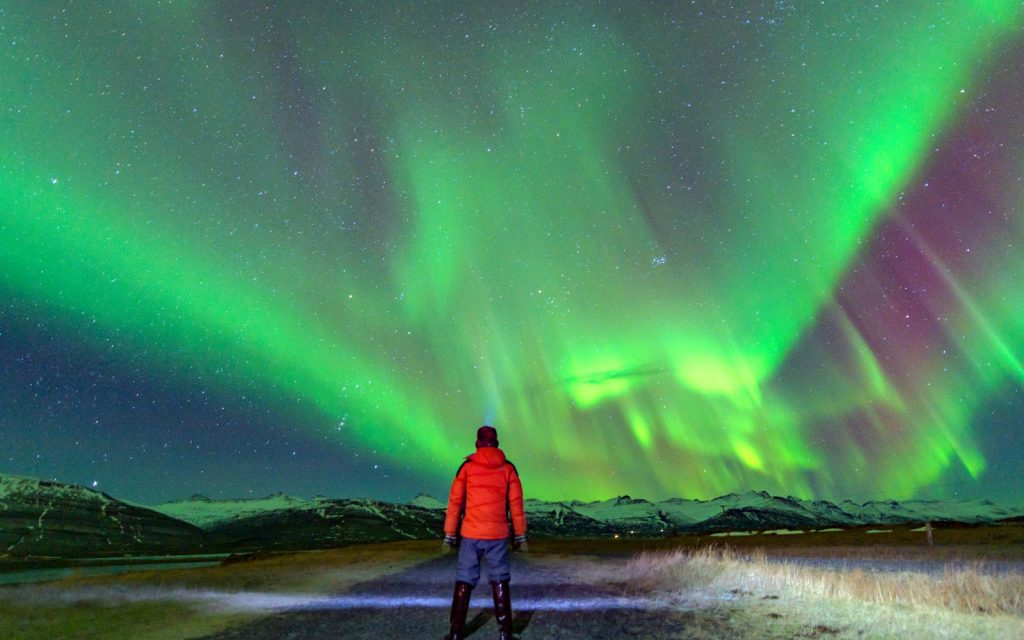
The Aurora Borealis, or Northern Lights, is one of nature’s most magical phenomena. Caused by solar particles colliding with the Earth’s atmosphere, these lights often appear in Icelandic skies from September to April. The vivid green, pink, and violet ribbons dance and shimmer overhead, offering an unforgettable nighttime experience. The Golden Circle region, with its minimal light pollution, is one of the best places to view them. - Combining Golden Circle Adventures with Aurora Hunts
Many tour operators offer combined Golden Circle and Northern Lights tours, giving travelers a full day of adventure followed by a night of sky-gazing. After exploring geysers and waterfalls, you can relax in a thermal bath or dine on traditional Icelandic cuisine before setting out into the night to chase the lights. Whether you join a guided tour or drive on your own, combining these two experiences makes for a perfect itinerary. - Tips for a Successful Northern Lights Experience
Seeing the Northern Lights requires patience, timing, and a bit of luck. Always check the aurora forecast and look for clear skies. Dress warmly, as temperatures can drop quickly at night. Avoid city lights and head to open areas for the best visibility. Bringing a tripod and camera with manual settings can help capture the lights—though the experience is just as memorable without photos. - Why the Golden Circle and Northern Lights Should Top Your List
Together, the Golden Circle and Northern Lights offer a journey that combines Iceland’s raw natural power with its serene and mystical beauty. Few places on Earth allow you to walk between continents, watch the ground boil, stand before a roaring waterfall, and then gaze up at swirling auroras—all in the same day. Whether you’re an adventure-seeker, nature lover, or casual traveler, these two highlights deliver a truly once-in-a-lifetime experience.
Where to stay in Iceland
- Reykjavík – Best for First-Time Visitors & Culture
- Why stay here: Iceland’s capital is the main hub for flights, tours, nightlife, and restaurants. Great for short stays or as a base for day trips.
- Top areas: Downtown Hlemmur, Laugavegur street area.
- Popular hotels:
- The Reykjavik EDITION – luxury
- Canopy by Hilton – stylish mid-range
- KEX Hostel – budget-friendly with character
- Golden Circle Area – Best for Nature Lovers & Day Trips
- Why stay here: Puts you near major attractions like Gullfoss, Geysir, and Þingvellir.
- Top towns/areas: Fluoir, Laugarvatn, Selfoss, Hverageroi.
- Popular stays:
- ION Adventure Hotel – modern and scenic
- Hotel Geysir – walkable to Geysir
- Frost and Fire Hotel – riverside hot tubs in Hveragerði
- South Coast – Best for Waterfalls, Glaciers & Northern Lights
- Why stay here: Ideal for exploring Skógafoss, Seljalandsfoss, Reynisfjara beach, and Vatnajokull glacier.
- Top towns: Vík, Hella, Hofn, Kirkjuaejarklaustur.
- Popular stays:
- Hotel Vík I Myrdal – near black sand beaches
- Fosshotel Glacier Lagoon – near glacier hiking spots
- Hotel Ranga – luxury with Northern Lights wake-up call
Things to do in Iceland
- Explore Natural Wonders
- Golden Circle: Visit Pingvellir National Park, Geysir, and Gullfoss waterfall.
- South Coast: See Skogafoss, Seljalandsfoss, Reynisfjara black sand beach, and the Solheimajokull glacier.
- Snæfellsnes Peninsula: Often called “Iceland in Miniature” – see Kirkjufell Mountain, lava fields, and sea cliffs.
- Jokulsarlon Glacier Lagoon: Watch floating icebergs and nearby Diamond Beach.
- Vatnajokull National Park: Home to Europe’s largest glacier and amazing ice caves (winter only).
- See the Northern Lights (Aurora Borealis)
- Best viewed between September and April, away from city lights.
- Ideal locations: Thingvellir, Hella, Hotel Rangá area, Eastfjords, or anywhere rural with clear skies.
- Consider a Northern Lights tour or guided aurora hunt.
- Soak in Hot Springs & Geothermal Pools
- Blue Lagoon Most famous, luxurious, and tourist-friendly.
- Sky Lagoon New and beautifully designed with ocean views.
- Secret Lagoon More natural and less crowded.
- Mývatn Nature Baths (North Iceland): Similar to Blue Lagoon, with fewer crowds.
- Many towns have public geothermal pools – affordable and authentic.
Day trip from Iceland
- The Golden Circle (Most Popular Day Trip)
- Stops:
- Þingvellir National Park – walk between tectonic plates.
- Geysir geothermal area – watch Strokkur erupt.
- Gullfoss waterfall – stunning two-tiered waterfall.
- Add-ons:
- Kerio Crater, Secret Lagoon, or a greenhouse farm.
- Best for: First-time visitors, families, history & geology lovers.
- Travel time: ~6–8 hours round trip.
- South Coast Adventure
- Stops:
- Seljalandsfoss & Skogafoss waterfalls.
- Reynisfjara black sand beach.
- Vík village.
- Add-ons:
- Solheimajokull glacier hike or DC plane wreck.
- Best for: Photographers, nature lovers, outdoor adventurers.
- Travel time: ~10–12 hours.
- Jokulsarlon Glacier Lagoon (Long Day Trip)
- Stops:
- Jokulsarlon glacier lagoon – see floating icebergs.
- Diamond Beach – ice chunks on black sand.
- Optional: Zodiac boat tour among the icebergs (summer).
- Best for: Scenic wonders, glacier and ice lovers.
- Travel time: ~14–15 hours (very long but incredible).
- Tip: Consider an overnight trip if time allows.