

Introduction
Australia is a vast island continent located in the Southern Hemisphere, known for its diverse landscapes, unique wildlife, and multicultural cities. It is the world’s sixth-largest country by land area, featuring everything from tropical rainforests and arid deserts to pristine beaches and modern urban centers. Famous for landmarks such as the Sydney Opera House, the Great Barrier Reef, and Uluru, Australia is a popular destination for nature lovers, adventure seekers, and cultural explorers.
- Introduction to the Great Ocean Road
Australia’s Great Ocean Road is one of the world’s most scenic coastal drives, stretching over 240 kilometers from Torquay to Allansford in Victoria. Built as a memorial to soldiers who served in World War I, this iconic highway offers a perfect blend of natural beauty, historical significance, and adventure. Travelers from around the globe come to experience its rugged coastline, dramatic cliffs, and quaint towns that line the southern edge of the Australian continent. - Start at Torquay – Surfing Capital of Australia
The journey typically begins in Torquay, a town known for its deep surfing culture. Home to the famous Bells Beach, this is where surfers gather for the annual Rip Curl Pro competition. Beyond surfing, Torquay offers beachfront cafes, surf museums, and shops selling Australian surf brands. It sets the tone for a coastal road trip that mixes laid-back lifestyle with breathtaking ocean views. - Anglesea and the Rugged Cliffs
A short drive from Torquay leads to Anglesea, where red cliffs meet the surf. The town is a great stop for families, offering river kayaking, golf courses often populated by kangaroos, and sandy beaches perfect for a picnic. The rugged coastal scenery here begins to reveal the dramatic beauty that characterizes the Great Ocean Road. It’s a peaceful place to catch your breath before hitting more adventurous stretches. - Lorne – Art, Nature, and Waterfalls
Lorne is a vibrant coastal town that blends art, food, and nature seamlessly. With its galleries, boutique shops, and cafes overlooking the bay, Lorne invites travelers to slow down. Just inland lies the Great Otway National Park, home to the stunning Erskine Falls. A short hike through the lush rainforest leads you to the waterfall, making this a perfect spot to experience both coastal and forested landscapes in one stop. - Teddy’s Lookout and the Winding Cliffs
Before leaving Lorne, a short drive up to Teddy’s Lookout rewards visitors with one of the most iconic views of the Great Ocean Road. The winding road hugging the cliffside, with the Southern Ocean crashing below, creates a postcard-perfect scene. This lookout embodies what makes the drive so unforgettable: raw, untouched beauty at every curve. - Apollo Bay – Gateway to the Otways
Apollo Bay is a charming seaside town and a popular place to rest for the night. Known for its friendly locals, fresh seafood, and wide beaches, it’s also a base for exploring the deeper parts of the Otway Ranges. The Otway Fly Treetop Walk offers a unique experience: a canopy-level steel walkway that lets you stroll above the forest floor, giving a bird’s-eye view of the ancient rainforest. - The Twelve Apostles – A Natural Wonder
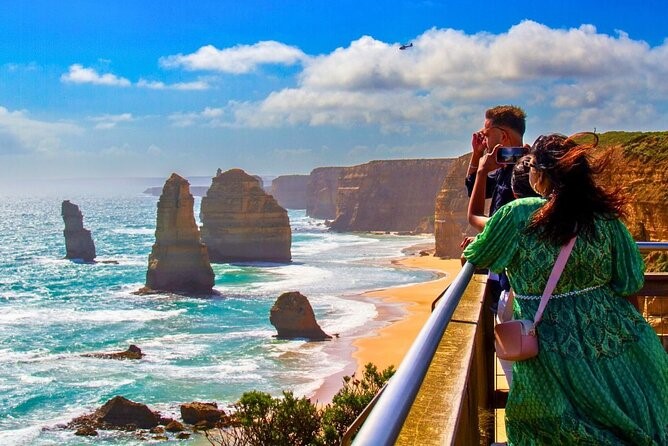
No trip along the Great Ocean Road is complete without witnessing the Twelve Apostles, the iconic limestone stacks rising from the ocean. Although only eight still stand, their towering forms against the crashing waves at sunrise or sunset leave a lasting impression. This area is part of the Port Campbell National Park, and it’s one of Australia’s most photographed natural landmarks, drawing millions of visitors each year. - Loch Ard Gorge – History Meets Drama
Just a short drive from the Twelve Apostles lies Loch Ard Gorge, named after a ship that wrecked here in 1878. The gorge offers dramatic cliffs and sea caves, as well as a touching history of the shipwreck’s survivors. A walking trail leads visitors through the story with signage, making it both a scenic and educational stop. It’s a place where nature and history intertwine with emotional impact. - London Arch and The Arch – Erosion in Motion
Further along the coast, geological wonders continue with formations like London Arch (formerly London Bridge, which partially collapsed in 1990) and The Arch. These are powerful reminders of nature’s relentless shaping of the coastline. Viewing platforms allow for safe observation of these structures and the wild seas that carved them. Each stop showcases the constantly changing face of this dramatic seascape. - Warrnambool and the End of the Journey
The official end of the Great Ocean Road is in Allansford, just before reaching Warrnambool. This coastal city is famous for whale watching, especially between June and September when southern right whales come close to shore. The Flagstaff Hill Maritime Village also offers a look at the area’s shipwreck history. Warrnambool marks a relaxing end to the journey, with hot springs, gardens, and family-friendly beaches awaiting travelers.
Where to stay in Australia
- Sydney
- Where to stay: Central Business District (CBD), The Rocks, Darling Harbour, Bondi Beach
- Types: Luxury hotels (e.g., Shangri-La), boutique hotels, serviced apartments, budget hostels
- Why: Close to iconic sights like the Sydney Opera House and Harbour Bridge, plus beaches and vibrant nightlife.
- Melbourne
- Where to stay: CBD, Fitzroy, St Kilda, Southbank
- Types: Trendy boutique hotels, stylish apartments, budget hostels, luxury hotels
- Why: Known for art, cafes, laneways, and cultural events, plus proximity to the Great Ocean Road.
- Great Barrier Reef (Cairns, Port Douglas, Airlie Beach)
- Where to stay: Cairns (for reef tours), Port Douglas (luxury and nature), Airlie Beach (gateway to Whitsundays)
- Types: Resorts, eco-lodges, budget hotels, backpacker hostels
- Why: Access to reef snorkeling/diving and tropical rainforests.
Things to do in Australia
- Explore the Great Barrier Reef
Dive or snorkel among vibrant coral reefs and marine life in the world’s largest coral reef system, located off the coast of Queensland.
- Visit Sydney’s Iconic Landmarks
Climb the Sydney Harbour Bridge, tour the Sydney Opera House, and relax at Bondi or Manly Beach.
- Experience the Outback and Uluru
See the stunning red rock monolith Uluru at sunset, learn about Aboriginal culture, and explore the nearby Kata Tjuta rock formations.
Day trip from Australia
From Sydney:
Blue Mountains National Park
Just about 1.5–2 hours west of Sydney, the Blue Mountains offer stunning cliffs, waterfalls, and eucalyptus forests. Highlights include the Three Sisters rock formation, Scenic World rides, and walking trails like the Wentworth Falls track.
From Melbourne:
Phillip Island
Around 90 minutes from Melbourne, Phillip Island is famous for its nightly Penguin Parade, where you can watch little penguins waddle ashore. You’ll also find koalas, beautiful beaches, and the rugged Nobbies coastline.
From Brisbane:
Moreton Island
Just an hour’s ferry ride from Brisbane, Moreton Island is a sand island with amazing snorkelling, sand dunes for tobogganing, and dolphin feeding at Tangalooma Resort.