

Introduction
South Africa is a diverse and vibrant country located at the southern tip of the African continent. Known for its stunning landscapes, rich cultural heritage, and complex history, it is often called the “Rainbow Nation” due to its multicultural population. South Africa has 11 official languages, with English widely spoken in business and tourism.
- A Legacy of Winemaking
South Africa’s wine industry dates back to the 17th century when Dutch settlers planted the first vineyards in the Cape. Since then, the country has become one of the world’s most respected wine producers, blending Old World techniques with New World innovation. South African wines are renowned for their balance, complexity, and unique character shaped by diverse climates and soils. Today, the country boasts over 500 wineries spread across a variety of regions, each offering distinct terroirs and wine styles. - Stellenbosch: The Heart of Wine Country
Stellenbosch is South Africa’s most famous wine region, located just an hour from Cape Town. With its oak-lined streets, historic Cape Dutch architecture, and world-class universities, Stellenbosch is both a cultural and viticultural hub. The region is especially celebrated for its full-bodied red wines, particularly Cabernet Sauvignon, Merlot, and Pinotage, South Africa’s signature grape. With over 150 wineries, visitors can enjoy a wide range of experiences—from boutique cellars to grand estates. - Franschhoek: The French Corner
Nestled in a scenic valley surrounded by mountains, Franschhoek (meaning “French Corner” in Dutch) was settled by French Huguenots in the late 1600s, who brought their winemaking skills with them. This picturesque region is known for elegant Chardonnays, Semillons, and Méthode Cap Classique (South African sparkling wine made in the Champagne method). Franschhoek also offers a gourmet food scene and a charming wine tram experience, making it a favorite among wine and food lovers alike. - Constantia: Where It All Began
Located just 15 minutes from Cape Town, Constantia is the oldest wine-producing region in the Southern Hemisphere. With cool sea breezes and rich soils, the area is ideal for Sauvignon Blanc, Chardonnay, and Constantia dessert wines, once favored by European nobility. Historic estates like Groot Constantia still operate today, offering a glimpse into the region’s colonial past and its modern revival. Constantia’s proximity to Cape Town makes it an easy and rewarding wine route for travelers. - Paarl: Bold Wines and Rich History
Paarl, just north of Stellenbosch, is known for its warm climate and granite-rich soils that contribute to powerful, fruit-forward wines. The region is especially strong in Shiraz, Chenin Blanc, and Cabernet Sauvignon, and is home to some of South Africa’s largest and oldest wineries. Paarl also has a proud cultural history—it played a key role in the development of Afrikaans and hosts the famous Taal Monument. The scenic wine estates here offer a balance of tradition and modern hospitality. - Robertson: The Valley of Wine and Roses
Located further inland along the Breede River, Robertson is often referred to as the “Valley of Wine and Roses.” Its limestone-rich soils and semi-arid climate produce award-winning Chardonnay, Sauvignon Blanc, and MCC sparkling wines. This relaxed and friendly region is home to both family-run farms and internationally recognized producers. The annual Wacky Wine Festival draws thousands of visitors each year for wine tastings, food pairings, and scenic river cruises. - Elgin and Walker Bay: Cool Climate Excellence
South Africa’s cool-climate regions like Elgin and Walker Bay are gaining global acclaim, particularly for Pinot Noir, Chardonnay, and Sauvignon Blanc. Elgin, a former apple-farming area, has transformed into a boutique wine region that excels in freshness and finesse. Walker Bay, near Hermanus, benefits from ocean breezes that create ideal growing conditions for elegant and aromatic wines. These areas are also great for whale-watching, making them perfect for wine tourists seeking a multi-sensory experience. - Swartland: The New Wave Frontier
Once overshadowed by more established regions, Swartland has emerged as the epicenter of South Africa’s natural and minimal-intervention wine movement. Young, innovative winemakers have revived old bush vines and embraced hands-off techniques, resulting in expressive, terroir-driven wines. Grenache, Syrah, Cinsault, and Chenin Blanc thrive here. Swartland wines are known for their purity, texture, and artisanal approach, attracting adventurous wine lovers and collectors. - Diversity of Grape Varieties and Styles
One of South Africa’s strengths lies in the incredible diversity of grape varieties and wine styles. From crisp Sauvignon Blancs to rich Cabernets, sweet Muscat dessert wines to traditional method sparkling wines, the country’s offerings are vast and dynamic. Local varieties like Pinotage (a cross between Pinot Noir and Cinsault) give South Africa a unique identity on the global wine stage. This diversity is a direct result of the country’s wide range of microclimates, soils, and altitudes. - Wine Tourism and Global Recognition
South Africa’s wine regions are not only about great wine—they’re also top travel destinations. Wine routes are well-organized, with scenic drives, luxurious accommodations, fine dining, and cultural experiences that cater to all kinds of visitors. International awards and growing exports have also put South African wines on the map, with critics praising their quality and value. Whether you’re a seasoned connoisseur or a casual sipper, exploring South Africa’s wine regions promises unforgettable flavors, hospitality, and scenery.
Where to stay in South Africa
- Cape Town – Urban Luxury and Scenic Views
Best for: First-time visitors, culture, beaches, and dining
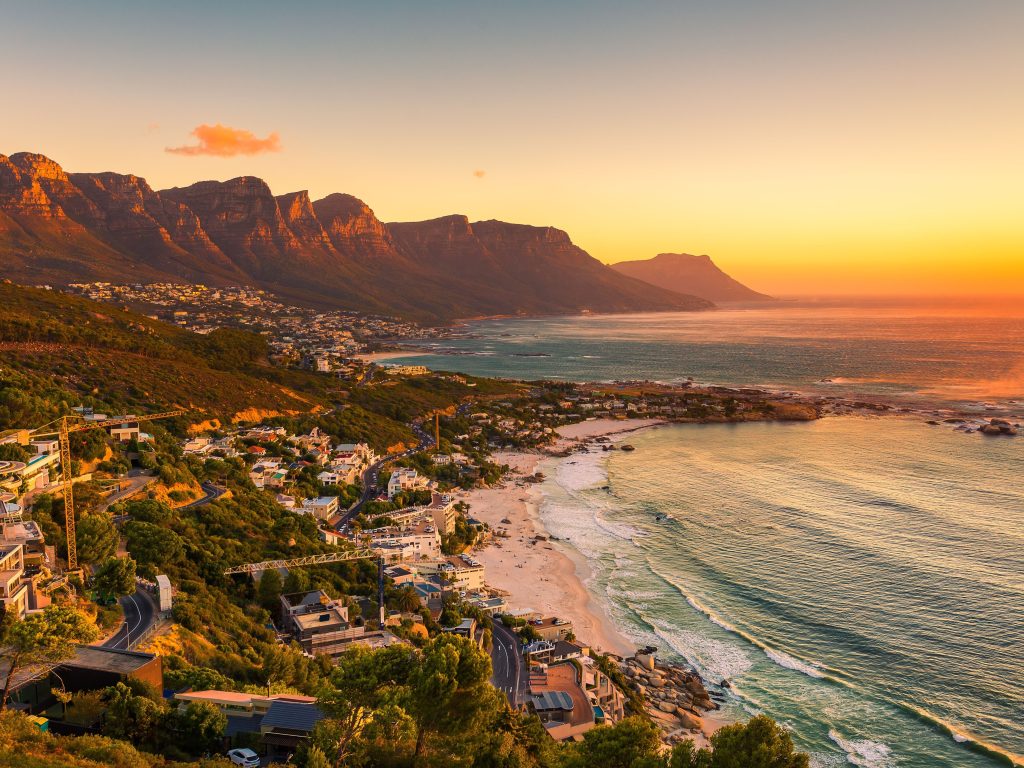
Cape Town is South Africa’s top tourist city, with iconic landmarks like Table Mountain, Robben Island, and the V&A Waterfront.
- Luxury: One&Only Cape Town, The Silo Hotel
- Mid-range: Cape Cadogan Boutique Hotel, Protea Hotel by Marriott
- Budget: Mojo Hotel, 91 Loop Boutique Hostel
- Popular Areas: V&A Waterfront, Sea Point, Gardens, Camps Bay
- Stellenbosch & Franschhoek – Wine Country Retreats
Best for: Wine lovers, couples, scenic getaways
These historic towns in the Cape Winelands are surrounded by vineyards and mountains.
- Luxury: Delaire Graff Estate (Stellenbosch), Leeu Estates (Franschhoek)
- Mid-range: Spier Hotel, Rickety Bridge Manor House
- Boutique B&Bs: Majeka House, Akademie Street Boutique Hotel
- Kruger National Park – Safari Lodges and Bush Camps
Best for: Big Five safaris, wildlife experiences
Kruger is South Africa’s flagship national park, with options for all budgets.
- Luxury Lodges: Singita, Londolozi, Royal Malewane
- Mid-range: Mjejane River Lodge, Rhino Post Safari Lodge
- Budget/Campsites: SANParks rest camps (Skukuza, Lower Sabie)
Things to do in South Africa
- Go on a Safari
- Kruger National Park: Spot the Big Five (lion, leopard, rhino, elephant, buffalo).
- Addo Elephant Park (Eastern Cape): Malaria-free safari option.
- Private Reserves: Try Sabi Sands or Madikwe for luxury lodges and exclusive experiences.
- Explore Cape Town
- Table Mountain: Take the cableway or hike up for epic views.
- Robben Island: Visit the prison where Nelson Mandela was held.
- Bo-Kaap: Explore this colorful, historic neighborhood.
- V&A Waterfront: Great for shopping, dining, and harbor cruises.
- Drive the Garden Route
- Stretching from Mossel Bay to Storms River, this route includes:
- Knysna: Famous for its lagoon and oysters.
- Plettenberg Bay: Beaches, hiking, and whale watching.
- Tsitsikamma National Park: Suspension bridges, forest hikes, and ziplining.
Day Trips from Cape Town
- Cape Peninsula Tour
- Highlights: Cape Point, Cape of Good Hope, Boulders Beach (penguins), Chapman’s Peak Drive
- Perfect for: Scenic drives, wildlife, coastal views
- Travel time: Full-day (8–9 hours)
- Winelands (Stellenbosch & Franschhoek)
- Highlights: Wine tastings, cellar tours, Franschhoek Wine Tram, gourmet lunch
- Perfect for: Wine lovers, foodies, couples
- Travel time: 45–90 minutes one-way
- Hermanus Whale Watching
- Highlights: Southern right whales (Jun–Nov), coastal views, cliff walks
- Perfect for: Nature lovers and photographers
- Travel time: 1.5–2 hours one-way