

Introduction
Tunisia is a country in North Africa, located on the Mediterranean Sea, bordered by Algeria to the west and Libya to the southeast. It has a rich history shaped by many civilizations, including the Punic (Carthaginian), Roman, Arab, and Ottoman empires. Tunisia is known for its diverse landscapes, from Mediterranean beaches to the Sahara Desert, as well as its ancient ruins, such as Carthage and El Djem. Its capital is Tunis, and the country is considered one of the more modern and progressive nations in the Arab world.
- Carthage – The Heart of Ancient Tunisia
Carthage is perhaps the most iconic ancient site in Tunisia, once a powerful Phoenician city-state and later a Roman metropolis. Founded by the Phoenicians in the 9th century BCE, it became the center of the Carthaginian Empire, rivaling Rome until its destruction in the Third Punic War (146 BCE). The Romans later rebuilt it as a major city of Africa Proconsularis. Today, visitors can explore the remains of Roman villas, baths, theaters, and the impressive Antonine Baths, which highlight the grandeur of ancient Carthage.
- El Djem – The Roman Amphitheatre
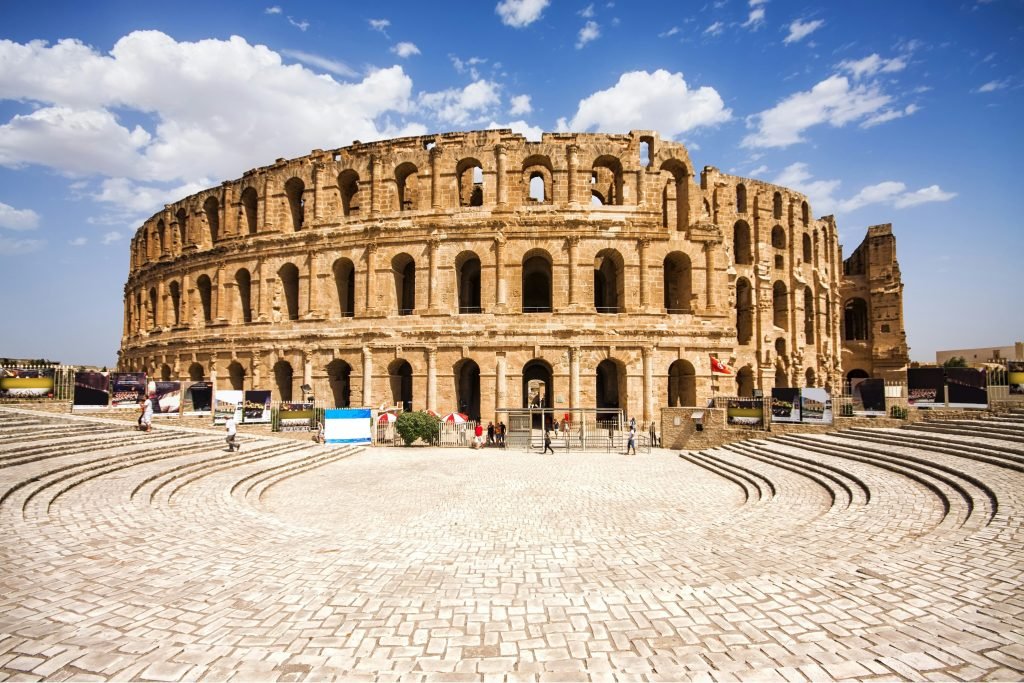
The Roman amphitheatre in El Djem is one of the best-preserved and largest of its kind in the world. Built in the 3rd century CE, it could hold up to 35,000 spectators and was used for gladiator contests and public spectacles. Its architectural similarity to the Colosseum in Rome underlines Tunisia’s importance within the Roman Empire. Today, the amphitheatre stands as a UNESCO World Heritage Site and is a symbol of Roman architectural ingenuity and entertainment culture in North Africa.
- Dougga – The Hilltop Roman City
Dougga, often referred to as the “best-preserved Roman small town in North Africa,” is nestled in the hills of northern Tunisia. This UNESCO World Heritage Site offers a complete Roman urban landscape with a forum, temples, theater, public baths, and residential buildings. The Capitol temple, dedicated to Jupiter, Juno, and Minerva, and the 3,500-seat theater are standout features. Dougga provides a clear and immersive picture of daily life in a provincial Roman town.
- Bulla Regia – The Underground Villas
Bulla Regia is famous for its unique underground Roman villas, built to protect residents from the region’s harsh summer heat. These subterranean homes include intricate mosaics, columns, and courtyards, many of which are still remarkably intact. The site also includes public baths, temples, and a theater, illustrating the wealth and sophistication of this Roman city. Bulla Regia offers a fascinating glimpse into architectural adaptations in ancient times.
- Kerkouane – The Punic City
Kerkouane is an exceptional site because it represents a well-preserved pre-Roman Punic city. Abandoned during the First Punic War and never rebuilt by the Romans, it offers unique insights into Punic urban planning, culture, and lifestyle. Its distinctive features include houses with red-pigmented plaster, religious temples, and advanced water management systems. As one of the few surviving examples of Carthaginian architecture, Kerkouane is a UNESCO World Heritage Site and a critical site for understanding Tunisia’s early history.
- Sbeitla – The Roman Forum and Temples
Sbeitla (ancient Sufetula) is another remarkable Roman city located in central Tunisia. Its most famous feature is the well-preserved Capitolium, comprising three separate temples dedicated to Jupiter, Juno, and Minerva — a rare architectural layout. Sbeitla also includes a forum, triumphal arch, Christian basilicas, and baths. The city showcases the transition from pagan Roman to Christian Byzantine influences, revealing the layers of Tunisia’s religious and architectural history.
- Thuburbo Majus – The Roman Summer Retreat
Thuburbo Majus was once a Roman colony and summer retreat for wealthy Roman citizens. Located not far from Tunis, the site includes a Capitol, temples, baths, a large forum, and a paleochristian basilica. The extensive ruins are adorned with mosaics and inscriptions, which add to our understanding of life during the Roman Empire. It’s less crowded than other sites, offering a serene exploration of Tunisia’s ancient grandeur.
- Oudna (Uthina) – The Forgotten Roman City
Oudna, or Uthina, is one of Tunisia’s lesser-known but impressive Roman sites. Located near Tunis, it features an amphitheatre, aqueduct, Capitol, and villas with mosaics. Its relative obscurity means fewer tourists, allowing for a more personal experience. The amphitheatre, partly built into a hillside, could hold thousands and is remarkably well preserved. Oudna is a reminder of the many hidden archaeological gems scattered across Tunisia.
- Roman Influence and Urban Planning
Tunisia’s ruins reflect the breadth of Roman influence on urban development in North Africa. Roman towns were typically organized around a forum with public buildings, baths, temples, and theaters, many of which still stand today. The widespread use of mosaics, aqueducts, and monumental architecture illustrates how Roman engineering and aesthetics permeated daily life. The ruins in Tunisia serve as open-air museums that trace the spread of Roman civilization across the Mediterranean.
- Preservation, Tourism, and Cultural Heritage
Tunisia’s ancient ruins are not only historical treasures but also vital to the country’s cultural identity and tourism industry. Several sites are UNESCO World Heritage Sites, reflecting their global significance. Tunisia’s efforts to preserve and promote these sites — through museums, site protection, and tourism initiatives — help educate the public and support local economies. However, ongoing challenges such as environmental degradation, funding shortages, and political instability underscore the need for continued preservation efforts.
Where to stay in Tunisia
- Tunis – Best for Culture & Convenience
Why stay: The capital city offers easy access to Carthage, the Bardo Museum, and the medina (a UNESCO site).
Recommended areas:
- La Marsa / Sidi Bou Said – Upscale, near the beach, charming and scenic
- Downtown Tunis – Close to museums, markets, and transport
Popular hotels: - The Residence Tunis (luxury)
- Dar Ben-Gacem (boutique/traditional)
- Hotel Carlton (mid-range)
- Sousse – Best for History & Beach Combo
Why stay: A great blend of ancient medina, Roman ruins nearby, and resorts along the Mediterranean.
Recommended areas:
- Port El Kantaoui – Modern marina area, ideal for families
- Sousse Medina – For authentic charm and history
Popular hotels: - Mövenpick Resort & Marine Spa (luxury)
- Hotel Marhaba Royal Salem (mid-range)
- Djerba Island – Best for Relaxation & Culture
Why stay A picturesque island with white-sand beaches, traditional Berber villages, and the historic El Ghriba Synagogue.
Recommended areas:
- Houmt Souk – Town center with shops, culture, and cafés
- Midoun – Near beaches and resorts
Popular hotels: - Hasdrubal Prestige Thalassa (luxury)
- Dar Dhiafa (authentic boutique stay)
Things to do in Tunisia
- Explore the Ancient Ruins
Tunisia is a treasure trove of ancient sites:
- Carthage – Roman baths, Punic ports, and museum near Tunis
- El Djem – Spectacular Roman amphitheatre
- Dougga – Best-preserved Roman town in North Africa
- Kerkouane – Rare Punic city ruins (UNESCO)
- Sbeitla and Bulla Regia – Roman cities with temples and underground villas
- Wander Through Historic Medinas
Tunisia’s medinas are rich in culture, architecture, and daily life:
- Tunis Medina – A UNESCO World Heritage Site with souks, mosques, and palaces
- Sousse and Kairouan Medinas – Known for ancient walls, historic mosques, and vibrant markets
- Tozeur Medina – Unique desert architecture and traditional crafts
- Relax on Mediterranean Beaches
Tunisia has gorgeous beaches, especially:
- Hammamet – A resort town with sandy beaches and a charming old medina
- Djerba Island – Palm-fringed beaches, warm waters, and Berber heritage
- Sousse and Monastir – Great for families and water sports
Day trip from Tunisia
- Carthage, Sidi Bou Said & Bardo Museum (from Tunis)
- Distance: 30–45 minutes from central Tunis
- Highlights:
- Explore ancient Roman ruins at Carthage
- Visit the stunning Bardo Museum (world-class mosaics)
- End your day in Sidi Bou Said, a blue-and-white cliffside town with cafes and art shops
- Perfect for: History lovers, casual travelers, photographers
- Dougga Roman Ruins (from Tunis or Bizerte)
- Distance: About 2–2.5 hours by car
- Highlights:
- Visit the UNESCO-listed ruins of Dougga — temples, theater, baths, and more
- Surrounded by olive groves and hills — great views and a peaceful atmosphere
- Perfect for: Ancient history enthusiasts, photographers, low crowds
- Hammamet (from Tunis)
- Distance: 1 hour
- Highlights:
- Relax on sandy beaches
- Visit the Hammamet Medina and 15th-century Kasbah
- Enjoy seafood by the sea
- Perfect for: Beachgoers, couples, casual day trip